How to Source Kitchen Appliances from China for Amazon FBA: The 2026 E-Commerce Procurement Playbook
The global small kitchen appliance market is projected to surpass USD 320 billion by 2027, with e-commerce channels capturing an ever-growing share. Amazon alone lists over 50,000 active kitchen appliance ASINs — and every single one of those products started with a sourcing decision. Yet the majority of new e-commerce sellers make the same costly mistake: buying from trading companies instead of factories, surrendering 20–40% of their margin before their first unit even ships.
This guide breaks down the complete e-commerce procurement workflow for kitchen appliances — from supplier vetting to container optimization — so you can build a profitable, defensible product line with factory-direct economics.
1. Factory-Direct vs. Trading Company: The Margin Math That Decides Your Amazon P&L
Before you message a single supplier on Alibaba, you need to understand the single biggest variable in your unit economics: who you buy from.
| Factor | Trading Company | Factory-Direct (AIMA / OTOJIA) |
|---|---|---|
| Unit Price (2200W Blender) | USD 45–58 | USD 32–38 |
| Markup Layers | 2–3 layers | 0 layers |
| OEM Customization | Slow, passed to sub-factory | Direct engineering team, fast turnaround |
| Quality Traceability | Opaque — you don’t know the real factory | Full transparency — visit the production line |
| Consistency Across Orders | Risky — source factory may change | Guaranteed — same line, same QC, every order |
| Gross Margin on Amazon (at $89.99 retail) | 28–35% | 45–55% |
That 15–20 point margin gap is not theoretical — it’s the difference between a sustainable Amazon business and one that bleeds cash on PPC. Factory-direct sourcing is the single highest-leverage decision in your entire e-commerce supply chain.
2. The Certification Checklist: What Your Products Need Before Amazon FBA
Amazon’s compliance team does not negotiate. If your kitchen appliances arrive at a fulfillment center without the correct documentation, your shipment gets quarantined, returned, or destroyed — at your expense. Here’s the non-negotiable certification checklist:
| Certification | Required For | What It Covers | AIMA Status |
|---|---|---|---|
| CE | Amazon Europe (DE, FR, IT, ES, UK) | Health, safety, and environmental standards | ✅ Certified |
| CB | Global markets (IECEE system) | International electrical safety | ✅ Certified |
| RoHS | EU + increasingly required by Amazon US | Restriction of hazardous substances | ✅ Certified |
| UL / ETL | Amazon USA & Canada | North American electrical safety | 🔄 UL-ready (can arrange) |
| FCC | Amazon USA (electronic devices) | Electromagnetic interference compliance | 🔄 Can arrange |
Pro tip: Always request the actual PDF certificates — not just a supplier’s claim of certification. Verify the certificate number against the issuing body’s online database. A legitimate factory will provide these within hours.
3. OEM & ODM: How to Build Your Own Kitchen Appliance Brand on Amazon
Generic products get generic margins. The e-commerce sellers earning 40%+ net margins are not reselling unbranded blenders — they’re selling differentiated products under their own brand. Here’s what a factory-direct OEM partnership makes possible:
| OEM Service | Impact on Your Amazon Listing | Typical MOQ |
|---|---|---|
| Custom Logo / Branding | Brand Registry eligibility → A+ Content, Brand Store, Sponsored Brands | 300 pcs |
| Custom Color | Visual differentiation in search results → higher CTR | 500 pcs |
| Custom Packaging | Premium unboxing experience → better reviews, lower returns | 300 pcs |
| Voltage / Plug Customization | Multi-market expansion (US 120V, EU 230V, UK 240V) | Standard |
| Product Modification (motor, blade, features) | Unique selling proposition → defensible against competitors | Negotiable |
Amazon Brand Registry — which unlocks A+ Content, Sponsored Brands ads, and the Brand Analytics dashboard — requires a registered trademark and branded products. Factory-direct OEM is the fastest path to getting there without the capital expenditure of building your own production line.
4. Container Loading Optimization: The Hidden Profit Lever Most Sellers Ignore
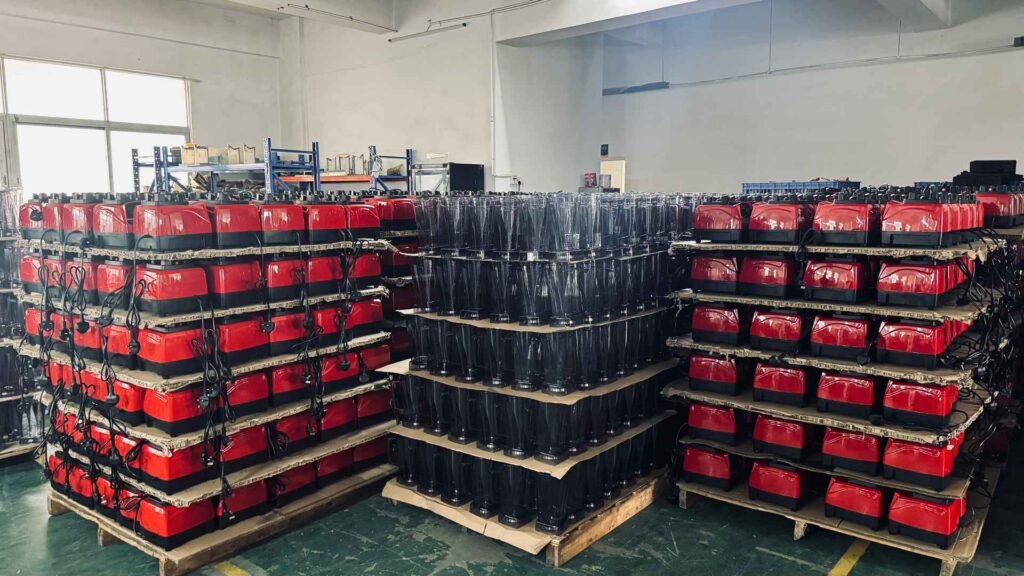
Amazon sellers obsess over PPC bid adjustments and keyword rankings — but overlook a cost center that can swing their unit economics by 15–25%: container utilization. Every cubic meter of empty space in your shipping container is money you paid for and didn’t use.
| Product Category | Units per 40HQ | Per-Unit Sea Freight (to US West Coast) | Per-Unit Sea Freight (to EU) |
|---|---|---|---|
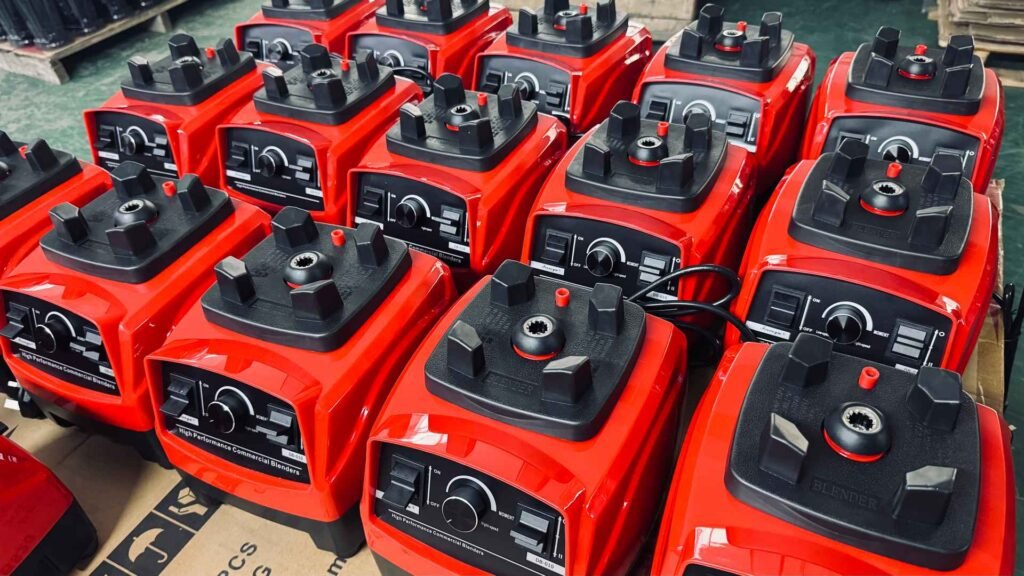
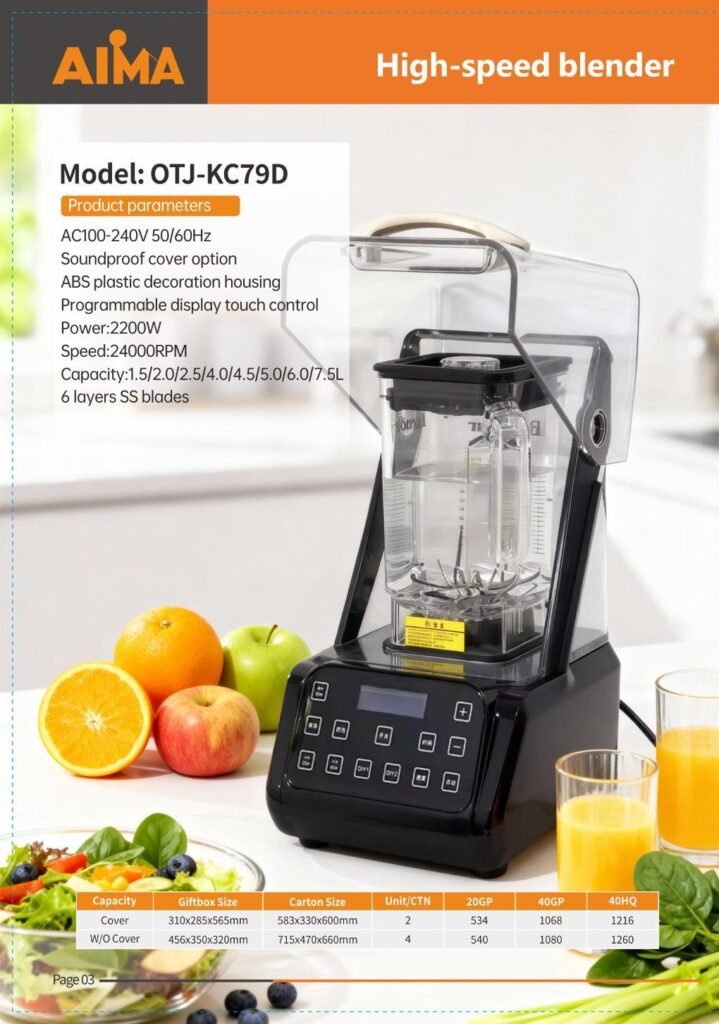
| Commercial Blender (soundproof) | 1,216 | ~USD 3.20 | ~USD 2.80 |
| Commercial Blender (non-soundproof) | 1,380 | ~USD 2.80 | ~USD 2.50 |
| Food Slicer (cast iron, 170mm) | 1,380–1,500 | ~USD 2.50 | ~USD 2.20 |
A well-optimized 40HQ container from an experienced factory can save you USD 1.00–2.00 per unit in freight versus a poorly packed one. On a 1,200-unit order, that’s an extra USD 1,200–2,400 in pure profit — before you’ve even created your Amazon listing. Ask any supplier for their exact carton dimensions and container load plan before committing.
5. Quality Control for E-Commerce: How to Prevent the Reviews That Kill Your Listing
On Amazon, a single 1-star review in your first 30 days can tank your conversion rate for months. E-commerce QC is fundamentally different from traditional wholesale QC — your customer is a consumer unboxing a product at home, not a professional chef in a commercial kitchen. The inspection checklist needs to account for that.
What to Verify Before Every Shipment
- IQC (Incoming Quality Control): 100% inspection on critical electrical components — motor windings, switches, PCB boards. One faulty capacitor can generate ten returns.
- Function Testing: Every unit powered on and operated at full speed. Zero exceptions.
- Cosmetic Inspection: Scratches, color inconsistency, logo misalignment — cosmetic defects drive the highest return rates on Amazon.
- Packaging Integrity: Drop test your master cartons. Amazon FBA warehouses are not gentle with boxes.
- AQL Sampling: Acceptable Quality Level 2.5 for major defects, 1.5 for critical. If your factory doesn’t understand AQL, find a new factory.
AIMA operates under ISO9001-certified 5S management with in-house lab testing — RoHS, drop test, vibration test, glow wire test, ball pressure test, and leakage current test. This isn’t marketing language; it’s the difference between a 4.5-star Amazon listing and a product recall.
6. MOQ Negotiation: What New E-Commerce Sellers Need to Know
Every new Amazon seller faces the same chicken-and-egg problem: you need low MOQ to test the market, but factories want volume to justify production line setup. Here’s how to navigate it:
| Scenario | Typical MOQ | Strategy |
|---|---|---|
| First-time trial order | 50–100 pcs | Accept slightly higher unit price; prioritize market validation over margin |
| OEM branding (logo only) | 300 pcs | Standard entry point — viable for a single-variation Amazon listing |
| Full custom (color + packaging + logo) | 500 pcs | Ensure you’ve validated demand with an unbranded test run first |
| Repeat order (established listing) | 300–500 pcs | Negotiate volume pricing — you now have leverage |
Key lesson: The factories that refuse to negotiate below 1,000 units on a first order are often trading companies in disguise. Real manufacturers like AIMA understand the e-commerce model — they’ve seen hundreds of sellers go from 100-unit test orders to 5,000-unit annual contracts. A flexible MOQ is a strong signal you’re talking to the actual factory.
7. Why Top Amazon Kitchen Brands Source from One Factory, Not Four
There’s a pattern among the highest-grossing kitchen appliance sellers on Amazon: they work with one primary factory, not a roster of four or five. The reasoning goes beyond price:
- Consistent QC standards — the same inspection team, same lab, same pass/fail criteria across every order
- Supply chain predictability — when your factory knows your Amazon sales velocity, they can pre-stage raw materials and reduce lead times by 2–4 weeks
- Product iteration speed — Version 2.0 of your bestseller happens faster when the engineering team already knows your tooling, your packaging specs, and your target cost
- Exclusive designs — factories offer their best sellers priority access to new product tooling, giving them first-mover advantage on emerging categories
Dual-brand factories like AIMA / OTOJIA are particularly well-suited to e-commerce: you get the engineering depth of a manufacturing plant combined with the international trade infrastructure of an export brand. One relationship, one QC standard, one supply chain.
Frequently Asked Questions
Q: How do I verify that a supplier is the actual factory and not a trading company?
Three quick tests: (1) Ask for a video call showing the production line — a factory can do this instantly; a trading company will stall. (2) Request the ISO9001 certificate with the company name and check it against the official registry. (3) Ask about minimum order quantities for custom modifications — factories can quote precise tooling costs; traders give vague answers.
Q: What’s the lead time from order to Amazon FBA delivery?
Standard production lead time for OEM kitchen appliances is 25–35 days. Sea freight to Amazon US (Long Beach) adds ~18–22 days. To Amazon EU (Hamburg/Rotterdam) adds ~30–35 days. Including customs clearance and FBA check-in, budget 60–75 days total from PO to “In Stock” on Amazon.
Q: Can I get exclusivity on a product design for Amazon?
Yes — but it requires a volume commitment. If you’re placing 3,000+ units annually on a specific model, most factories will agree to a territory or channel exclusivity clause. For custom tooling that you’ve paid for, exclusivity is standard. Discuss this before placing your first order.
Q: What’s the best product category to start with as a new Amazon kitchen seller?
High-power commercial blenders (2200W) consistently show the strongest unit economics: high perceived value (retail $79–$129), manageable FBA size tier, and low return rates when properly QC’d. Food slicers are a close second — less competitive than blenders but with equally strong margins. Avoid induction cooktops as a first product due to higher regulatory complexity.
Q: How do I handle warranty and returns for kitchen appliances sold on Amazon?
Your factory should provide 1.5–2% free spare parts with every shipment (motors, blade assemblies, control boards). Set aside these parts at a 3PL or your own location for warranty replacements. Never ship replacement units from the factory for individual returns — it’s too slow and damages your seller metrics. Plan your warranty logistics before your first order lands.
Ready to Source Your First Kitchen Appliance SKU?
Get factory-direct wholesale pricing, complete certification documentation, and a customized OEM proposal within 24 hours. Whether you’re launching your first Amazon product or scaling to 10+ ASINs — we’ve helped hundreds of e-commerce sellers build profitable kitchen appliance brands.
Get Your Wholesale Quote →📧 sales1@zs-aima.com | sales2@zs-aima.com | 📞 +86 760-22558182
Ask for Ricardo — Market & Supply Chain Manager