Hotel & Restaurant Blender Procurement Guide: Why Commercial Juicers Are the Only Choice for Professional Kitchens
Picture this: it’s 7:15 AM at a 400-room five-star hotel in Bangkok. The breakfast buffet is at peak capacity. The juice station has a queue of 30 guests. Your blender — purchased six months ago from a local restaurant supply store — seizes up mid-cycle. Smoke rises from the motor housing. Three hundred guests are about to leave a TripAdvisor review that begins with “The juice machine was broken.”
This scenario plays out every morning in hotels and restaurants around the world — and it’s almost always preventable. The difference between a USD 60 household blender and a purpose-built commercial juicer is not marketing. It’s engineering. For hotel and restaurant procurement teams, understanding that difference is the difference between a flawless guest experience and a reputation-damaging equipment failure.
1. The Motor: Why 2200W Is the Baseline for Hotel F&B Operations
In a residential kitchen, a blender runs for 45 seconds to make one smoothie, then rests for hours. In a hotel breakfast buffet, it runs 150–300 cycles in a 3-hour window, often back-to-back, crushing ice, frozen fruit, and fibrous vegetables without pause. The physics don’t change between home and commercial use — but the engineering must.
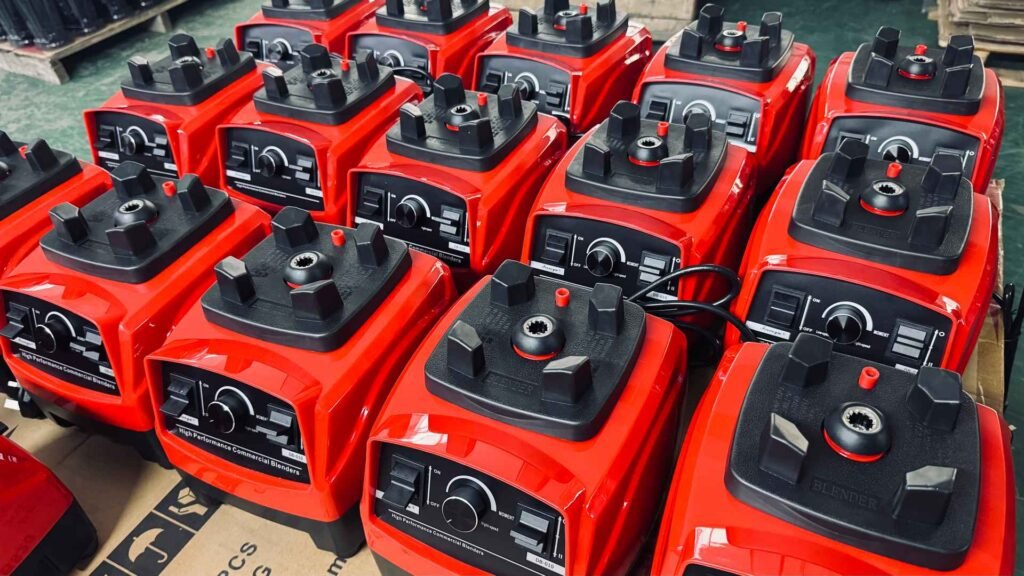
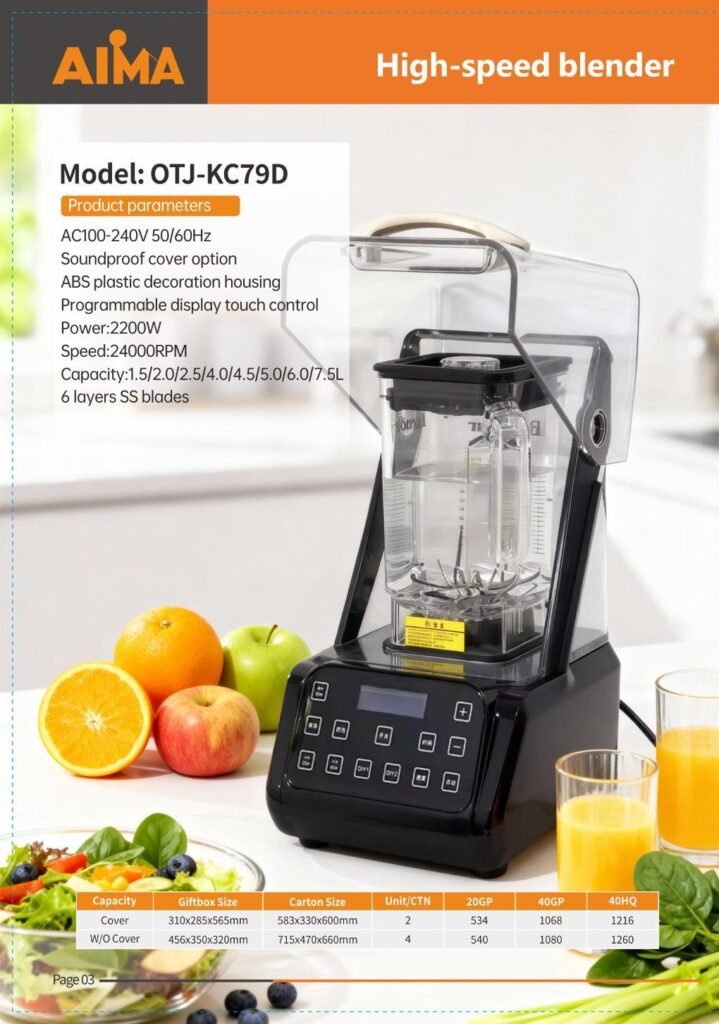
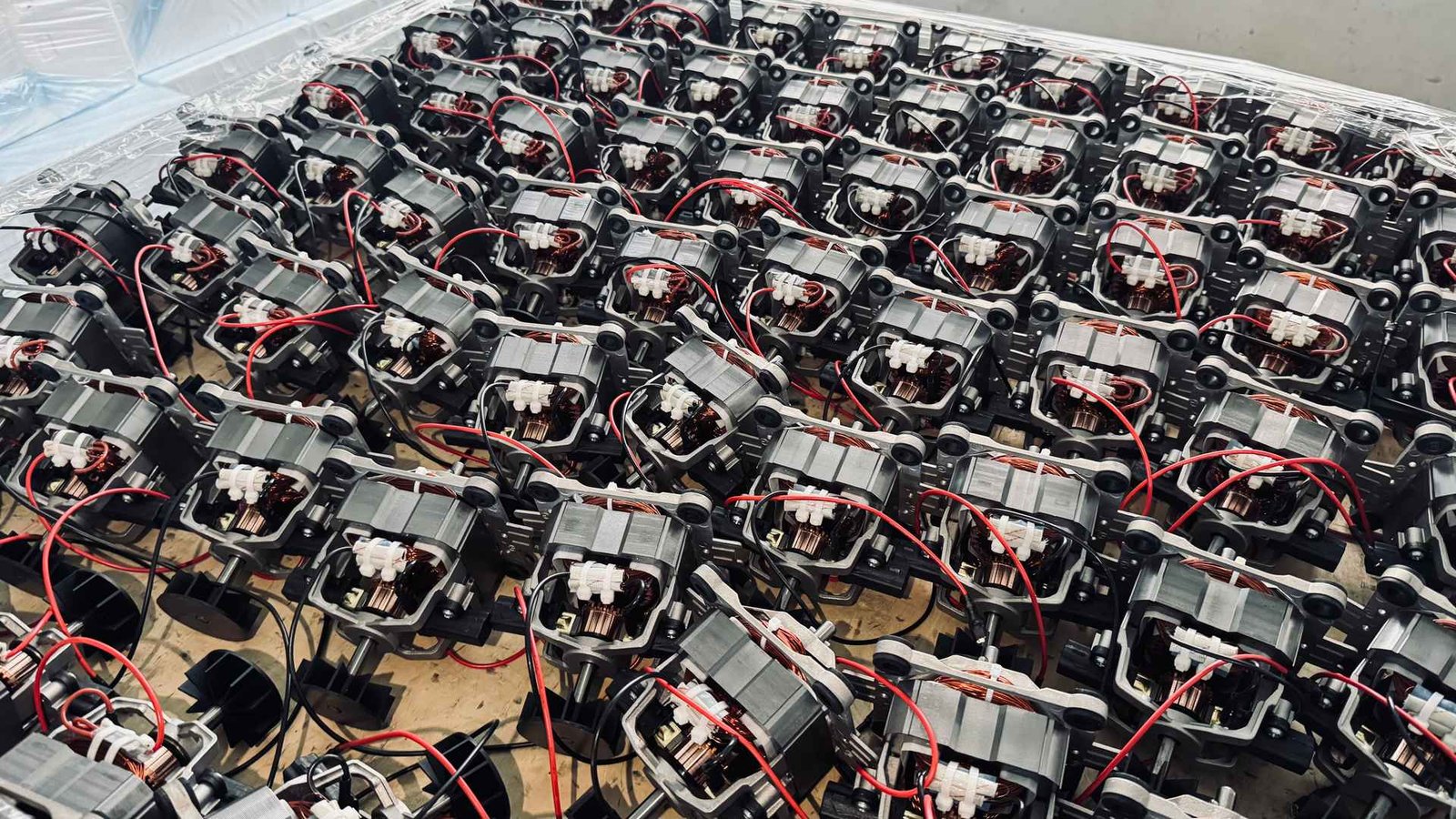
AIMA’s commercial blender platform is built around a 2200W 100% pure copper wire motor — manufactured in-house, not outsourced. Pure copper windings deliver higher electrical conductivity than aluminum, producing less heat per watt of output. At peak, the motor sustains 24,000 RPM, transferring enough kinetic energy to pulverize a full jar of ice and frozen mango into a perfectly smooth consistency in under 30 seconds.
| Operational Scenario | Consumer Blender (600W) | Commercial Blender (2200W) |
|---|---|---|
| Blend time per 1.5L smoothie | 90–120 seconds | 22–30 seconds |
| Drinks per hour (single machine) | 25–35 | 100–140 |
| Continuous runtime before overheat | 2–3 minutes | 8+ hours |
| Coffee shop morning rush (7AM–10AM) | Needs 3–4 machines | 1 machine |
| Hotel buffet breakfast (150+ covers) | Guaranteed failure within 3 months | 5+ year operational life |
2. Noise Compliance: The Soundproof Feature That Protects Guest Satisfaction Scores
In an open-kitchen hotel restaurant, a juice bar embedded in the lobby, or a poolside smoothie station, noise is a guest experience variable. An unshielded 2200W motor at 24,000 RPM produces approximately 85–92 dB(A) — roughly equivalent to a motorcycle at close range. For a guest trying to enjoy a quiet breakfast or a business traveler on a laptop three tables away, that’s unacceptable.
The AIMA OTJ-KC79D addresses this with an integrated acoustic enclosure: a thick, crystal-clear polymer shield with vibration-dampening walls that seals the blending chamber. Testing in open-kitchen environments shows a 15–20 dB(A) reduction in perceived noise — bringing the sound level below normal restaurant conversation volume.
For hotel procurement directors, this feature translates directly into fewer noise complaints on guest satisfaction surveys. For restaurant operators, it means the juice bar can sit anywhere in the dining room — not hidden behind a kitchen wall.
3. Multi-Property Consistency: Programmable Controls for Chain Operations
If you’re a procurement director for a hotel group with 12 properties across Southeast Asia — or a restaurant chain with 40 locations — your biggest operational challenge isn’t buying blenders. It’s ensuring every property delivers the same product. A mango smoothie at the Phuket property should taste identical to the one served at the Kuala Lumpur property. Without programmable controls, it won’t.
The OTJ-KC79D features a programmable touch screen control panel that allows F&B directors to pre-set multi-stage blending profiles: specific speed curves, ramp-up sequences, and countdown timers. Once programmed, the machine executes the same blend profile every cycle — regardless of which staff member presses the button. This eliminates:
- Inconsistent drink texture across properties
- Over-blending (dilution, heat degradation of ingredients)
- Under-blending (chunks, complaints, re-makes)
- Staff training variability
4. The Procurement Director’s TCO Calculator: Why the Cheaper Blender Costs More
Procurement teams are measured on budget adherence — and a USD 35 commercial blender looks more expensive on a purchase order than a USD 22 consumer model. But P&L responsibility doesn’t end when the PO is signed. Here’s the total cost of ownership for a hotel breakfast operation serving 200 covers per day, over 3 years:
| Cost Line | Consumer Blender × 4 units | Commercial Blender × 2 units |
|---|---|---|
| Initial Purchase | USD 88 (4 × $22) | USD 70 (2 × $35 wholesale) |
| Replacements (3 years) | USD 264 (replaced every 3 months) | USD 0 |
| Downtime Revenue Loss | ~USD 1,800 (4 failures × 1 day lost juice sales each) | ~USD 0 |
| Staff Productivity (slower blend) | ~USD 1,500 (extra 45 seconds × 200 drinks × 365 days × 3 years) | Included in baseline |
| Guest Complaint Impact | Unquantifiable (negative reviews) | None |
| 3-Year Total | ~USD 3,652+ | ~USD 70 |
The consumer option costs 52 times more over three years — and that’s before accounting for the intangible cost of guest complaints. The commercial blender is not the expensive option. It is the only rational option for any operation serving more than 20 drinks per day.
5. OEM Customization: Put Your Hotel Brand on the Machine
Five-star properties and premium restaurant chains increasingly want equipment that carries their own visual identity — not a manufacturer’s logo. AIMA offers full OEM customization for hotel and restaurant procurement contracts:
| Customization | Benefit for Hotel / Restaurant | MOQ |
|---|---|---|
| Property Logo on Machine Body | Reinforces brand identity at guest-facing juice stations | 300 pcs |
| Custom Color (matching brand palette) | Visual consistency with interior design and brand guidelines | 500 pcs |
| Customized Jar Branding | Logo-embossed Tritan™ jars — visible in every guest pour | 300 pcs |
| Pre-Programmed Recipe Profiles | Factory-loaded blend programs for your signature drinks | Negotiable |
| Multi-Voltage Configuration | One SKU for all your properties across different countries | Standard |
6. Certifications & Compliance: What Hotel Procurement Teams Must Verify
Hotel equipment procurement involves liability. A kitchen fire caused by a faulty blender motor is not just a repair bill — it’s a potential insurance claim, a possible guest injury, and a guaranteed reputation incident. Every commercial blender entering a hotel or restaurant kitchen must carry:
- CE Certification — mandatory for any property following European safety standards (applicable across most of Asia’s premium hotel sector)
- CB Scheme — international recognition of electrical safety testing, accepted by 50+ countries
- RoHS Compliance — restricts hazardous materials; increasingly required by corporate ESG policies
- ISO9001 Factory Certification — ensures the manufacturing process itself is audited and consistent
AIMA holds all four. Every unit ships with the certificate documentation — no delays at customs, no compliance rejections from your engineering department.
7. Logistics for Multi-Property Hotel Groups
When you’re equipping 8 properties across 4 countries, logistics complexity kills timelines. AIMA’s dual-brand factory model simplifies this:
- Consolidated single-factory sourcing: Blenders, food slicers, hand mixers, induction cooktops — all from one production facility, one QC standard, one shipping origin
- Split-container shipping: Ship to multiple SEA destinations from one production run (Bangkok, Ho Chi Minh City, Jakarta, Manila, Kuala Lumpur — all covered)
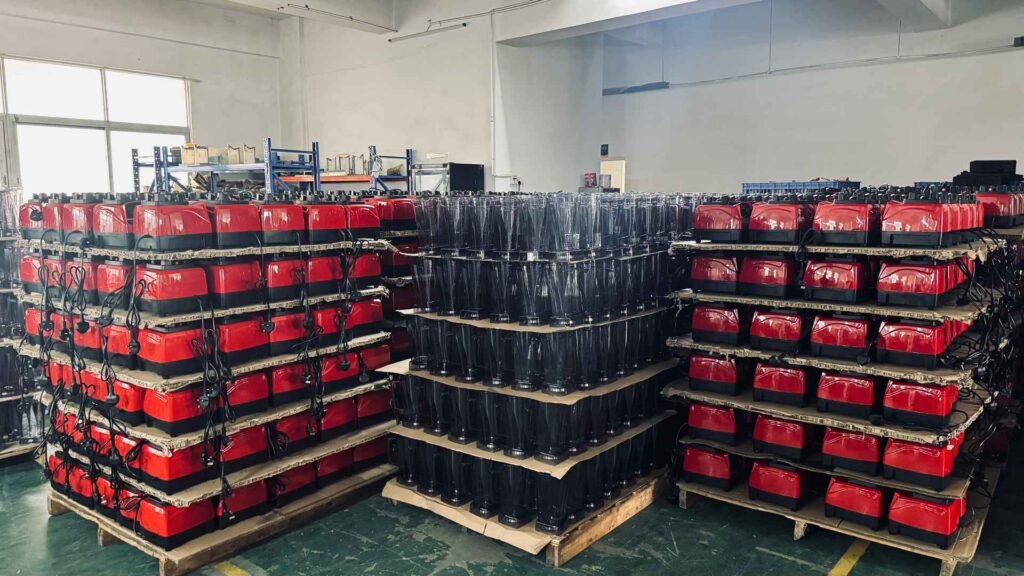
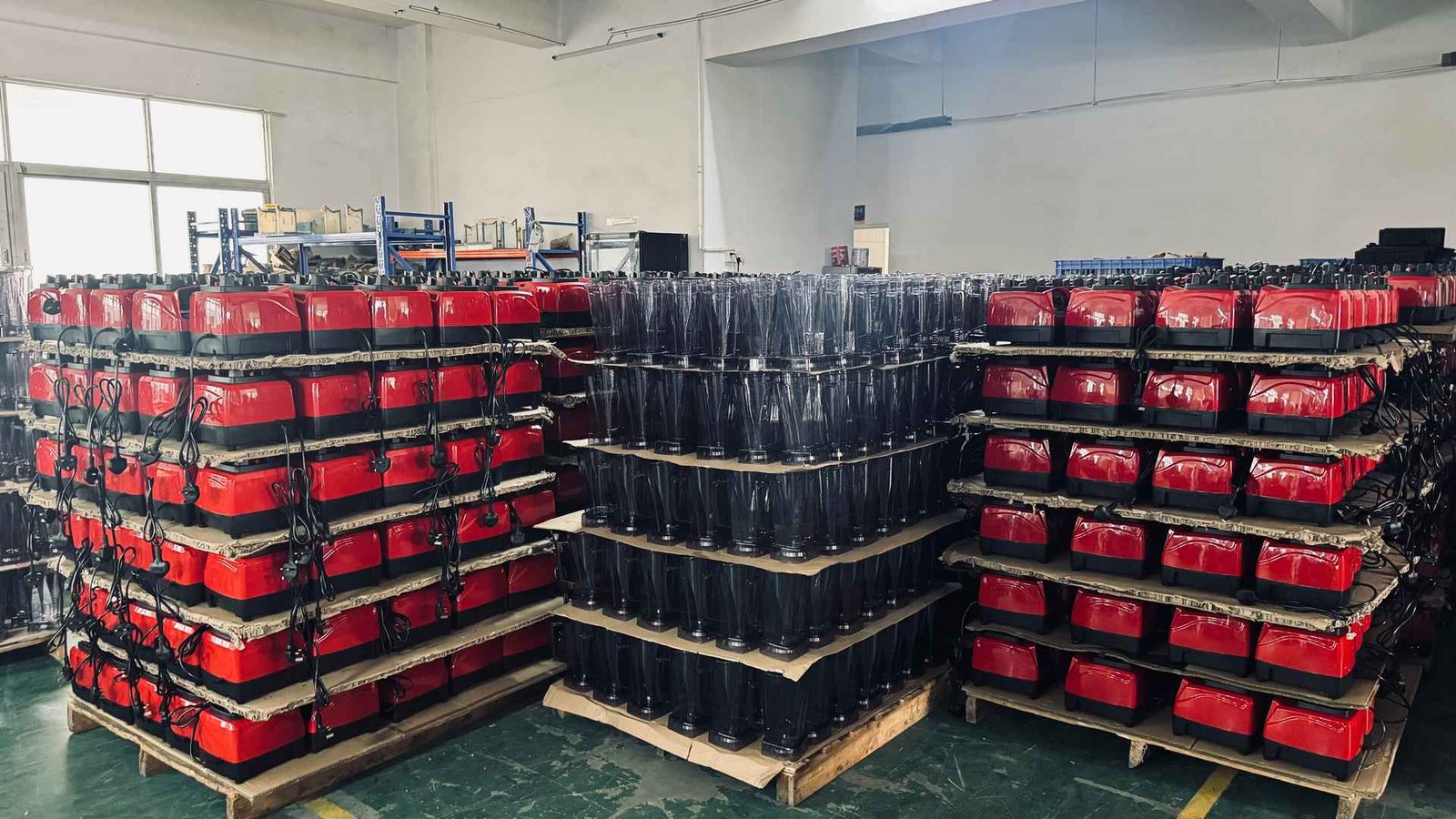
- High container efficiency: 1,216 units of the soundproof blender configuration per 40HQ — minimizing per-unit freight cost across your property portfolio
- FOB/CIF terms available: Choose the Incoterm that matches your group’s logistics capability
Frequently Asked Questions
Q: We operate hotels in Thailand, Vietnam, and Indonesia — can one blender model work across all locations?
Yes. AIMA configures voltage (220V/230V) and plug types (Type C, G, O) per destination country. A single OTJ-KC79D platform can be factory-configured for all three markets — you’re buying one SKU, deployed across your entire portfolio.
Q: What’s the warranty and after-sales support for hotel group purchases?
Every shipment includes 1.5% free spare parts (motors, blade assemblies, control boards). For hotel groups with 5+ properties, we can pre-position a spare parts kit at your regional engineering hub. Technical support is available via WhatsApp, WeChat, and email with 24-hour response time.
Q: Can we visit the factory before committing to a group procurement contract?
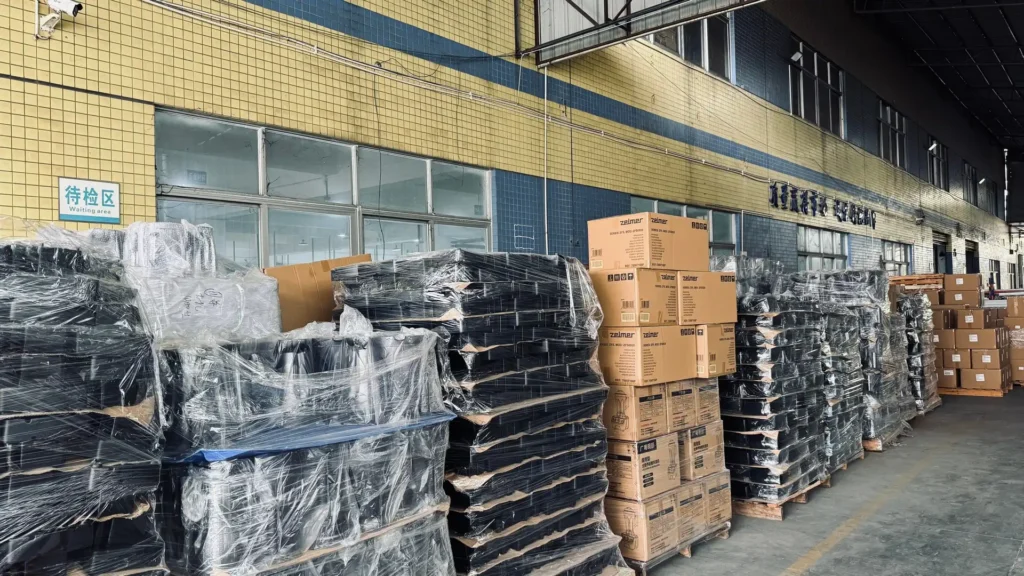
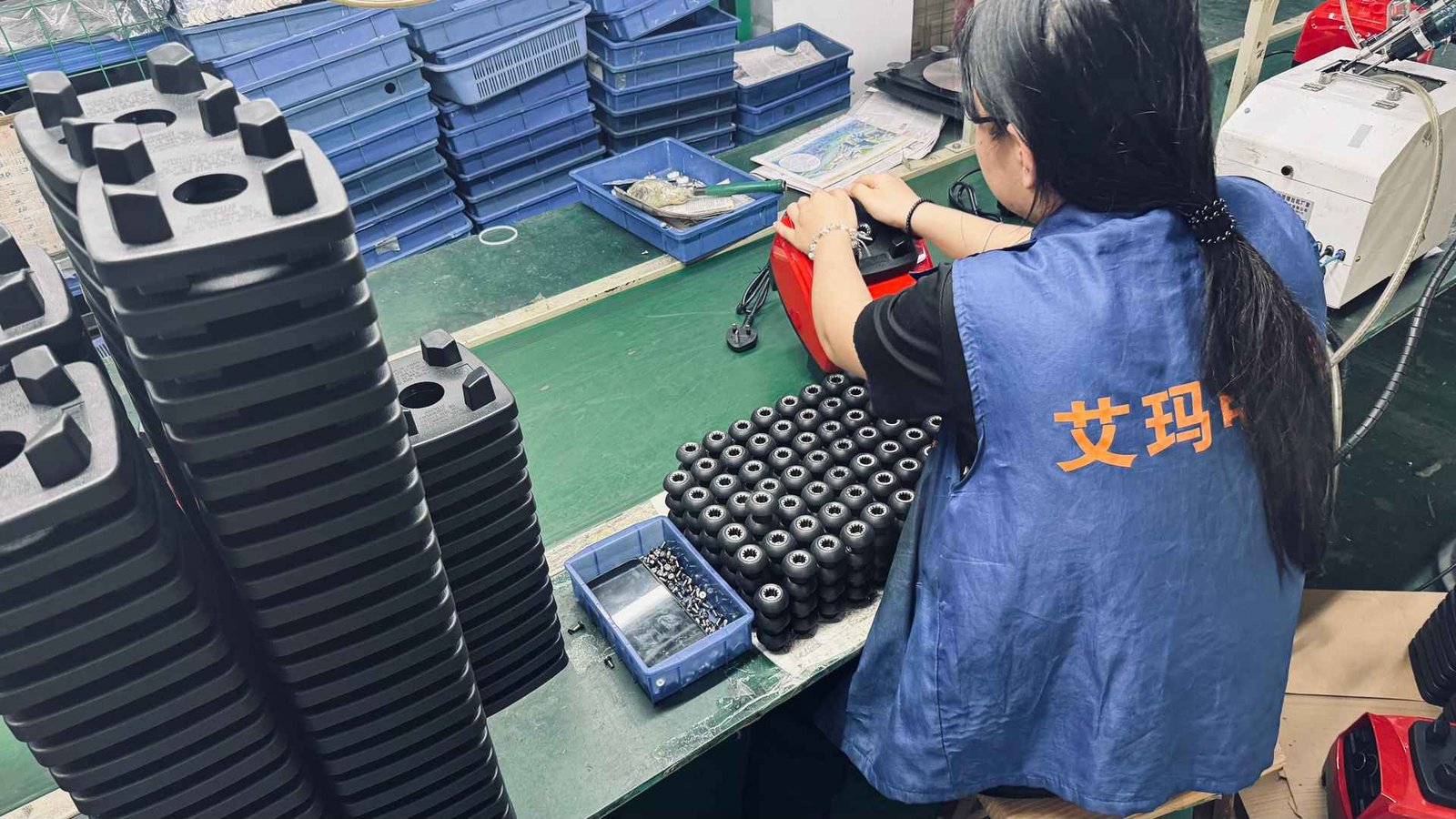
Absolutely — and we encourage it. Our factory in Zhongshan, Guangdong is 90 minutes from Shenzhen and Guangzhou airports. We’ve hosted procurement directors from hotel groups and restaurant chains across Asia, Europe, and the Middle East. A factory visit lets you audit the production line, QC lab, and raw material storage firsthand.
Q: What’s the lead time for a 500-unit order with custom branding?
Standard production lead time is 30–40 days for OEM orders with logo branding. Sea freight to most Southeast Asian ports adds 5–10 days. Total timeline from PO to delivery at your warehouse: approximately 45–55 days. Express production (25 days) is available for urgent rollout schedules.
Q: How do your blenders handle tropical fruits common in Southeast Asian hotel menus — durian, jackfruit, young coconut?
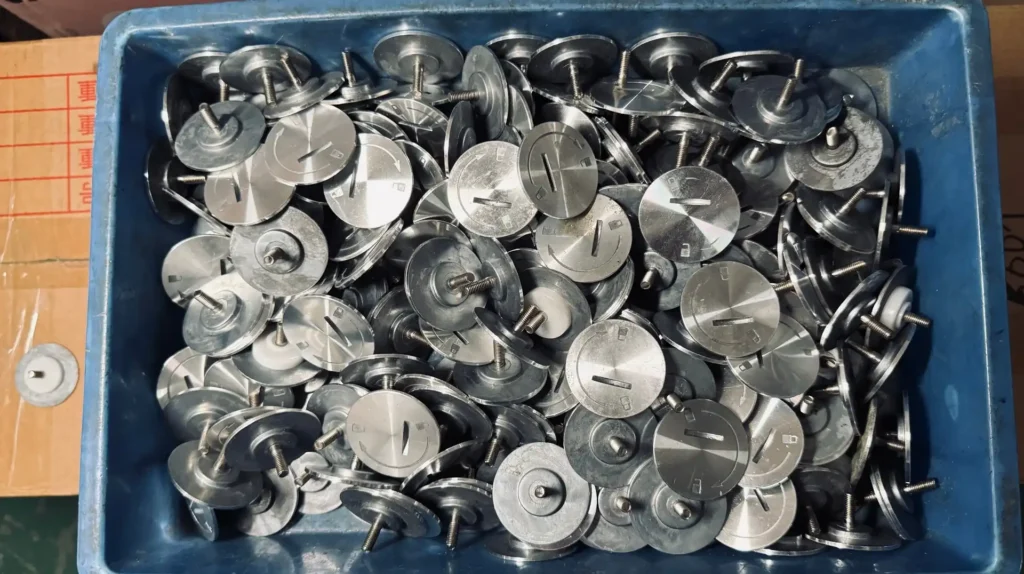
This is exactly the use case our 2200W platform is designed for. Fibrous tropical fruits like jackfruit and young coconut meat require high torque at low RPM to break down without clogging. Our 6-layer stainless steel blade assembly, combined with the programmable speed curve, handles these ingredients efficiently. We specifically test with tropical fruit loads during QC because SEA and Latin America are our primary markets.
Equipping Your Hotel or Restaurant Group?
Get a customized procurement proposal for your property portfolio — including OEM branding, multi-country voltage configuration, and consolidated logistics. Factory-direct pricing. ISO9001 certified. Inquiry answered within 24 hours.
Request Group Procurement Quote →📧 sales1@zs-aima.com | sales2@zs-aima.com | 📞 +86 760-22558182
Ask for Ricardo — Market & Supply Chain Manager