How to Source Commercial Kitchen Appliances Directly from the Factory: A Complete Buyer’s Guide
If you are an Amazon FBA seller, supermarket purchasing manager, or commercial kitchen equipment distributor, you already know the single biggest challenge in this business: middlemen eat your margins. Every layer between you and the production line — trading companies, regional agents, consolidators — adds cost without adding value. The solution is simple in theory but difficult in execution: find a real factory that will work with you directly.
This guide walks through exactly what to look for when sourcing commercial food slicers, high-power blenders, induction cooktops, and other small kitchen appliances straight from the manufacturer — using AIMA Electrical (Zhongshan AIMA Electrical Appliance Co., Ltd.) as a real-world case study of what a qualified, factory-direct partner should look like.
1. Why Factory-Direct Sourcing Beats Trading Companies Every Time
When you buy from a trading company, you are not just paying for the product — you are paying for their office rent, sales commissions, and the margin they add on top of the actual factory price. Worse, trading companies rarely have direct control over quality, lead times, or customizations. When something goes wrong, you are stuck between the trading agent and the factory, and neither takes full responsibility.
By sourcing directly from a manufacturer like AIMA Electrical, you unlock several immediate advantages:
- True wholesale pricing — no intermediary markup, maximizing your import margin
- Direct quality control communication — talk to the engineers who build the product, not a sales agent reading from a spec sheet
- Full OEM/ODM flexibility — customize voltage, color, packaging, and branding without going through a middleman who may miscommunicate your requirements
- Consistent lead times — the factory controls its own production schedule
AIMA operates a dual-brand strategy under one roof: AIMA is the industrial manufacturing brand, while OTOJIA is the premium international trademark used for export and global distribution. Regardless of which brand appears on your purchase order, you are always buying directly from the factory floor at No.1 Wenxian Road, Xiaolan Town, Zhongshan City, Guangdong.
2. How to Verify a Factory’s Credentials (Before You Place an Order)
Not every supplier who claims to be a “factory” actually is one. Here are the minimum credentials you should verify before committing to any commercial kitchen appliance manufacturer:
| Checklist Item | What AIMA Has |
|---|---|
| ISO Quality Certification | ISO9001 certified, 5S management standard |
| Product Safety Certifications | CE, CB, RoHS, UL-ready |
| Years in Business | 15+ years specializing in small kitchen appliances |
| Factory Floor Area | 3,000㎡ production facility |
| QC Laboratory | In-house: RoHS testing, drop testing, vibration testing, glow-wire testing, ball-pressure testing, leakage current testing |
| Incoming Quality Control | IQC — 100% inspection on all critical components |
| Trade Show Presence | Exhibited at HOTELEX Shanghai 2026 (Hall 2.2, Booth B15) |
A factory that invests in its own QC lab and shows up at major international trade fairs like HOTELEX Shanghai is demonstrating a level of transparency and commitment that trading companies simply cannot match. AIMA’s HOTELEX 2026 booth at Hall 2.2 B15 showcased their full product line directly to international buyers — you can verify their exhibitor listing in the official HOTELEX directory.
3. Commercial Food Slicers: The Backbone of Any Kitchen Equipment Lineup
For distributors and Amazon FBA sellers, commercial food slicers represent one of the highest-demand categories in the B2B kitchen equipment space. Restaurants, delis, butcher shops, and catering operations all need reliable slicing equipment — and they need it at competitive wholesale prices.
AIMA’s food slicer lineup spans multiple sizes and configurations, all built around three engineering principles that matter for commercial use:
- Gear-driven transmission — unlike cheap belt-driven slicers that slip under load, AIMA’s gear drive delivers consistent torque for cutting through dense meats and cheeses without stalling
- Heavy-duty housing — iron casting or aluminum casting depending on the model, with anti-drift reinforcement ribs that prevent the machine from walking across the counter during operation
- Precision thickness control — 0–20mm adjustable knob with clear scale markings for repeatable, consistent slices
Featured Models: AIMA Food Slicer Series
Browse the full collection at the Food Slicers category page. Below are the flagship models:
| Model | Blade | Power | Housing | 40HQ Load | Product Page |
|---|---|---|---|---|---|
| MS-2203 | 220mm (8.7″) SS | 220W | Iron Casting | 1380 units | View Product |
| MS-2202 | 220mm (8.7″) SS | 220W | Iron Casting | 1380 units | View Product |
| MS-2201 | 220mm (8.7″) SS | 220W | Aluminum Casting | 1428 units | View Product |
| MS-1909 | 190mm (7.5″) SS | 220W | Iron Casting | 1500 units | View Product |
| MS-1701 | 170mm (6.7″) SS | 220W | Aluminum | — | View Product |
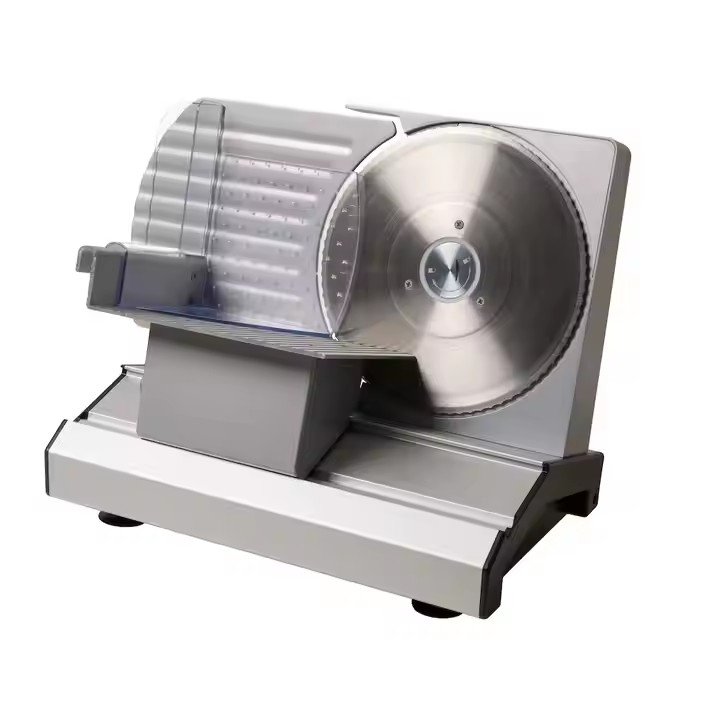
Above: The MS-2202 with iron casting housing and 220mm stainless steel blade — built for high-volume commercial kitchen environments.
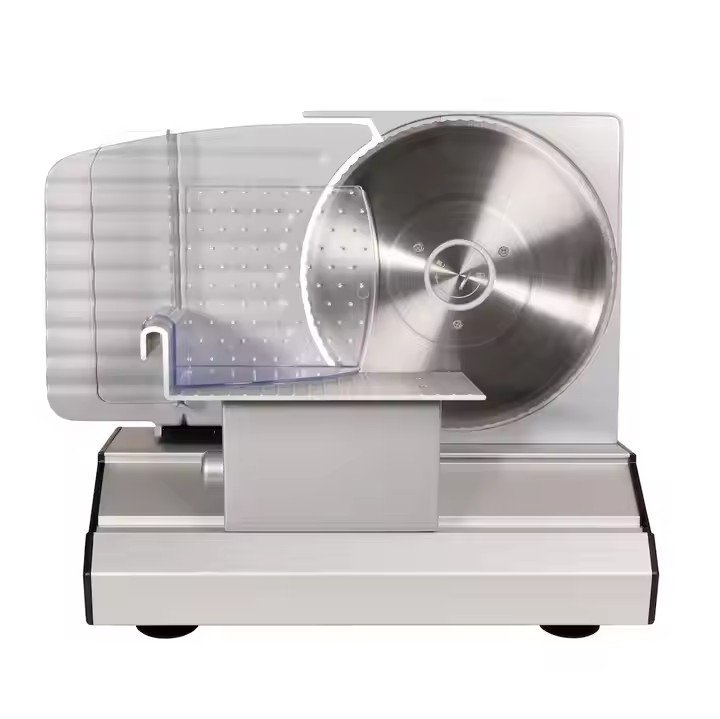
Above: The MS-2201 features an aluminum casting housing for a lighter, more maneuverable unit without sacrificing durability.
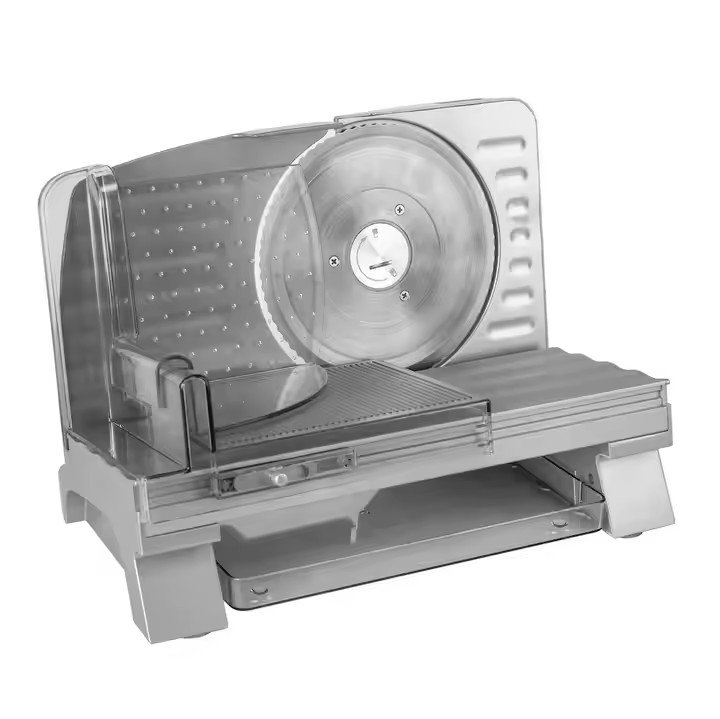
Above: The MS-1701 — a compact 170mm slicer ideal for smaller deli counters and entry-level commercial kitchens.
4. Commercial Blenders: 2200W Pure Copper Motor Performance
If slicers are the backbone, high-power commercial blenders are the engine room of any professional kitchen. Smoothie bars, bubble tea chains, juice shops, and restaurant prep stations all depend on blenders that can run continuously under heavy load without burning out.
What separates a genuine commercial blender from a consumer-grade unit? The motor. AIMA’s blender lineup is built around a 2200W pure copper wire motor manufactured in-house — a critical differentiator. Many lower-cost suppliers use aluminum-clad copper (CCA) windings that degrade under heat and continuous use. AIMA’s self-produced 100% copper motors deliver 24,000 RPM at peak performance and maintain torque even when processing frozen fruit, ice, and dense mixtures.
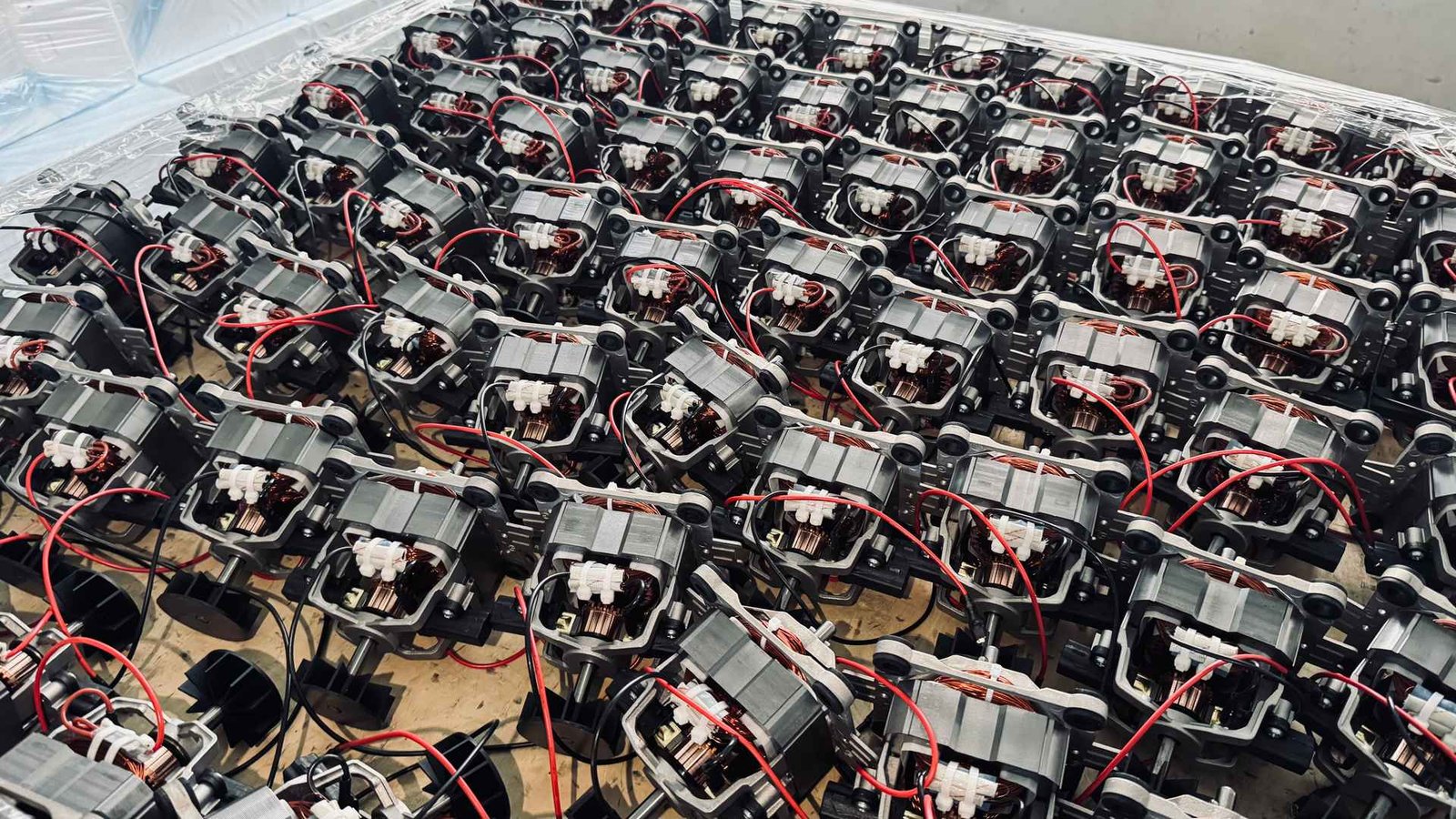
Above: A batch of 2200W pure copper wire motors on the AIMA production line — self-manufactured, not outsourced.
Featured Models: OTOJIA Commercial Blender Series
| Model | Power / Speed | Key Feature | Product Page |
|---|---|---|---|
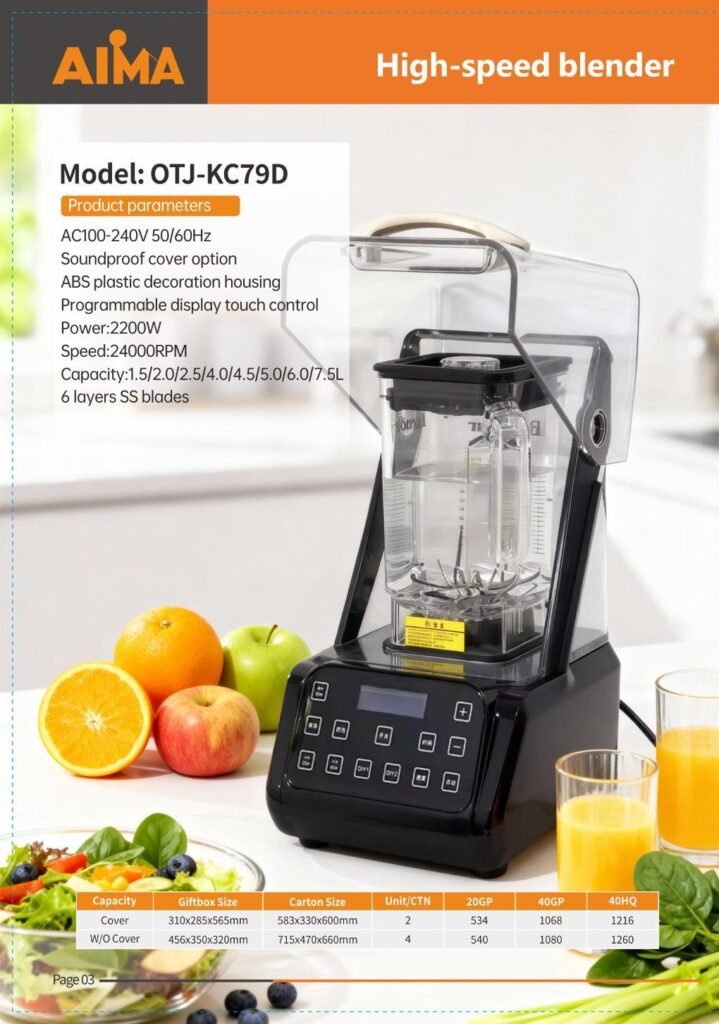
| OTJ-KC78D | 2200W / 24,000 RPM | Soundproof enclosure, touch screen, 6-layer SS blade | View Product |
| OTJ-KC79D | 2200W / 24,000 RPM | Optional soundproof cover, touch screen | Contact factory |
| OTJ-669 | 2200W / 24,000 RPM | Variable speed knob, pulse control | View Product |
| OTJ-632 | 2200W / 24,000 RPM | Variable speed knob, optional timer | View Product |
All blender models support AC 100–240V 50/60Hz universal voltage and are available with jar capacities ranging from 1.5L to 7.5L. The 6-layer stainless steel blade assembly is designed for both wet and dry blending, making these machines suitable for everything from smoothies to nut butters and spice grinding.
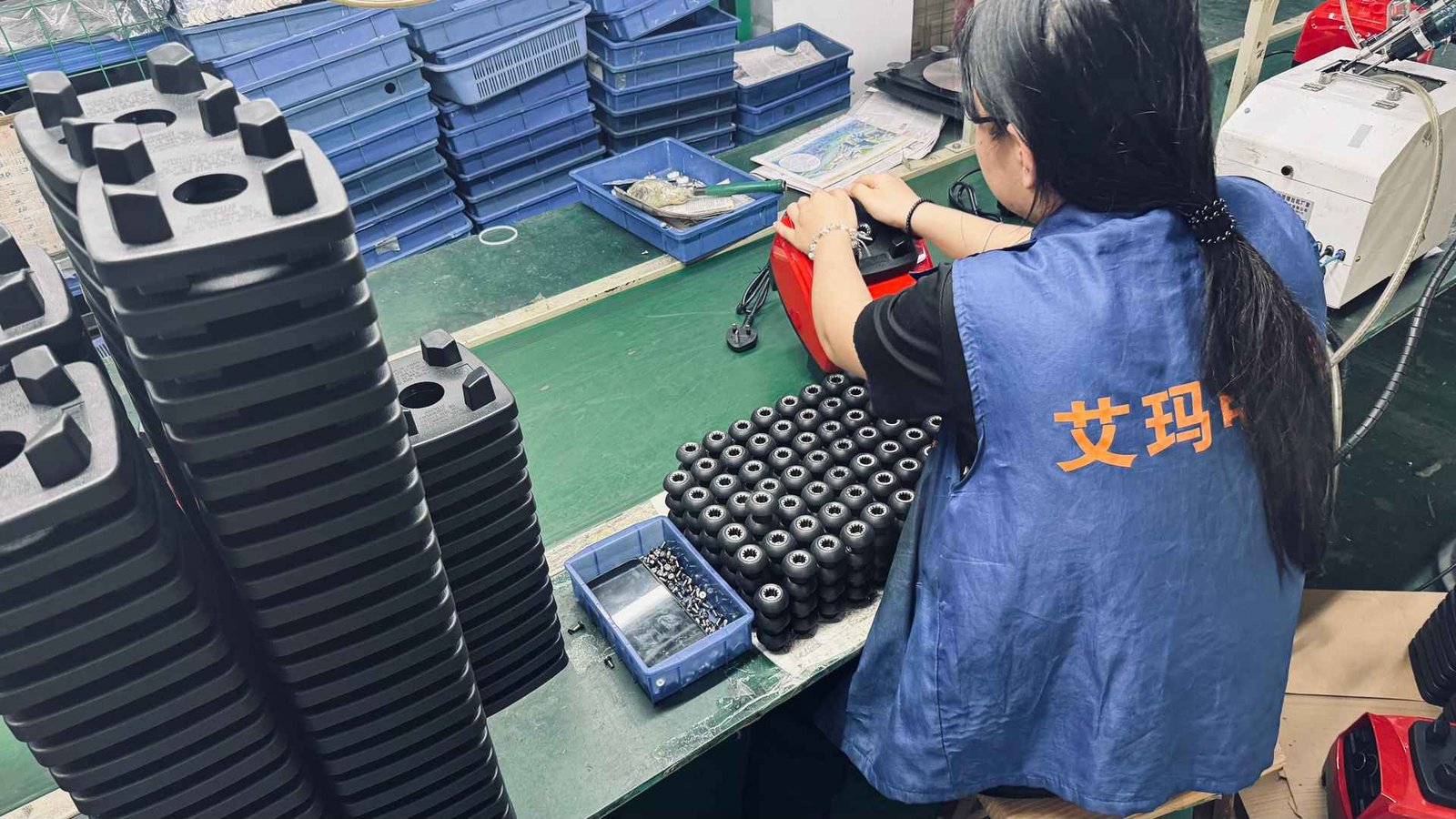
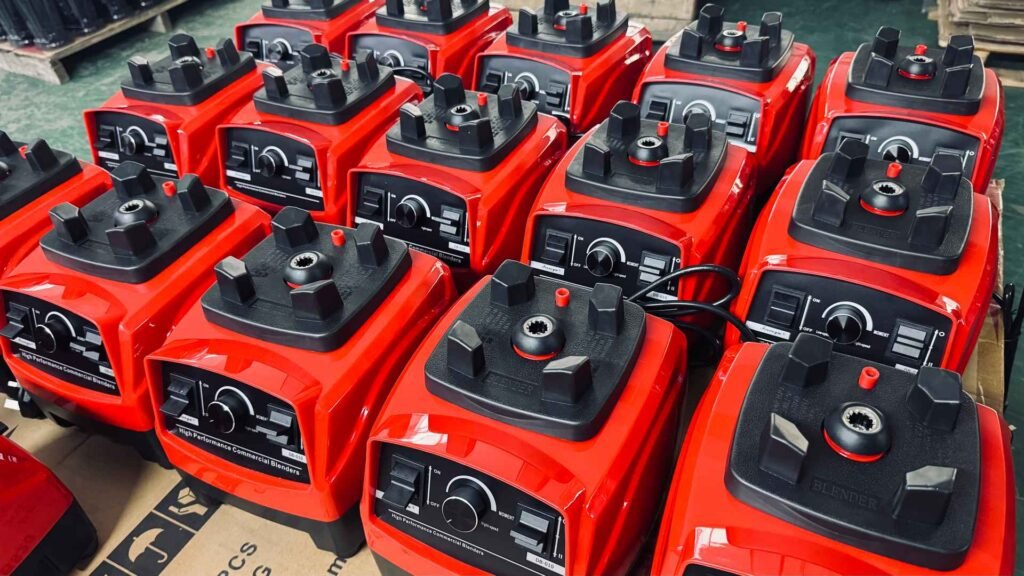
Above: Skilled technicians assembling commercial blender bases on the AIMA production line.
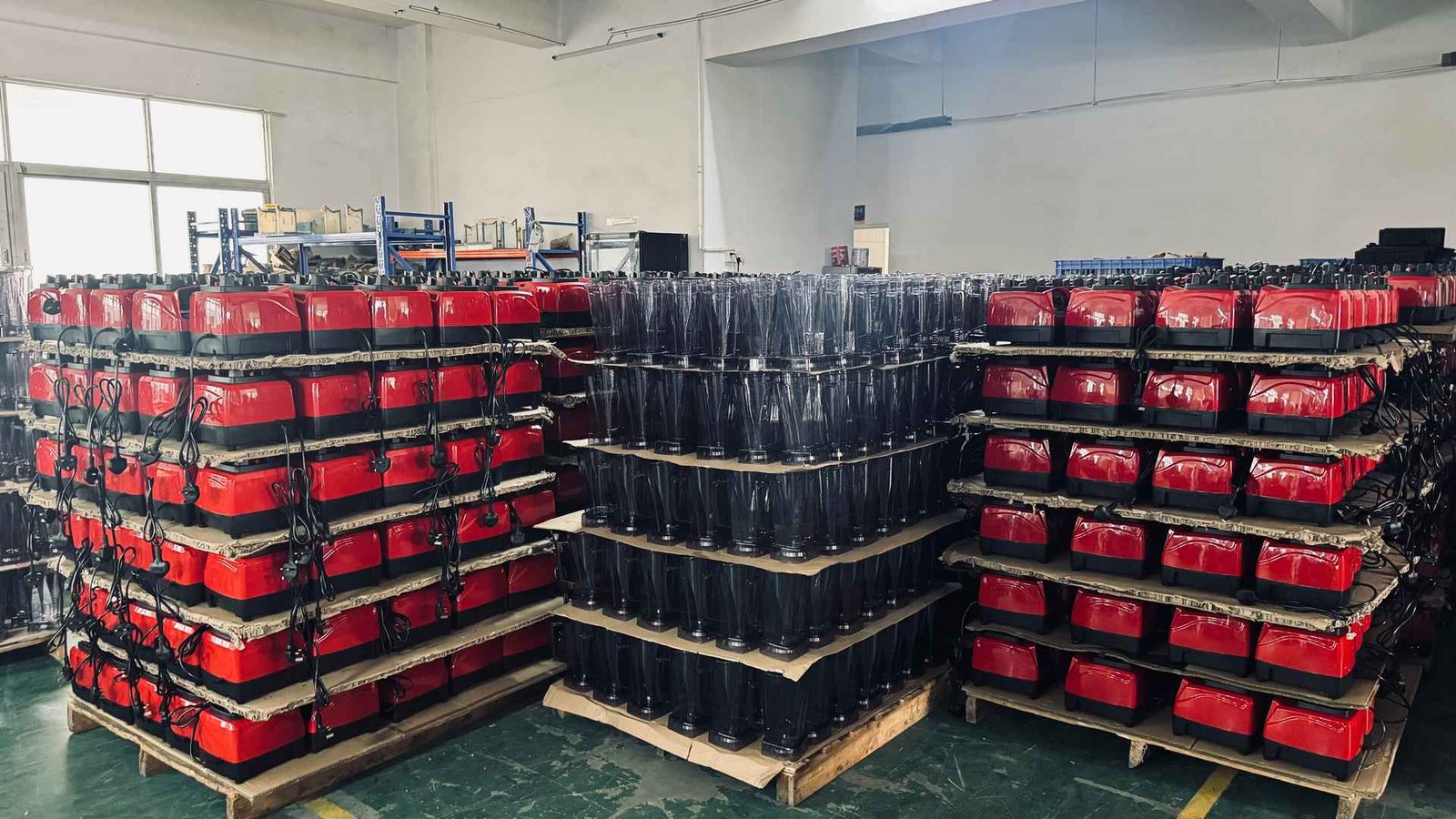
Above: Inline electrical performance and appearance quality inspection of every blender base before final assembly.
5. OEM/ODM: Your Brand, Our Factory
One of the strongest arguments for working directly with a factory like AIMA is the OEM/ODM flexibility. When you go through a trading company, every customization request becomes a game of telephone — and small errors in translation can result in an entire container of product that does not match your specifications.
With AIMA, you communicate directly with the production team. Here is what can be customized:
- Voltage & plug type — match any regional standard (North America 120V, Europe 220-240V, UK/Australia, etc.)
- Color & finish — custom housing colors and surface treatments for brand consistency
- Packaging design — full retail packaging, private label boxes, or plain neutral export cartons
- Branding & logo — laser engraving, silk screening, or embossed logo placement
- Accessory bundles — customize what’s included in the box for different sales channels
Whether you are listing under your own Amazon brand, supplying a supermarket chain, or building out a commercial kitchen equipment catalog, the ability to customize directly with the factory eliminates costly revision cycles.
6. Container Loading Efficiency: Why It Directly Affects Your Bottom Line
In international B2B trade, per-unit shipping cost is just as important as per-unit product cost. A product that packs efficiently into a 40HQ container saves you hundreds or even thousands of dollars in freight per shipment.
AIMA’s product line is engineered with container optimization in mind:
| Product Category | Units per 40HQ | Why It Matters |
|---|---|---|
| Food Slicers (MS-2202/2203) | 1,380 units | High density — lower per-unit freight cost |
| Food Slicers (MS-1909) | 1,500 units | Highest slicer density in the lineup |
| Commercial Blenders | 1,380 units | Consistent with slicer shipments for mixed containers |
| Induction Cooktop (OTJ-2801) | 1,254 units | Compact design optimized for high-volume shipping |
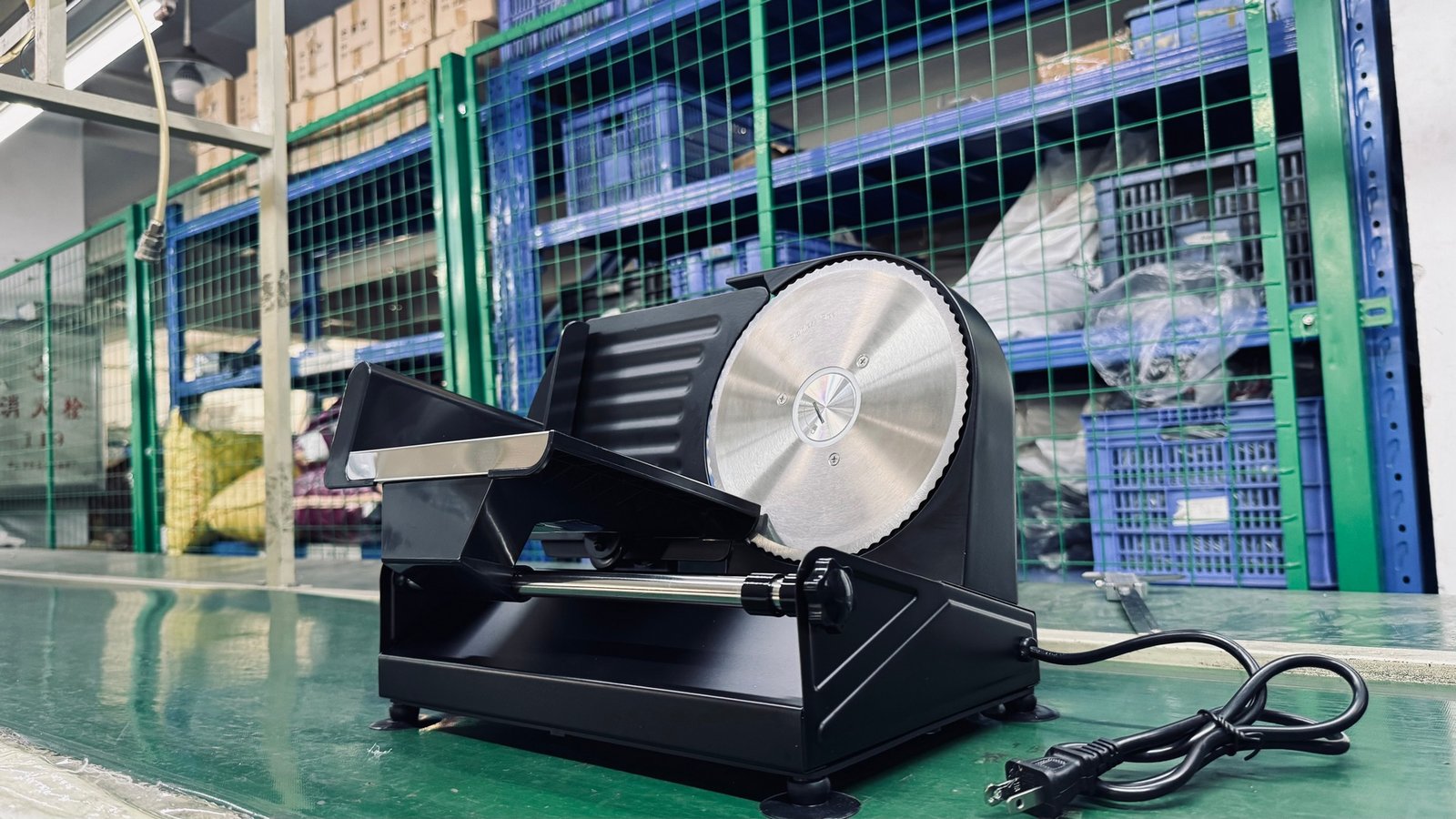
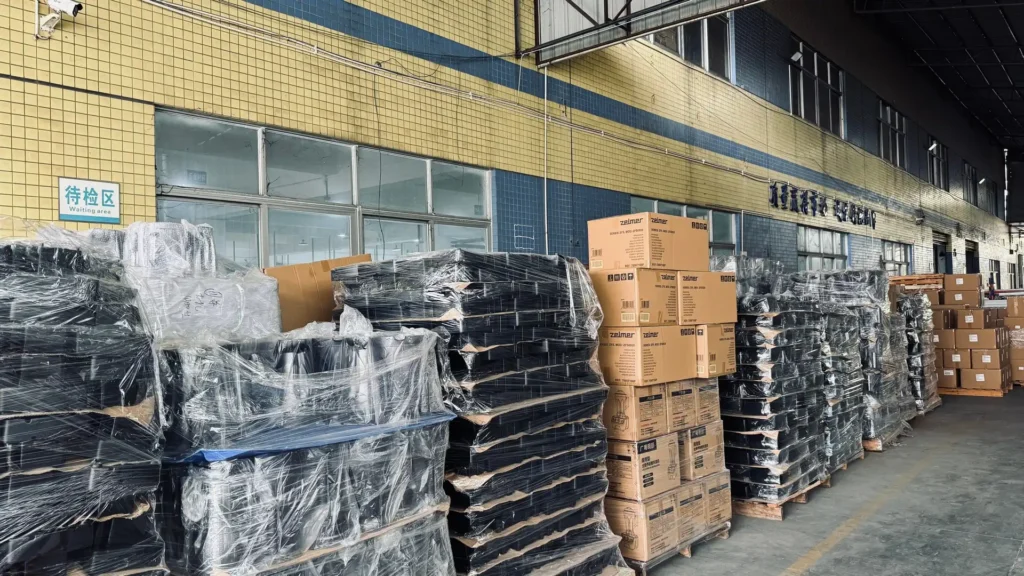
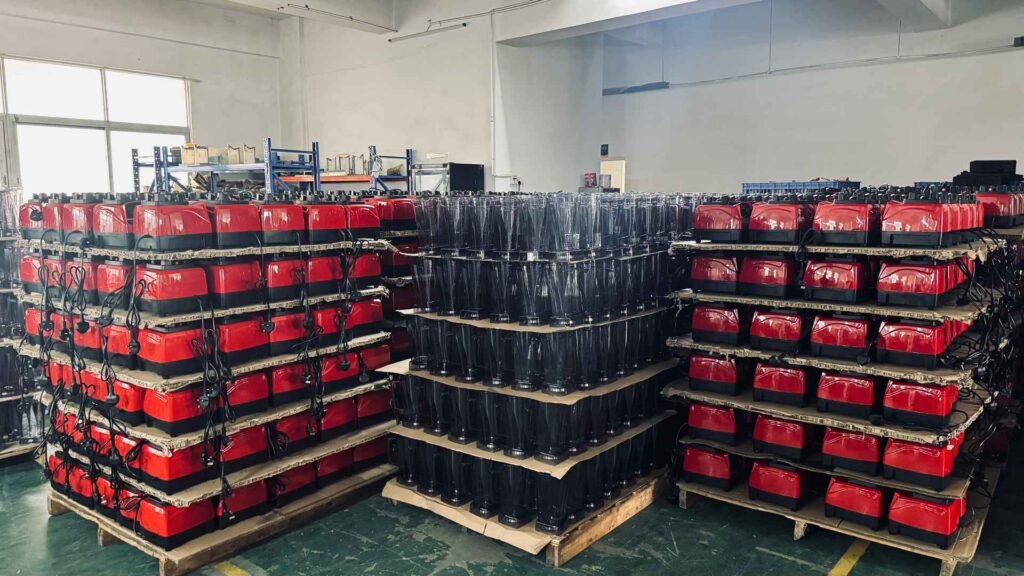
Above: AIMA’s finished goods warehouse — rows of commercial slicers staged and ready for export container loading.
7. Quality Assurance: What Happens Before Your Order Ships
A factory-direct relationship is only as good as the quality control behind it. AIMA’s QA system operates at three critical stages:
Stage 1: Incoming Quality Control (IQC)
All raw materials and components are inspected upon arrival. Critical components — motors, blade assemblies, electronic controls — undergo 100% inspection before entering the production line.
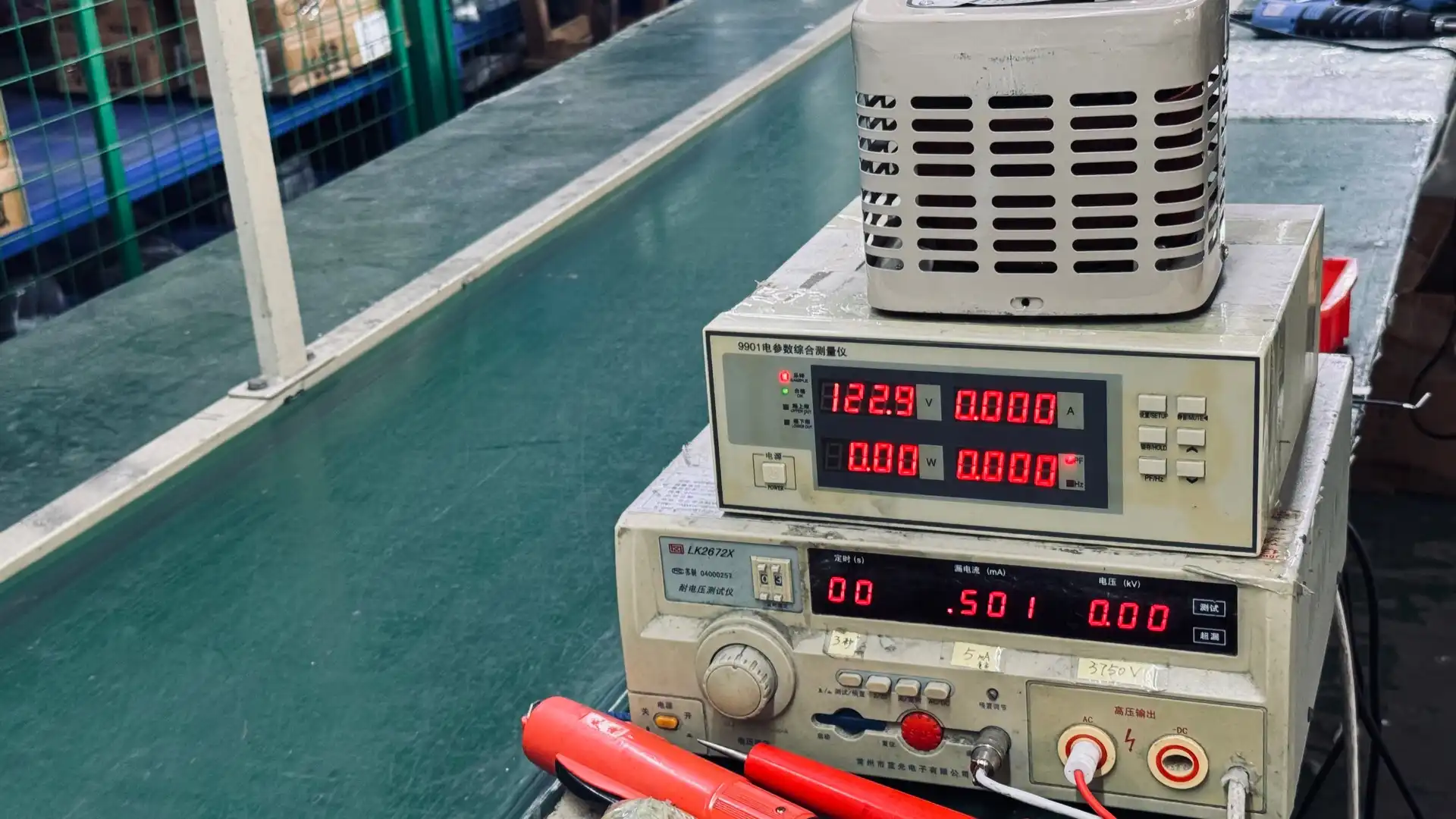
Above: The 9901 electrical parameter and hipot (high potential) safety tester — every critical component is verified before assembly.
Stage 2: In-Process Quality Control
During assembly, key checkpoints verify that each unit meets electrical safety and mechanical performance standards. The QC lab is equipped for RoHS compliance testing, drop testing, vibration testing, glow-wire testing, ball-pressure testing, and leakage current testing — the same battery of tests required by major international certification bodies.
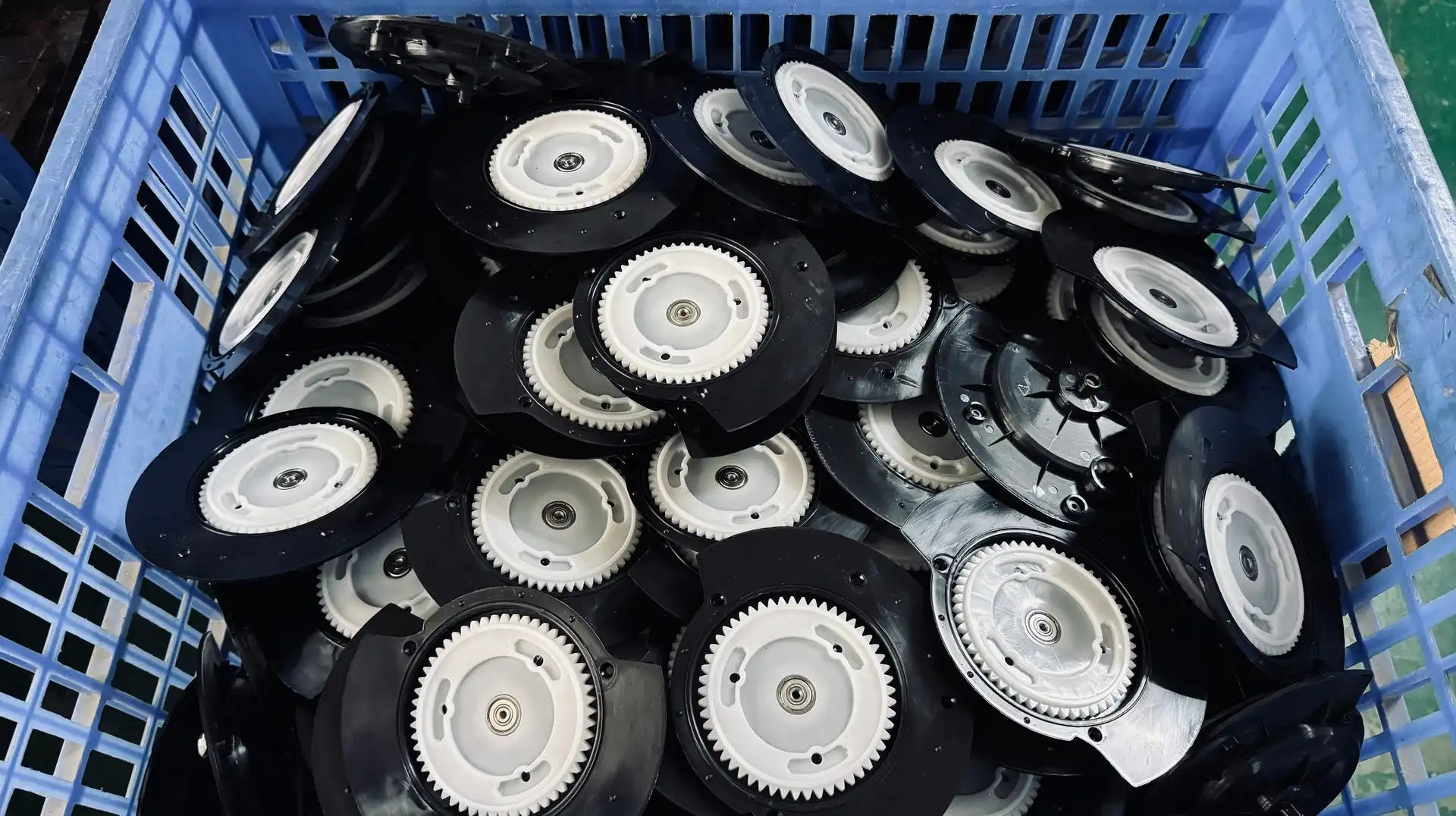
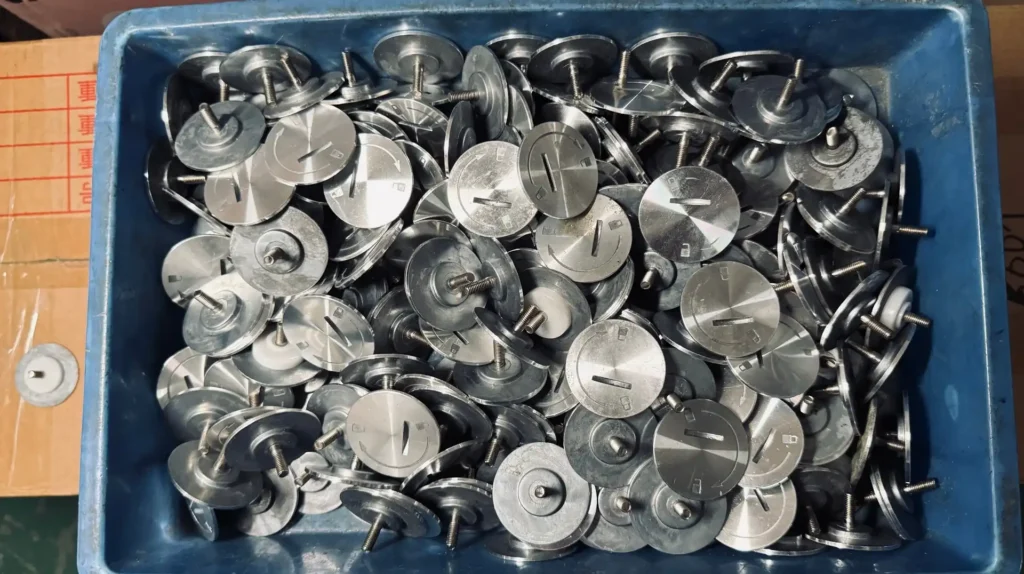
Above: Precision-machined all-metal gear drive components — a key differentiator from budget slicers that use plastic gears prone to stripping.
Stage 3: Final Inspection & Packaging
Every completed unit undergoes a final electrical safety and performance check before packaging. Automated packaging equipment ensures consistent, secure packing that holds up through international shipping.
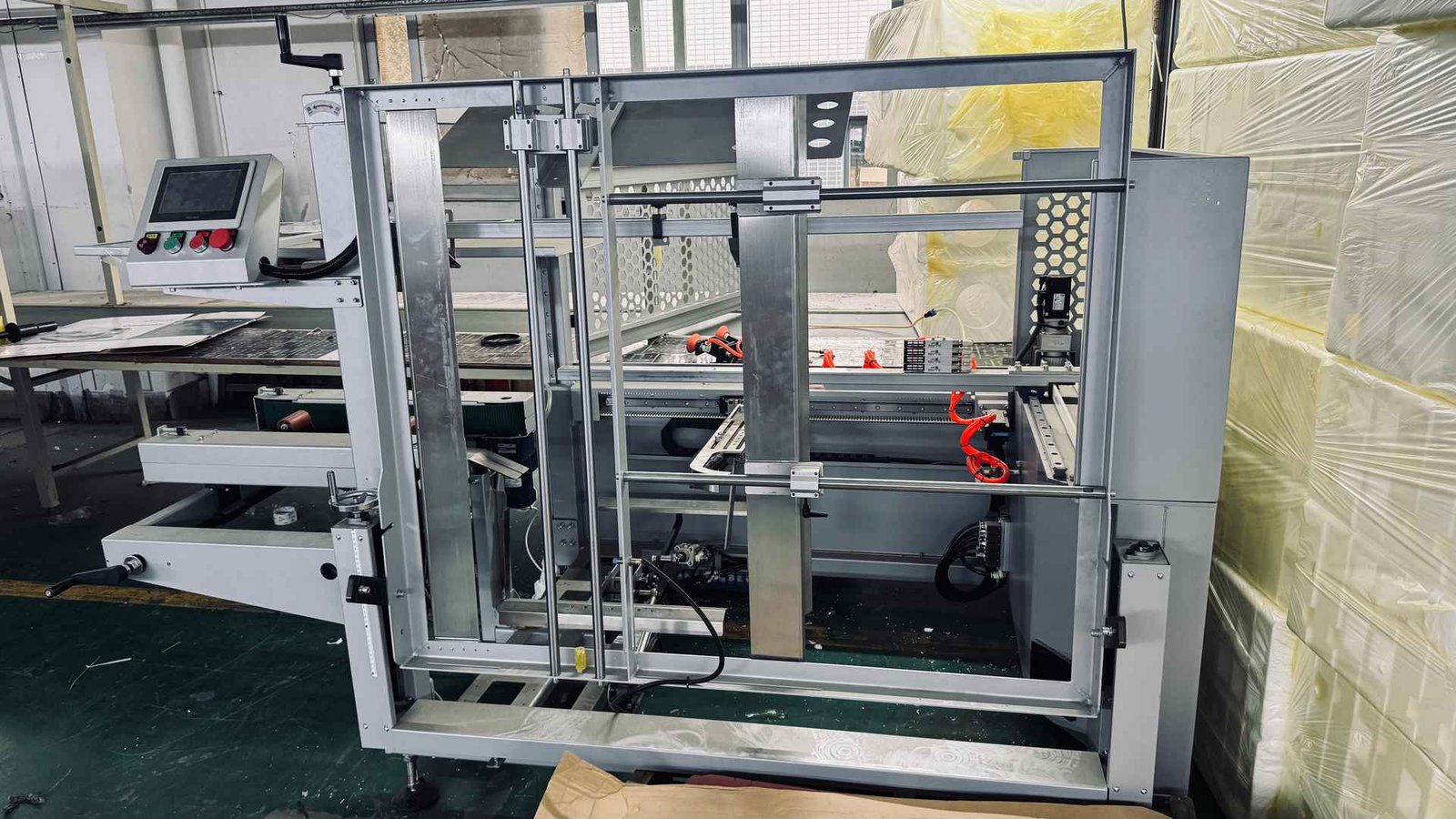
Above: End-of-line automatic packaging and carton sealing equipment ensures your order arrives intact, no matter the destination port.
8. How to Start Your First Order with AIMA
If you have read this far, you are serious about sourcing commercial kitchen appliances directly from the factory. The process is straightforward:
- Visit the website — browse the full product catalog at aimazs.com
- Identify your target models — check the food slicer category and individual product pages for detailed specifications
- Send an inquiry — email sales1@zs-aima.com with your target models, desired quantity, target voltage, and any OEM/ODM requirements
- Request a sample — evaluate build quality and performance firsthand before committing to a container order
- Confirm specifications and lead time — the factory team will provide a proforma invoice with detailed specs, pricing, and shipping timeline
Direct line to the factory: Ricardo, Marketing & Supply Chain Manager, is your primary point of contact for B2B inquiries. Reach out at sales1@zs-aima.com or call +86 760-22558182.
9. Stay Connected: Follow AIMA’s Factory Updates
For new product launches, factory floor updates, and trade show appearances, follow AIMA across their B2B social channels:
- LinkedIn — factory updates and B2B networking
- Facebook — product showcases and customer success stories
- X (Twitter) — trade show news and industry updates
- YouTube — product demos and factory tour videos
Conclusion: Factory-Direct Is Not Just a Buzzword
The difference between a good wholesale deal and a great one often comes down to a single decision: are you buying from a factory or a middleman?
AIMA Electrical — with 15 years of manufacturing experience, ISO9001 certification, in-house motor production, a full QC laboratory, and a growing international presence at shows like HOTELEX Shanghai — represents exactly the kind of factory-direct partner that serious B2B buyers should be looking for. Whether you need heavy-duty commercial food slicers, high-power soundproof blenders, or custom OEM kitchen appliances, you are talking directly to the people who build them.
Ready to start sourcing? Contact AIMA today and request your wholesale quotation.
Keywords: commercial kitchen appliances factory direct, commercial food slicer OEM, heavy duty meat slicer factory, commercial blender supplier China, OEM kitchen appliance manufacturer, food slicer wholesale, high power blender factory, China kitchen appliance factory.