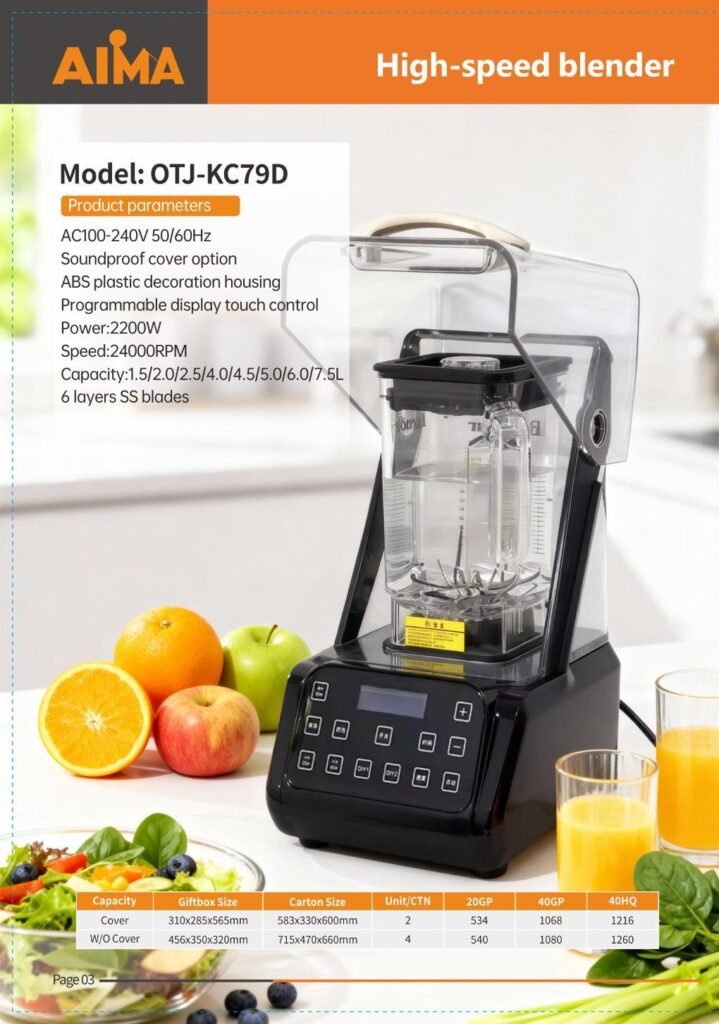
Choosing a commercial blender for a beverage business is about more than comparing wattage. Buyers also need a control layout staff can use, a batch size that suits the menu, and clear answers about electrical configuration, replacement parts, documentation, and export packaging.
The AIMA OTJ-A8 is listed with a 2200W motor, a 2.0L capacity, a variable-speed knob, and a pulse function. This guide introduces those verified product details and gives importers, food-service distributors, and private-label brands a practical checklist for evaluating the model.
1. OTJ-A8 Product Overview
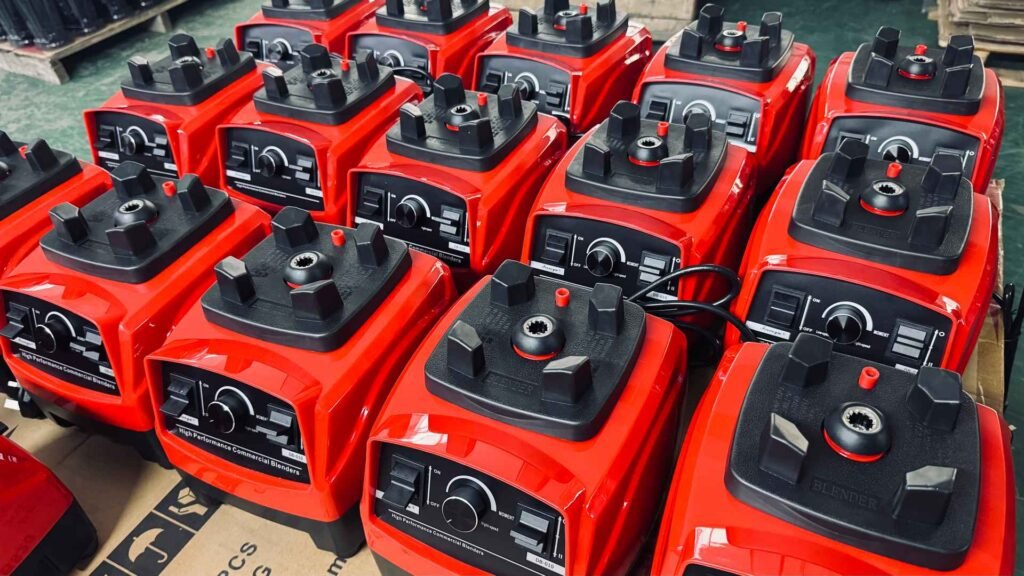
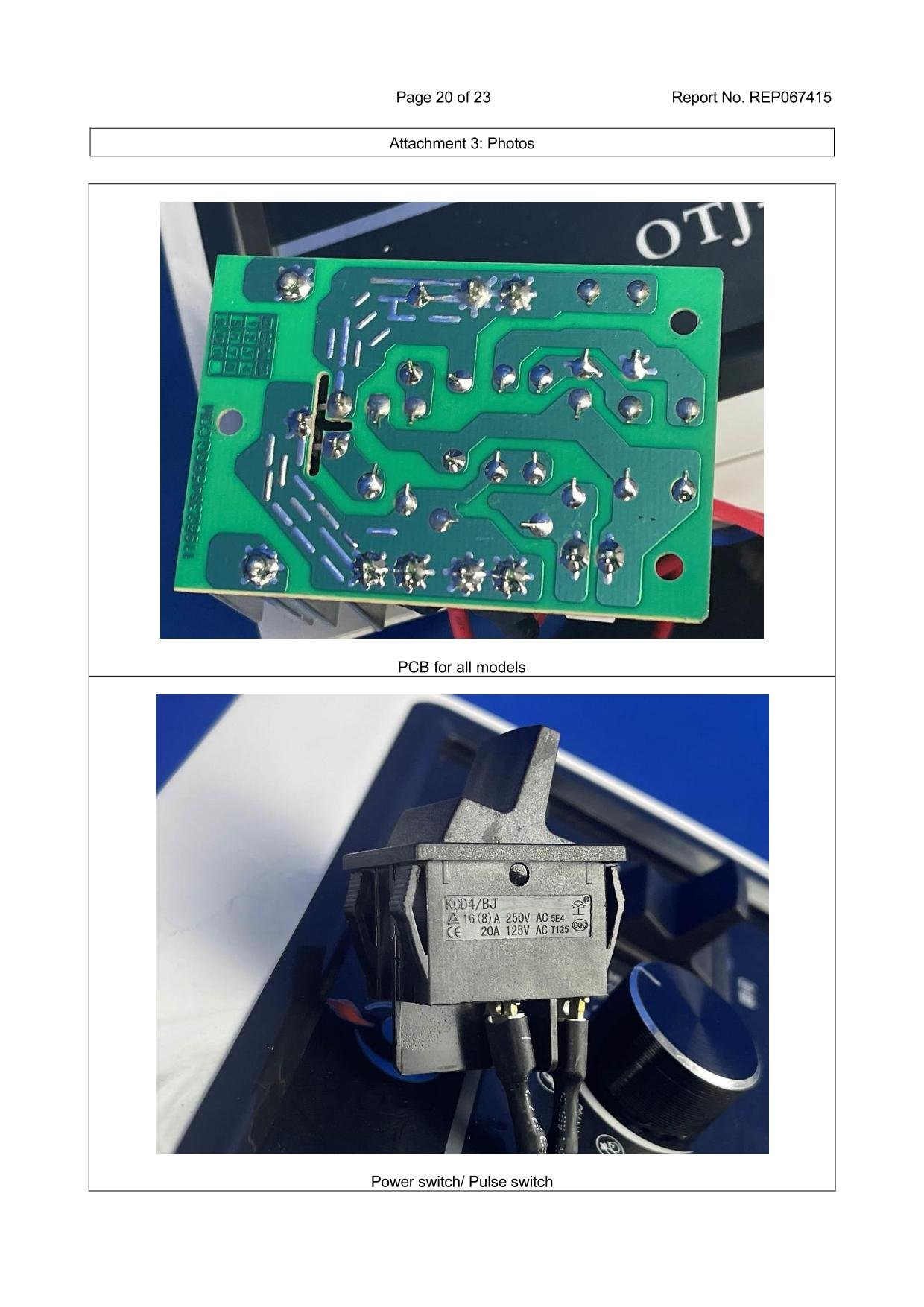
The OTJ-A8 combines a high-power motor with two direct controls: a variable-speed knob and pulse operation. Staff can adjust the blending speed for different recipes and use short pulse cycles when a recipe calls for brief, controlled bursts. The 2.0L capacity gives buyers a defined batch size to compare with their menu portions, counter space, and expected service volume.
For buyers comparing several machines, these details help frame the first product-fit discussion. They do not replace a full specification sheet. Confirm the final configuration, test documentation, and packing details against the written quotation before approving a sample or production order.
| Parameter | OTJ-A8 listing information |
|---|---|
| Model | OTJ-A8 |
| Product type | Heavy-duty commercial blender |
| Motor power | 2200W |
| Capacity | 2.0L |
| Controls | Variable-speed knob and pulse function |
Electrical ratings, blade construction, jar material, duty-cycle guidance, dimensions, carton data, and market approvals should be confirmed for the exact OTJ-A8 configuration requested.
2. Variable-Speed Control for Different Beverage Recipes
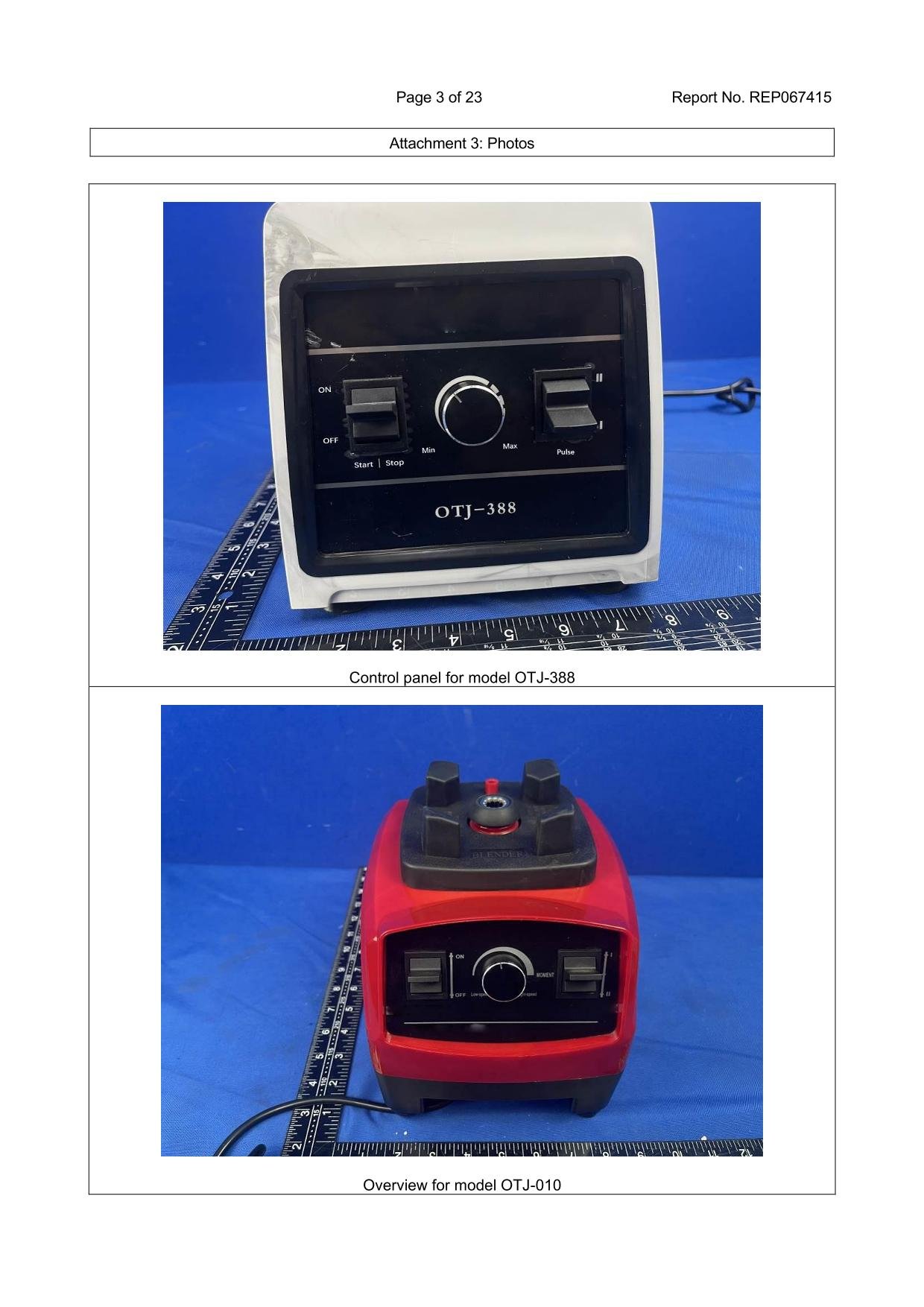
A fixed-speed appliance gives operators fewer choices during preparation. Variable-speed control lets staff adjust the blending process to the recipe, whether they are starting gently or working toward a smoother finish. Pulse operation adds a separate momentary control for short bursts.
For cafés, juice bars, and restaurant beverage stations, a simple control layout can make training easier across shifts. During product evaluation, ask the factory to demonstrate the exact OTJ-A8 unit with representative ingredients and explain the recommended operating and cleaning procedures.
3. Matching a 2.0L Capacity to Your Operation
Capacity should be evaluated against actual serving sizes and the number of orders handled in a typical service period. A 2.0L jar can suit made-to-order drinks and defined batch recipes, while high-throughput operations may need to compare multiple units, larger containers, or another model.
Before requesting a quotation, estimate servings per hour, peak demand, recipes, and available counter space. Then ask whether the quoted OTJ-A8 configuration includes the jar size shown on the product listing and whether replacement jars and other wear parts can be ordered separately.
4. Commercial Blender Sourcing Checklist
Use a written checklist to compare suppliers on the complete offer rather than the headline power rating alone.
- Electrical configuration: confirm voltage, frequency, plug type, and availability for the destination market.
- Jar and blade details: request the material specifications, usable capacity, blade assembly information, and spare-part options.
- Operating guidance: ask for the model-specific duty-cycle, cooling, and cleaning instructions.
- Documentation: request the certificates and test reports applicable to the exact model and electrical version. Do not assume that documents for another blender automatically apply.
- Quality and warranty: define sample approval, inspection criteria, warranty coverage, and the process for service or replacement parts.
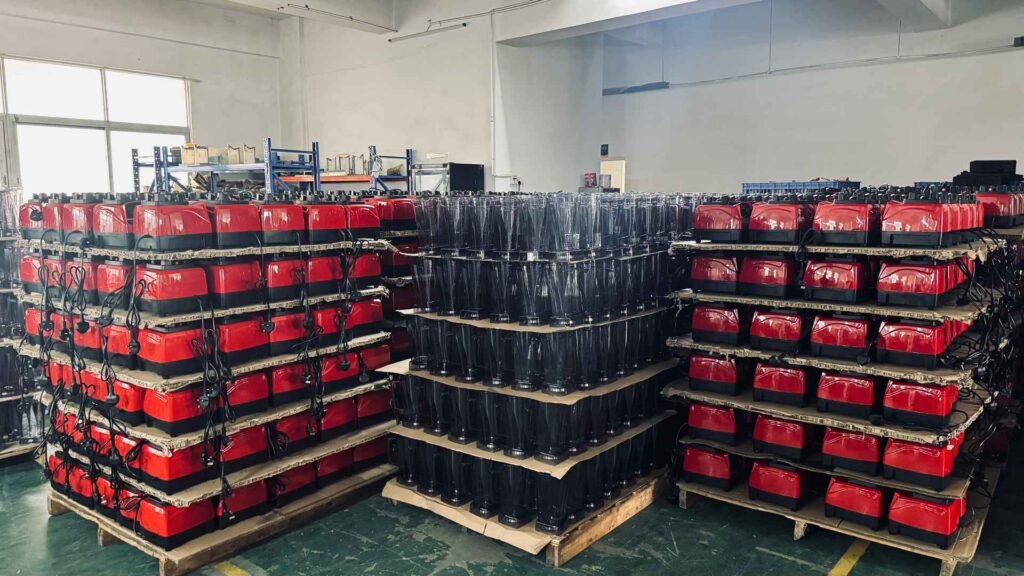
- Packaging and logistics: confirm giftbox and export-carton dimensions, units per carton, gross weight, and container loading data.
- Private label: specify logo placement, manuals, labels, color box artwork, language requirements, and any setup or tooling charges.
5. OEM and Private-Label Project Planning
For an OEM or ODM inquiry, share your target market and product requirements at the start. A complete brief helps the factory confirm which options are available for the OTJ-A8 and prepare a quotation that can be reviewed against your business plan.
- Destination country and required electrical rating
- Estimated trial quantity and annual demand
- Branding, packaging, and language requirements
- Sample requirements and target evaluation date
- Required compliance documents and retailer onboarding materials
- Expected shipment window and delivery terms for the quotation
Zhongshan AIMA Electrical Appliance Co., Ltd. describes its business as manufacturing small kitchen appliances and supporting OEM/ODM projects. Buyers can discuss the OTJ-A8 configuration, sample evaluation, branding scope, and export requirements directly with the factory.
6. Sample Evaluation Before a Purchase Order
Use the sample stage to check the unit against the approved quotation and specification sheet. Review the control operation, blending results using your own recipes, ease of cleaning, sound level in the intended workspace, packaging condition, and the included parts. Record questions and agreed changes in writing so that the production sample and mass-production specification remain aligned.
If the unit is intended for a regulated market or retailer program, have the responsible compliance team review the applicable documentation before commercial launch. A product listing alone is not a substitute for market-specific approval or technical documentation.
7. Frequently Asked Questions
What are the listed power and capacity of the AIMA OTJ-A8?
The product listing identifies a 2200W motor and a 2.0L capacity. Confirm the exact configuration in the factory quotation before ordering.
Does the OTJ-A8 have variable-speed control?
Yes. The listing describes a variable-speed knob and a pulse function.
Can I request the OTJ-A8 for OEM or private-label sourcing?
AIMA accepts OEM/ODM inquiries. Send your destination market, quantity estimate, branding and packaging needs, and electrical requirements so the factory can confirm what is available for this model.
Which certifications are available for the OTJ-A8?
Ask AIMA for the certificates and test reports covering the exact model and configuration you plan to buy. Verify document scope and destination-market requirements before making a compliance decision.
What should I include in a quotation request?
Include your destination country, voltage and plug requirements, target quantity, packaging needs, sample request, and any retailer or compliance documentation requirements.
Request an OTJ-A8 Quotation
Share your market, order estimate, and product requirements with AIMA to confirm the OTJ-A8 configuration, sample options, documentation, and quotation details for your project.
View the AIMA OTJ-A8 2200W commercial blender or email sales2@zs-aima.com.
Related Resources
- Explore AIMA commercial blenders
- Commercial blender buying guide
- Review AIMA’s certification information
- Contact AIMA about OEM/ODM sourcing
Direct factory contact: Zhongshan AIMA Electrical Appliance Co., Ltd. | aimazs.com | sales2@zs-aima.com