Table of Contents
- 1. What Custom Blender OEM Tooling Covers
- 2. Three OTJ Models: Confirmed Starting Specifications
- 3. How to Scope a Custom Pitcher
- 4. Blade Changes and Compatibility Checks
- 5. OEM Packaging for European and UK Retail
- 6. Voltage, Plugs and Market Documentation
- 7. A Practical RFQ and Sample Workflow
- 8. Frequently Asked Questions (FAQ)
1. What Custom Blender OEM Tooling Covers
Custom blender OEM tooling can refer to a change in the pitcher, blade assembly, housing, or branded presentation. These are separate workstreams. Therefore, buyers should identify the requested change before asking for a quotation, because a packaging update and a new molded component do not have the same approval steps.
For a European or UK private-label project, the first brief can list the target capacity, intended use, preferred appearance, voltage version, plug standard, and retail packaging requirements. Additionally, buyers should say whether the request is for an existing model adaptation or a new tooling project. AIMA accepts OEM packaging design, while custom pitcher or blade tooling fees are available on request.
1.1 Separate confirmed features from open specifications
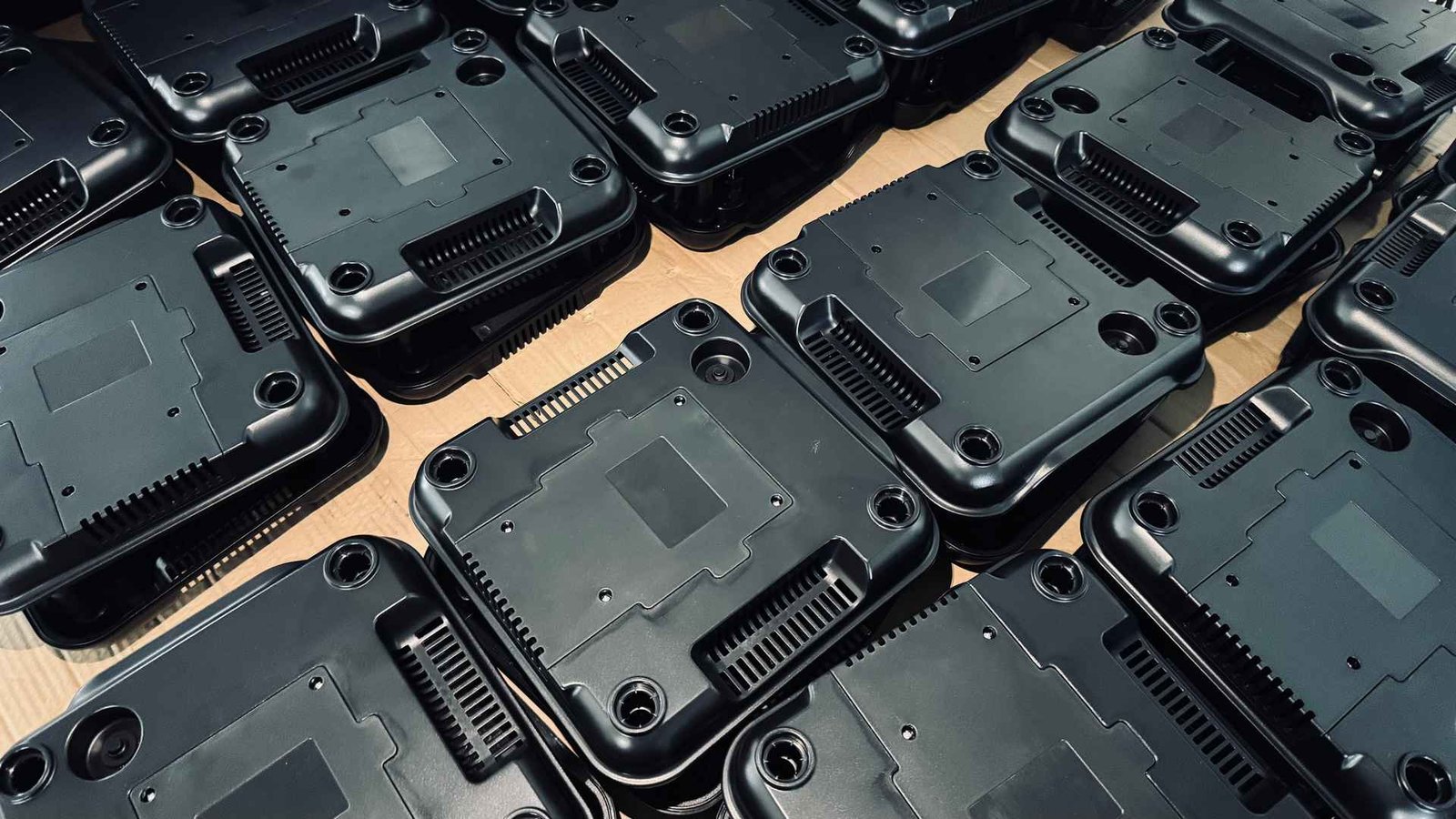
The OTJ models have documented motor, capacity, speed, and feature information. In contrast, pitcher material, BPA information, custom dimensions, and tooling costs are not specified in the supplied factory data. Those items should remain open in the RFQ until AIMA confirms them for the selected model. Review the commercial blender range to identify the base product family before preparing that brief.
2. Three OTJ Models: Confirmed Starting Specifications
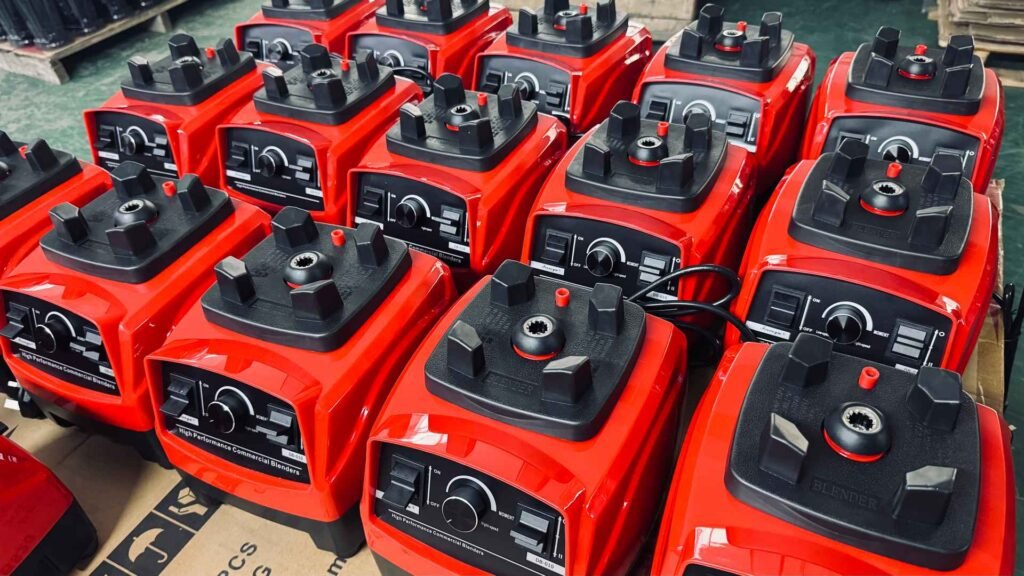
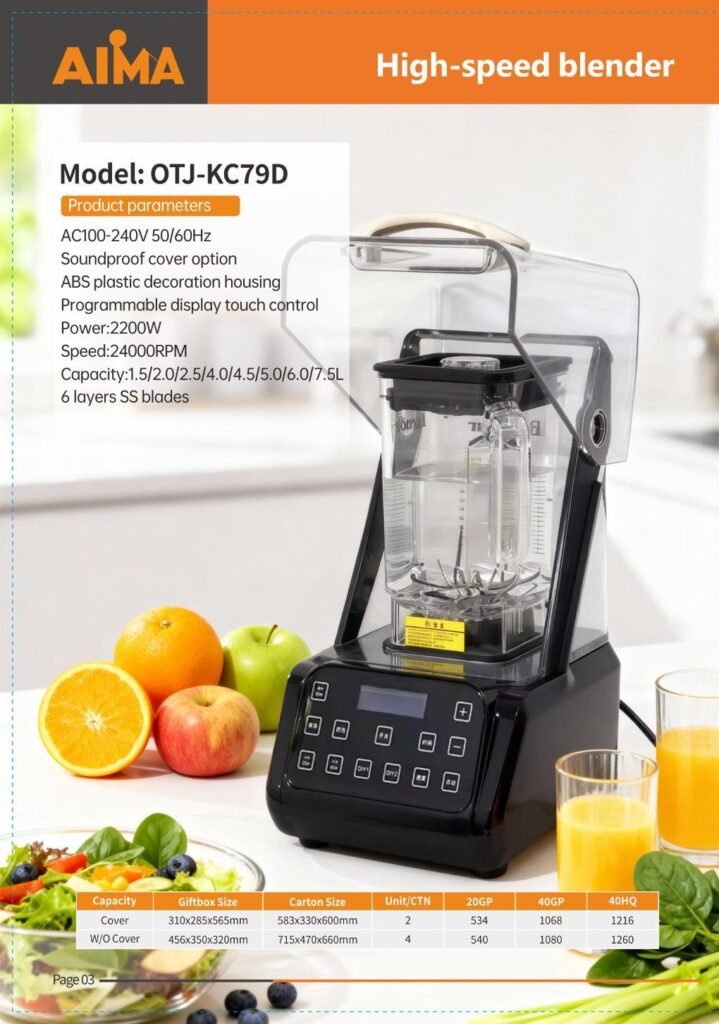
Before requesting custom blender OEM tooling, compare the existing configurations. Specifically, all three models are listed at 2200W and 24,000 RPM, but their capacities, motors, carton packs, and loading figures differ. Use the selected model as the baseline for the discussion; do not assume that a component change automatically applies across the entire series.
| Model | Capacity and Motor | Carton Pack | Documented Distinction |
|---|---|---|---|
| OTJ-329 | 2.5L; 2200W; 24,000 RPM; 9547 copper motor | 4 units/carton | Variable speed, pulse, ice crushing, safety protection |
| OTJ-K78 | 2.5L; 2200W; 24,000 RPM; 9547 copper motor | 4 units/carton | Includes a timer knob |
| OTJ-C176 | 2.0L; 2200W; 24,000 RPM; 9535 copper motor | 2 units/carton | Sound enclosure; measured at 72 dB |
Additionally, the three models share a stainless-steel six-blade design, dual bearings, an all-metal drive coupling, overcurrent and overheat protection, and a pulse function. The factory data also states that the blenders can crush fresh coconut meat with brown skin. For a requested custom pitcher or blade, ask the supplier to confirm compatibility with the chosen model and whether the change affects its listed configuration.
3. How to Scope a Custom Pitcher
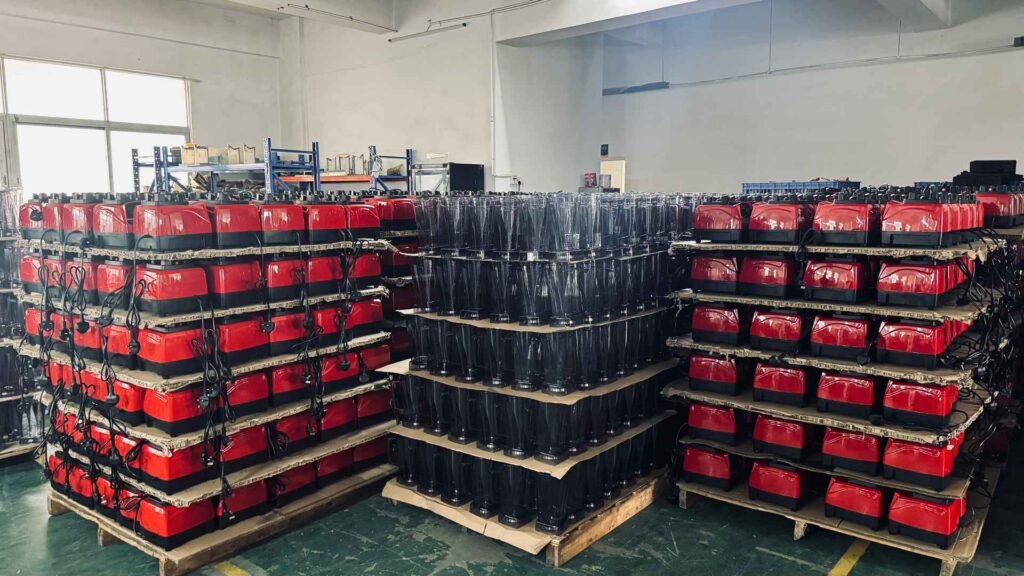
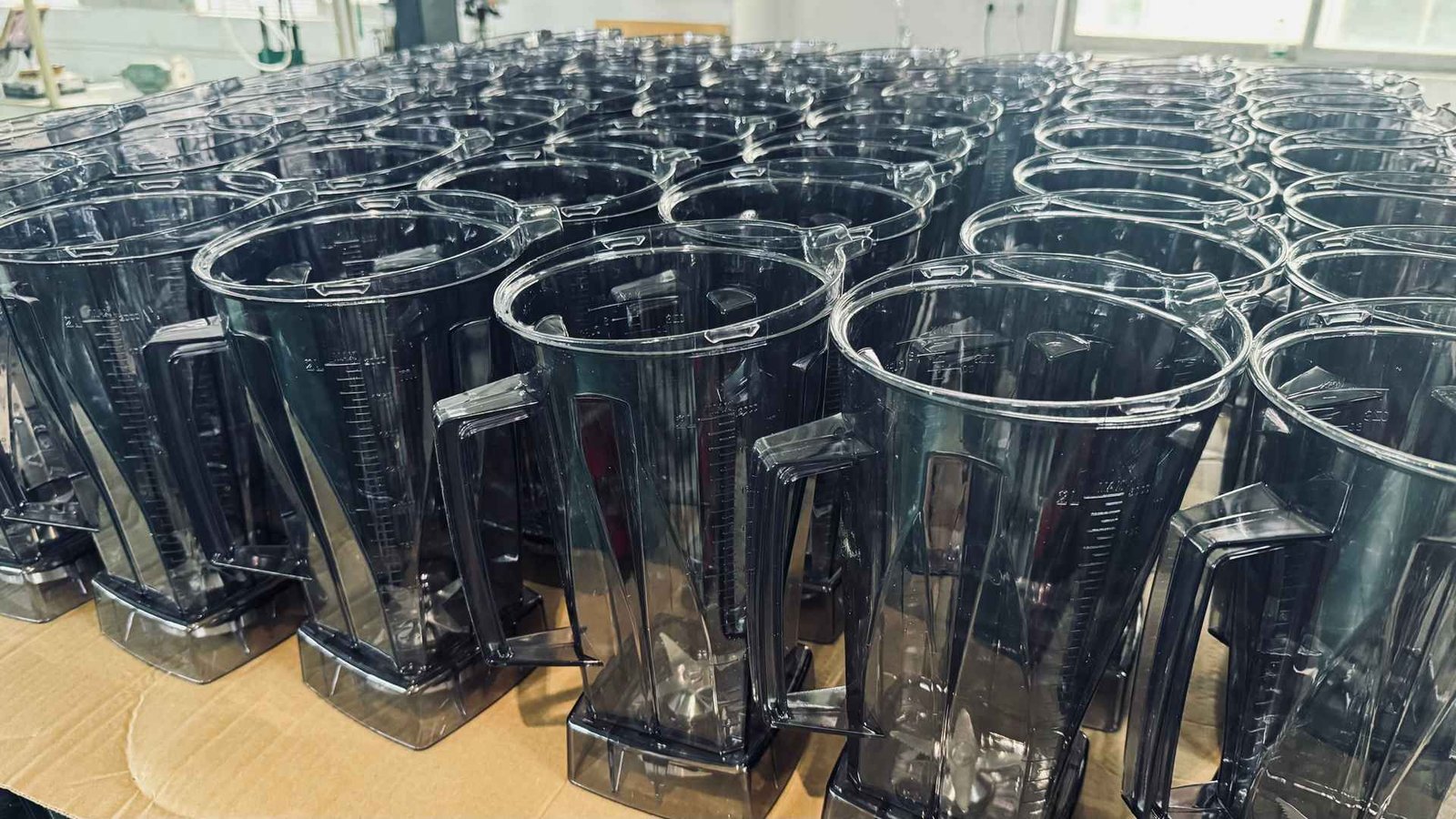
A useful pitcher brief gives the supplier enough information to evaluate the request without treating unconfirmed details as promises. Start with the base model and its documented capacity: OTJ-329 and OTJ-K78 are 2.5L, while OTJ-C176 is 2.0L. Then describe the intended change, such as a different capacity, shape, handle treatment, lid concept, measurement markings, or branded appearance.
However, the supplied data does not state the pitcher material, food-contact test status, BPA status, custom dimensions, or whether a proposed change requires new tooling. Mark each as “available on request” in the buyer specification until the factory confirms it. Consequently, the RFQ should request written confirmation of the material, drawings, compatibility, validation sample, and any market-specific documentation before mass production.
3.1 Approve a drawing and sample before production
Send reference images or a drawing with dimensions, then ask AIMA to identify which details can be supported using the selected model. Additionally, request a sample or pre-production approval step when the design is confirmed. Standard samples are supplied as needed with delivery within 5 days; sample fees and whether they can be credited against a later order are available on request. A custom-tooling sample schedule should be confirmed separately.
4. Blade Changes and Compatibility Checks
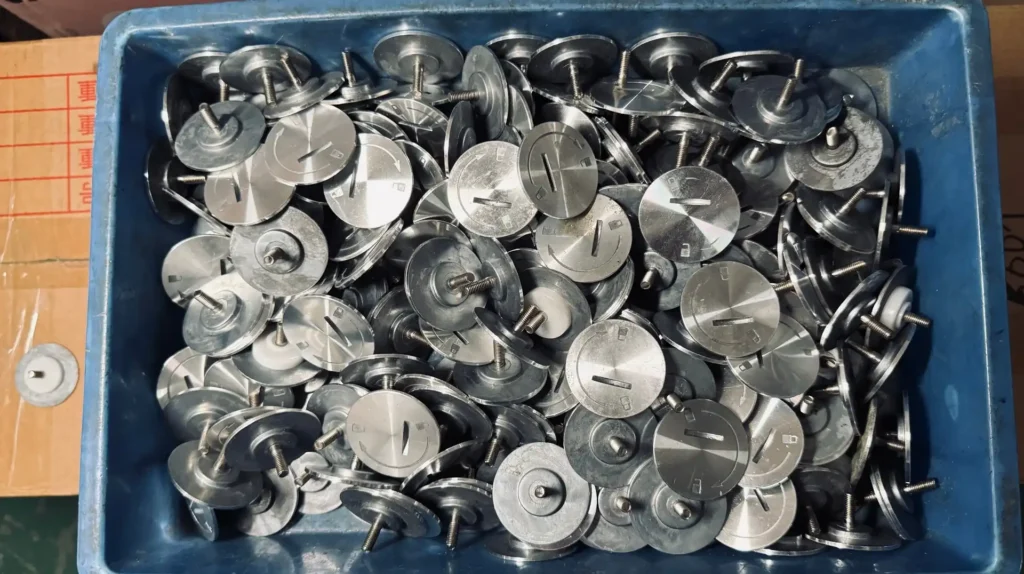
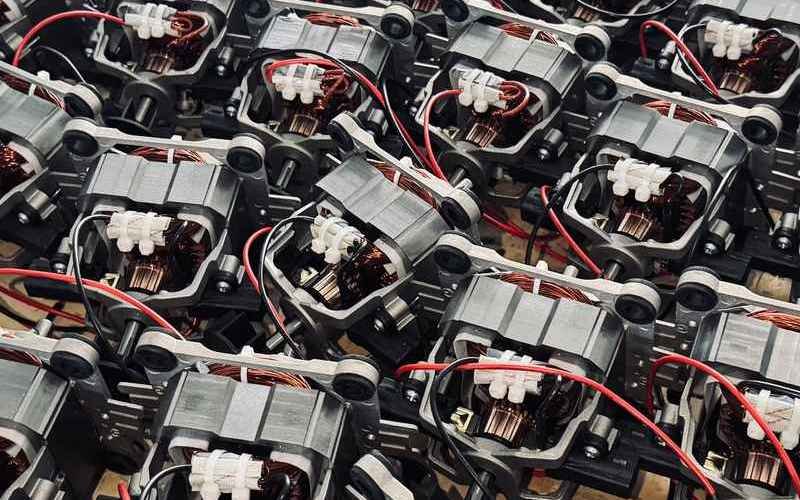
Blade requests should begin with the documented base assembly. The OTJ-329, OTJ-K78, and OTJ-C176 are listed with stainless-steel six-blade designs, dual bearings, and all-metal drive couplings. Therefore, a buyer considering a different blade should identify the model, intended application, and requested change, then ask the factory to confirm fit, performance validation, and whether other drive components are affected.
Additionally, specify whether the request concerns the blade geometry, a replacement spare part, or a broader assembly change. These are not interchangeable instructions. Avoid assuming a specific steel grade, blade dimension, or compatibility across all three models, because those details are not included in the available product data. Custom blade specifications and any tooling fee are available on request.
4.1 Put measurable acceptance points in writing
Before approval, document the agreed model, drawing revision, sample status, and inspection points. Specifically, ask the supplier which checks will be used to confirm the approved blade assembly and what records can be supplied. AIMA reports in-house assembly and testing processes, including hipot testing and drop, vibration, and glow-wire tests; the exact validation plan for a customized blade should be confirmed for the project.
5. OEM Packaging for European and UK Retail
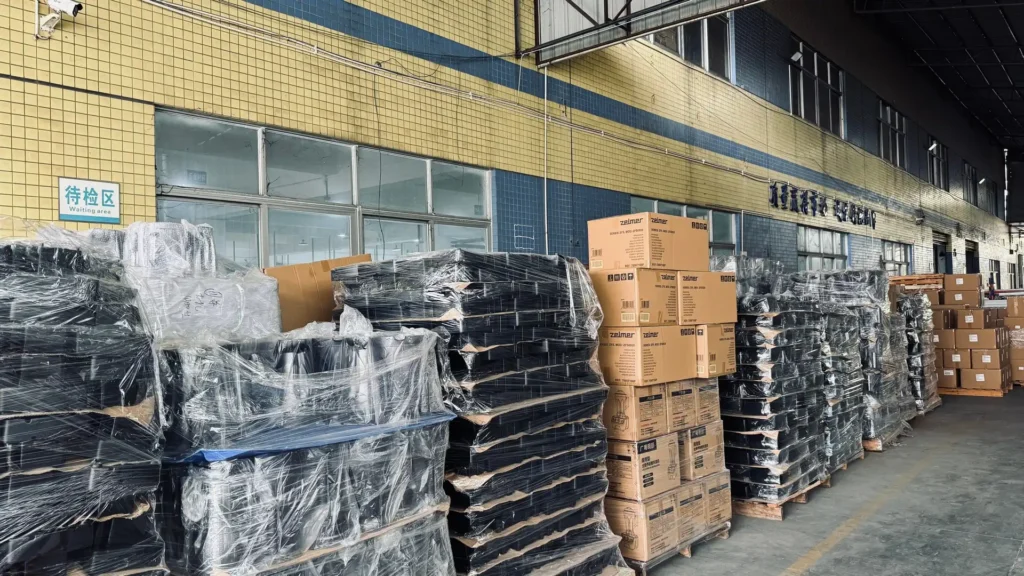
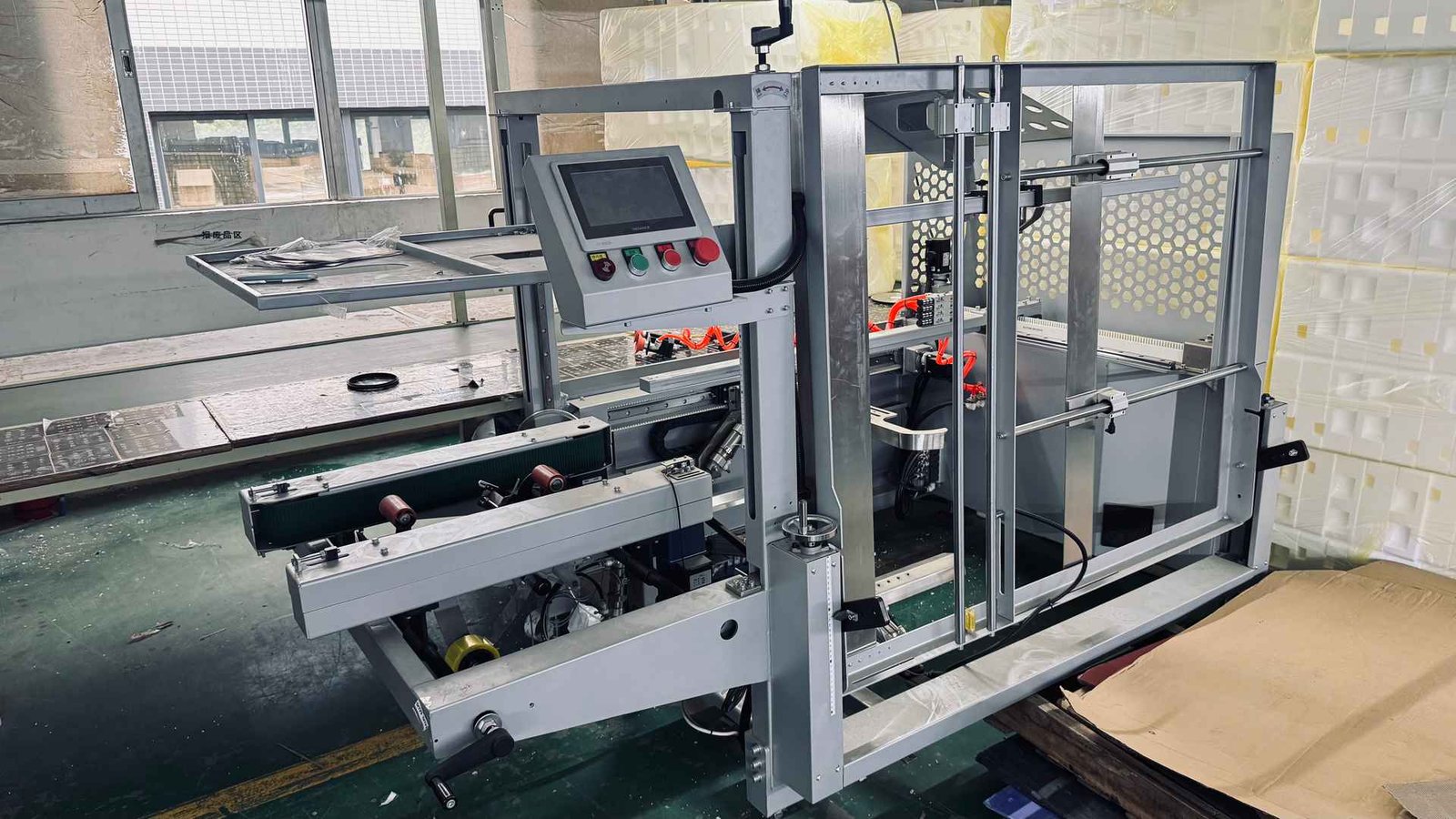
OEM packaging is often the fastest way to adapt an existing blender range for a buyer’s brand. AIMA’s documented packing standard is a 3-layer color box and 5-layer outer carton, supplied with a manual and nameplate. The factory welcomes OEM packaging design. Additionally, logo, color, voltage-version, plug-standard, manual, carton, and nameplate requirements can be listed for confirmation in the project brief.
For retail readiness, provide final artwork, language requirements, barcode and label content, carton marks, and the destination market. Consequently, both sides can review the print files and packing configuration before production. Do not assume an unlisted retail test, barcode format, carton dimension, or specific language is included unless it is confirmed in the quotation or approved specification.
| Packaging or Branding Item | What the Buyer Should Submit | What to Confirm |
|---|---|---|
| Logo and product identity | Artwork files and placement reference | Print method, size, color, and approval sample |
| Color box and outer carton | Artwork, language, barcode, carton marks | 3-layer color box and 5-layer outer carton configuration |
| Manual and nameplate | Required languages and approved product details | Final text, rating information, and market version |
| Custom component | Drawing, reference, and target model | Tooling scope, sample plan, and fees available on request |
For a broader overview of private-label support, see AIMA’s private-label commercial blender supplier information. Packaging decisions should be reviewed together with the chosen model and the buyer’s shipment plan.
6. Voltage, Plugs and Market Documentation
European and UK orders should state their electrical version and plug requirement in the RFQ. The factory data lists dedicated motor versions rather than a 100–240V wide-voltage motor: 110V 60Hz and 220–240V 50/60Hz are separate options, and the two versions are listed at the same price. Therefore, do not specify “universal voltage” for these models; confirm the exact supply version needed for the order.
For UK projects, state the required plug standard. The available factory data lists BS 1363 with KEMA-KEUR, as well as VDE cable certification to DIN EN 50525-2-11. It also lists CE LVD and EMC verifications, an EC Declaration of Conformity, RoHS, and IECEE CB to IEC 60335-2-14. However, certification availability must be confirmed for the specific model and configuration. Review the AIMA certification library and request model-specific files before making a compliance claim.
6.1 Keep the project specification version-controlled
Consequently, link the approved artwork, voltage, plug, model, and component drawings to one revision-controlled specification. For multi-market orders, separate the versions clearly on product labels and shipping documents. This reduces the risk of mixing a UK plug configuration with a different market’s packaging or electrical version. Further background is available in AIMA’s European commercial kitchen appliance supplier guide.
7. A Practical RFQ and Sample Workflow
A clear RFQ helps the factory distinguish a standard model order from a custom tooling project. Start by naming the model and requested market. Then attach the pitcher or blade drawing, packaging artwork, voltage and plug requirements, requested documents, and expected order plan. Specifically, ask for a written list of confirmed items and open questions so the quotation does not imply that unapproved changes are already included.
7.1 Confirm costs, quantities and lead times directly
Pricing is quoted per project — email sales2@zs-aima.com. The exact MOQ, sample fee, tooling fee, warranty terms, and custom-component schedule are available on request. Samples are supplied as needed with delivery within 5 days; mass-production lead time is 30–35 days after deposit. These stated production terms should not be treated as the completion schedule for new tooling unless the factory confirms that in writing.
Additionally, the available payment terms are an at-sight irrevocable L/C or T/T with a 30% deposit and balance paid before shipment. The price basis is FOB Zhongshan port, and the quotation validity is 30 days from 23 September 2026. For current purchasing decisions, request an updated quotation and confirm the validity date. AIMA has more than 15 years of manufacturing experience, a 3,000 m² factory, ISO9001 + 5S management, and 100% IQC incoming inspection, according to the supplied factory data.
7.2 Use a written approval gate before mass production
Finally, approve the model, drawings, sample, label and packaging files, voltage and plug version, and inspection requirements before releasing the order. This process gives both the European or UK buyer and the supplier one controlled reference for production and shipment.
Frequently Asked Questions (FAQ)
Q1: Which OTJ models can buyers discuss for custom blender OEM tooling?
A: The factory data provides starting specifications for OTJ-329, OTJ-K78, and OTJ-C176. Confirm pitcher or blade compatibility and any change scope for the selected model.
Q2: What is the pitcher material and is it BPA-tested?
A: Pitcher material and BPA information are available on request. Ask AIMA to confirm these details for the selected model and configuration.
Q3: Can AIMA customize a blade or pitcher?
A: Custom pitcher and blade changes can be discussed. Compatibility, tooling requirements, fees, drawings, and validation steps are available on request.
Q4: What packaging is used for an OEM order?
A: The stated standard is a 3-layer color box and 5-layer outer carton, with a manual and nameplate. AIMA welcomes OEM packaging design.
Q5: What should European and UK buyers confirm before production?
A: Confirm the model, voltage, plug standard, approved artwork, component specifications, market documents, sample plan, MOQ, and production schedule in writing.
Direct Contact: sales2@zs-aima.com