Table of Contents
1. What Makes a Commercial Blender Different? 2. Motor Quality: Why Pure Copper Windings Matter 3. Blade Design & Jar Capacity Options 4. Soundproof vs Standard Configuration 5. Model Comparison 6. Container Economics for Wholesale Buyers 7. OEM/ODM: Building Your Blender Brand 8. Quality Control & Certifications 9. FAQ 10. Procurement Roadmap 11. ConclusionEvery smoothie bar, bubble tea chain, hotel breakfast buffet, and restaurant prep kitchen depends on one machine more than any other: the commercial blender. It runs 8-14 hours daily, processing everything from ice and frozen fruit to nut butters and hot soups — and it is expected to deliver consistent results shift after shift. However, most buyers make their purchasing decision based on two numbers alone: wattage and price. Consequently, they overlook the engineering details that determine whether a blender lasts five years under daily use or burns out before its first anniversary.
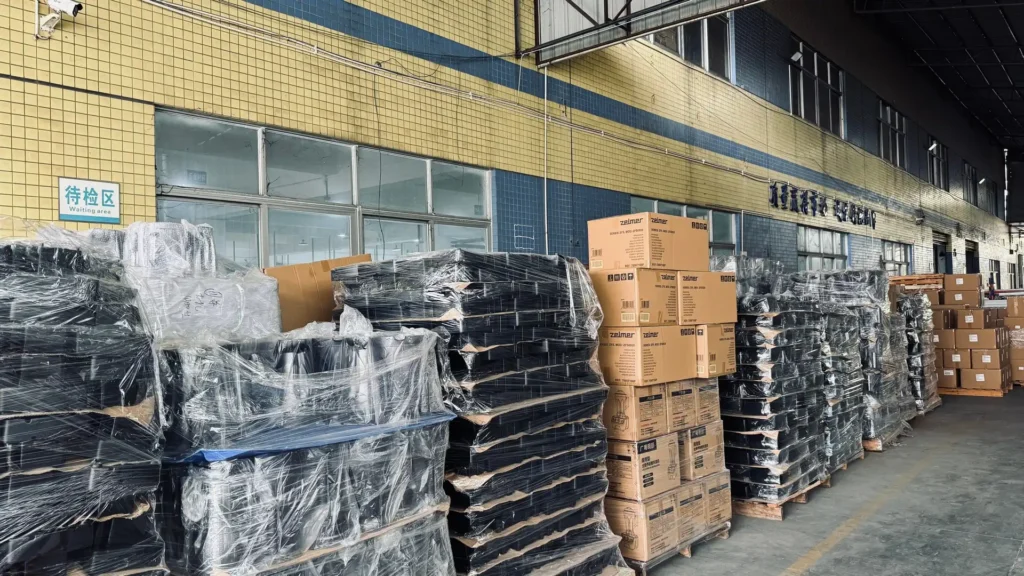
This guide covers every variable that determines commercial blender reliability: motor construction, blade geometry, jar capacity, soundproofing options, container loading economics, and the certifications required for retail distribution in Europe and North America. Specifically, all product examples reference the OTOJIA commercial blender lineup, manufactured by Zhongshan AIMA Electrical Appliance Co., Ltd. — an ISO9001-certified factory with 15+ years of focused kitchen appliance manufacturing and in-house 2200W pure copper motor production.
1. What Makes a Commercial Blender Different from a Consumer Blender?
Walk into any department store and you will find blenders labeled “heavy-duty” with 1500W motors and glass jars. On the surface, they look similar to commercial units. In reality, the differences are not cosmetic — they are engineering-level, and they determine whether your blender survives a lunch rush.
| Factor | Consumer Blender | Commercial Blender (OTOJIA Standard) |
|---|---|---|
| Motor winding | Aluminum-clad copper (CCA) or pure aluminum — degrades under heat, loses torque over time | 100% pure copper wire — consistent torque, no thermal degradation, rated for continuous duty |
| Peak power | 1200-1800W (often marketing watts, not sustained) | 2200W sustained — actual power delivered to the blade under load per IEC 60335-2-14 test conditions |
| Blade speed | 18,000-22,000 RPM | 24,000 RPM — 9-33% faster particle reduction for smoother textures |
| Duty cycle | 3 min on / 5 min off (intermittent) | Continuous — rated for back-to-back blending cycles without cool-down |
| Blade assembly | 4-layer SS, press-fit | 6-layer SS, mechanically secured — balanced for high RPM without vibration drift |
| Jar material | Glass or thin polycarbonate | Thick-wall Tritan copolyester — impact-resistant, BPA-free, thermal shock-rated |
| Expected lifespan | 1-3 years (home use) | 5-8 years (commercial duty, with routine maintenance) |
The bottom line: If you are buying for a business, the price difference between a consumer and commercial blender is recovered within the first quarter of reliable operation. After all, a failed blender during service costs far more in lost revenue and emergency replacement than the upfront savings ever could.
2. Motor Quality: Why Pure Copper Windings Are the Difference Between a Workhorse and a Disposable Appliance
2.1 The Copper vs. CCA Problem
In a blender, the motor is everything. It is the single most expensive component, the primary failure point, and the part that most directly affects blending performance. The difference between a motor that lasts 5 years and one that fails in 12 months comes down to winding material.
Many factory-direct suppliers — and nearly all consumer brands — use aluminum-clad copper (CCA) windings: aluminum wire coated with a thin layer of copper. CCA is 40-60% cheaper than pure copper, but it has two fatal flaws in a high-RPM blender motor. First, aluminum has higher electrical resistance than copper, generating more heat at the same current — a condition known as thermal degradation. Under sustained commercial use, the aluminum core expands and contracts at a different rate than the copper coating, creating micro-fractures that increase resistance further. In turn, this triggers a runaway cycle that ends in motor failure. Second, as the winding degrades, the motor delivers progressively less torque to the blade, a phenomenon called torque loss. The blender still spins — but it stalls on frozen ingredients and dense mixtures that it handled easily when new.
2.2 In-House Motor Manufacturing: Why It Matters
AIMA manufactures its own 2200W pure copper wire motors in-house. This is a critical differentiator that most blender “manufacturers” cannot claim. In fact, many are simply assemblers who buy motors from third-party suppliers and have zero control over winding quality. At AIMA’s facility, however, motors are produced in batch quantities, with every unit passing electrical parameter and hipot testing before entering the production line.
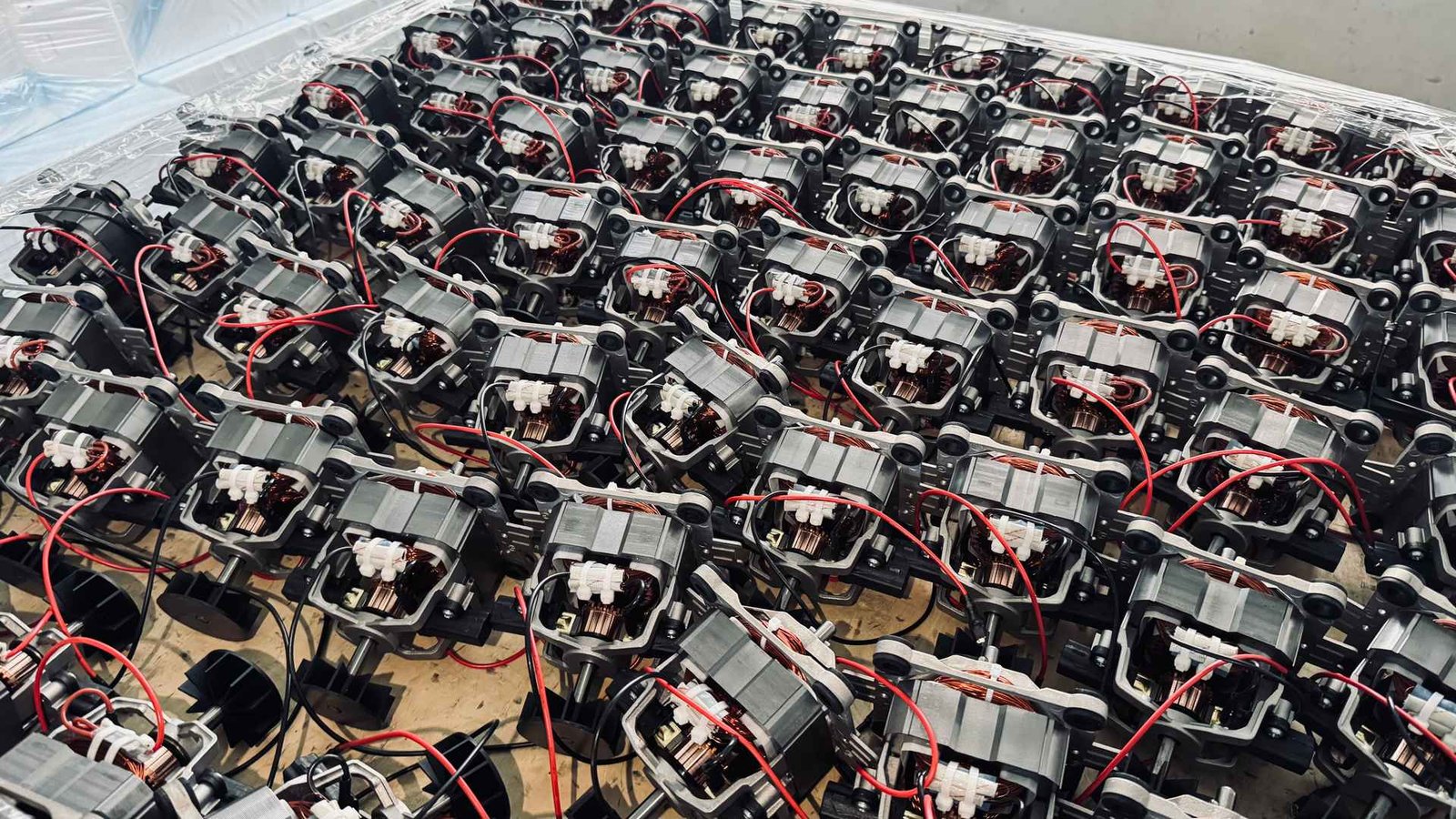
What to ask every supplier: “Do you manufacture your own motors, or do you purchase them?” If the answer is “we purchase,” follow up with: “From whom, and can I see the winding material certification?” If they cannot produce a mill certificate for the copper wire, assume CCA.
3. Blade Design: What 6-Layer Stainless Steel Actually Means
3.1 Blade Geometry Breakdown
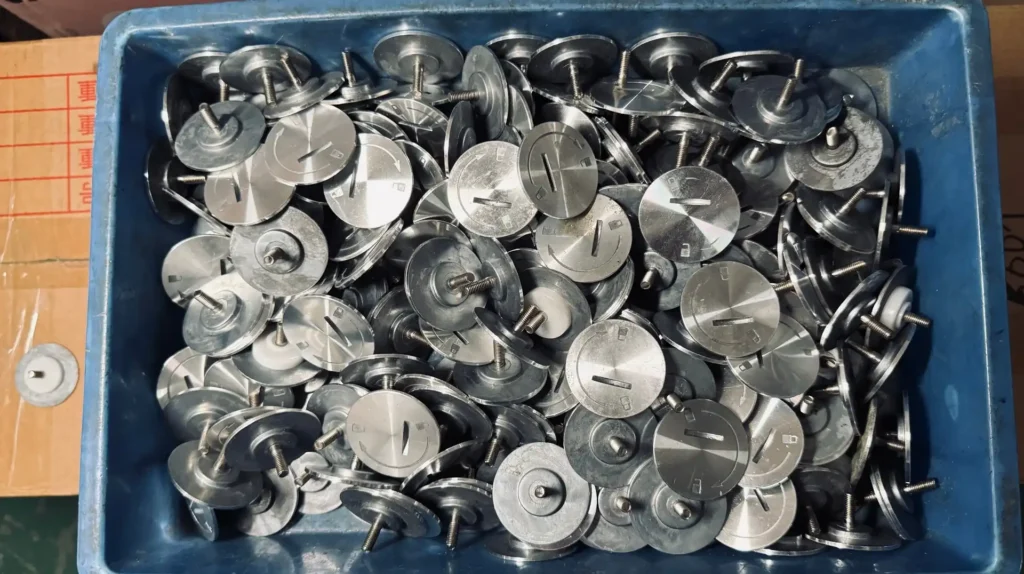
Blade count is easy to market (“6 blades!”), but the engineering reality is more nuanced. The OTOJIA commercial blender series uses a 6-layer stainless steel blade assembly — which means 3 pairs of opposing blades on a common shaft, not 6 individual blades in random orientation. Specifically, the bottom layer angles upward to create a suction vortex that pulls ingredients down toward the center. Meanwhile, the middle layer provides flat cutting edges for primary particle reduction — the workhorse of the assembly. Finally, the top layer features a serrated edge for ice crushing and frozen product, preventing the cavitation bubbles that stall blending in cheaper machines.
This geometry is designed for both wet blending (smoothies, soups, sauces) and dry blending (spice grinding, nut butter, coffee). Furthermore, the blade assembly is mechanically secured to the jar base rather than press-fit — meaning it maintains balance at 24,000 RPM without developing the vibration drift that plagues budget competitors.
3.2 Jar Capacity: 1.5L to 7.5L
OTOJIA blenders support 8 jar capacity options — 1.5L, 2.0L, 2.5L, 4.0L, 4.5L, 5.0L, 6.0L, and 7.5L — all using the same motor base. This modularity is a significant advantage for wholesale buyers and multi-location operators. For example, a bubble tea chain can order 2.0L jars for single-serve drinks and 5.0L jars for batch prep — same motor base, same spare parts. Similarly, a hotel can outfit its breakfast buffet with 4.0L jars while equipping its pool bar with 2.0L jars, maintaining a single spare parts inventory across the entire property.
4. Soundproof Enclosures: When They Matter and When They Do Not
A 2200W motor spinning at 24,000 RPM produces approximately 85-92 dB at 1 meter — comparable to a lawn mower. For an open kitchen or a smoothie bar where noise is part of the atmosphere, this is perfectly acceptable. For a hotel breakfast area, an office pantry, or an open-plan café, however, it is a complaint generator.
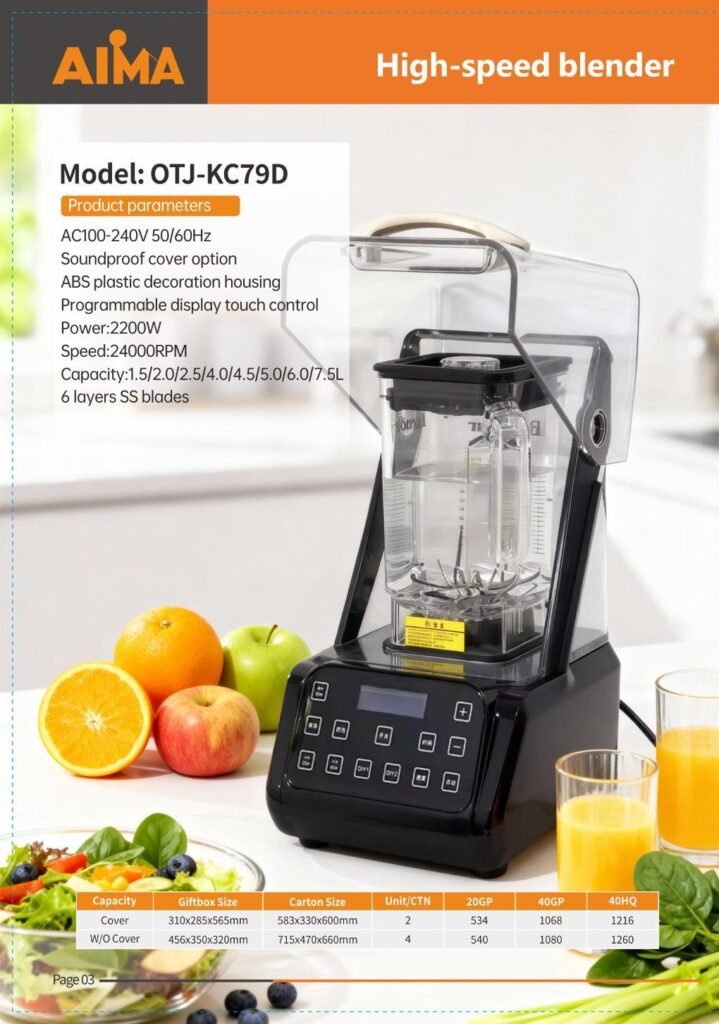
OTOJIA addresses this with two models that offer integrated or optional soundproof enclosures. Simply put, the enclosure reduces noise by approximately 15-18 dB — taking the blender from “lawn mower” to “conversational dishwasher” territory:
| Model | Soundproofing | Noise Reduction | Best Application |
|---|---|---|---|
| OTJ-KC78D | Integrated, standard | ~15-18 dB | Hotels, offices, open-plan cafes, residential common areas |
| OTJ-KC79D | Optional (separate purchase) | ~15-18 dB (with enclosure) | Mixed-use venues — add enclosures only where quiet operation is required |
| OTJ-669 | None — open design | N/A | Commercial kitchens, smoothie bars, juice shops — noise-expected environments |
| OTJ-632 | None — open design | N/A | Restaurant prep kitchens, catering — back-of-house use |
How to choose: If the blender will be used in a customer-facing area where conversation is expected, choose the OTJ-KC78D with integrated soundproofing. In addition to noise reduction, the enclosure serves a secondary function — it catches splatter, keeping the service counter clean throughout the day. On the other hand, if the blender lives in a back kitchen, save the enclosure cost and go with the OTJ-669 or OTJ-632.
5. Model Comparison: Which OTOJIA Blender Fits Your Operation?
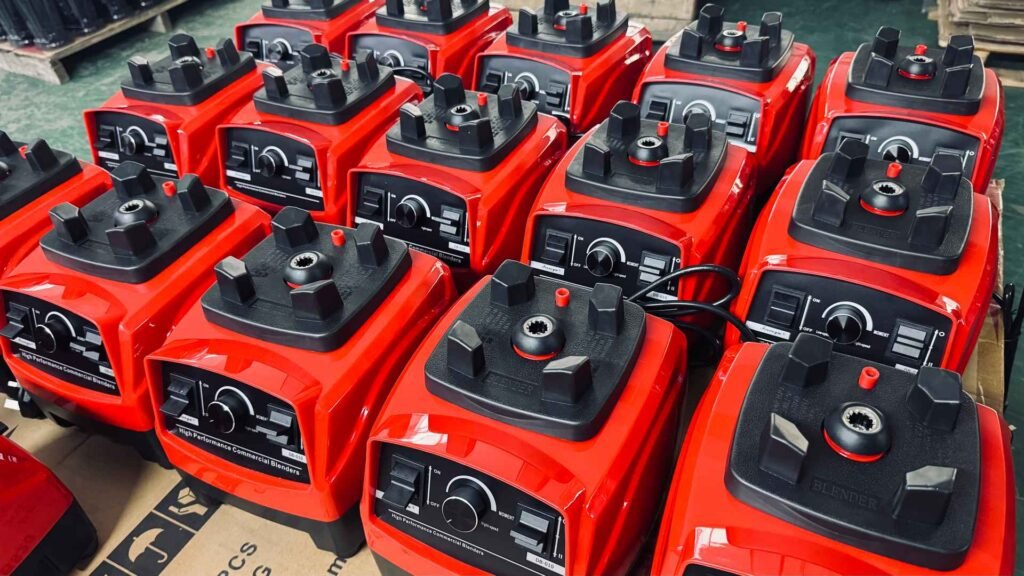
All OTOJIA blender models share the same core platform: 2200W pure copper motor, 24,000 RPM, 6-layer stainless steel blade, AC 100-240V 50/60Hz universal voltage. The differences lie in control interface, soundproofing, and price positioning — allowing distributors to offer a clear good-better-best tier structure within a single brand family:
| Model | Control | Soundproof | 40HQ | Best For | Link |
|---|---|---|---|---|---|
| OTJ-KC78D | Touch, programmable | Integrated | 1,380 | Hotels, premium cafes — customer-facing, quiet operation | View |
| OTJ-KC79D | Touch, programmable | Optional | 1,380 | Multi-location chains — flexible SKU | Contact factory |
| OTJ-669 | Knob + pulse | None | 1,380 | Smoothie bars, juice shops — chef-preferred manual control | View |
| OTJ-632 | Knob + timer | None | 1,380 | Restaurant prep, catering — batch consistency | View |
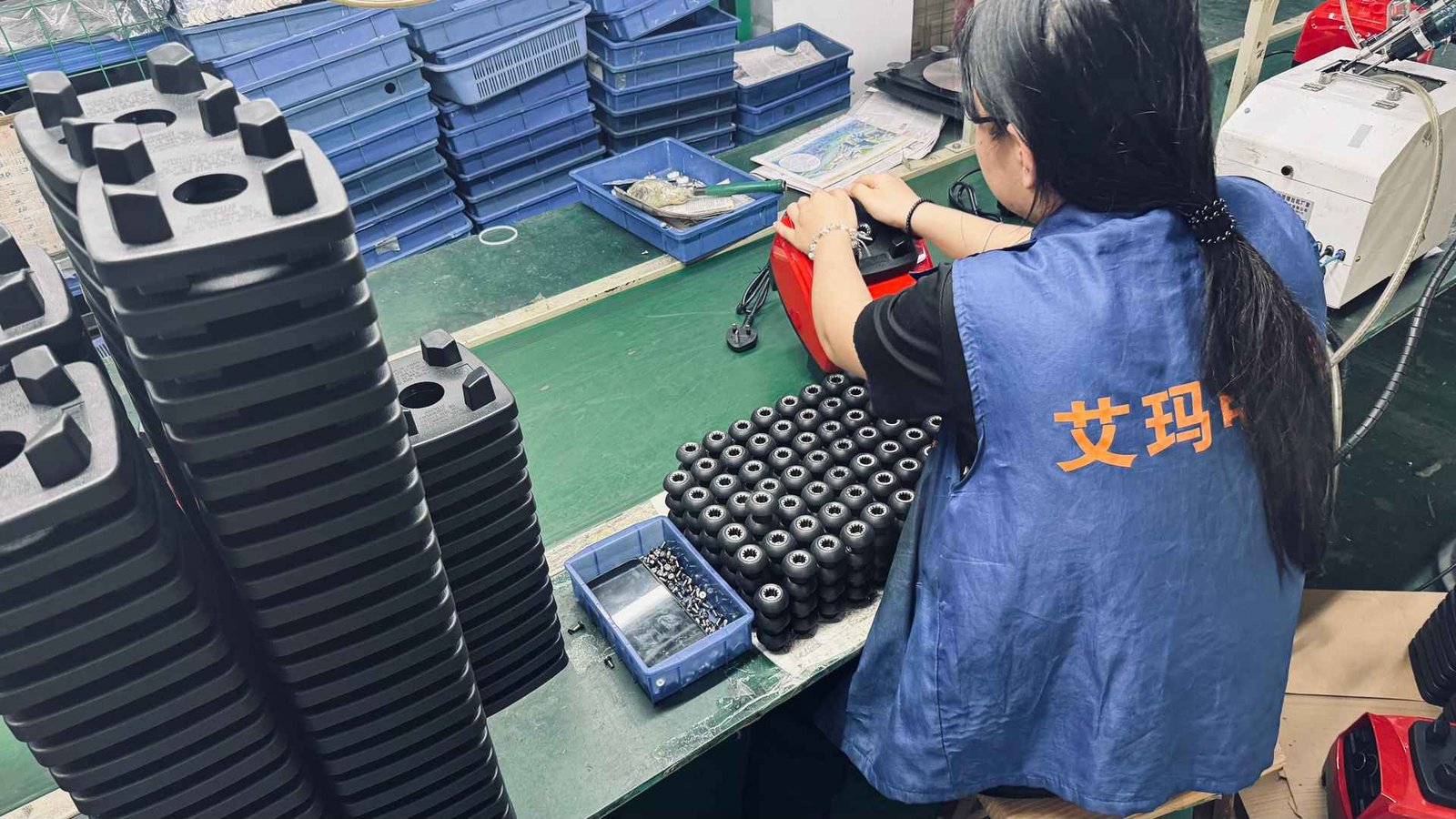
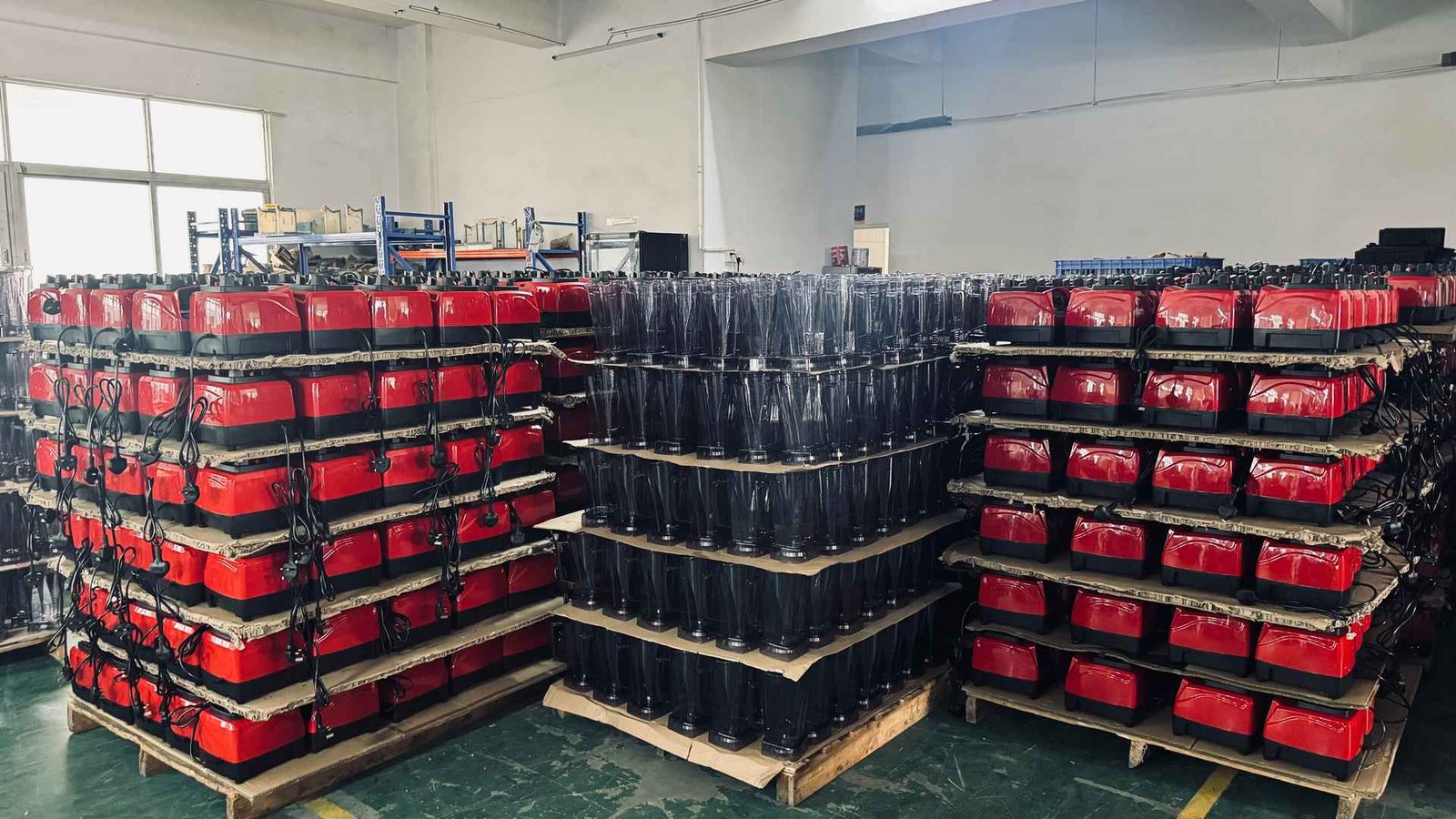
6. How Many Blenders Fit in a 40HQ Container? Container Economics for Wholesale Buyers
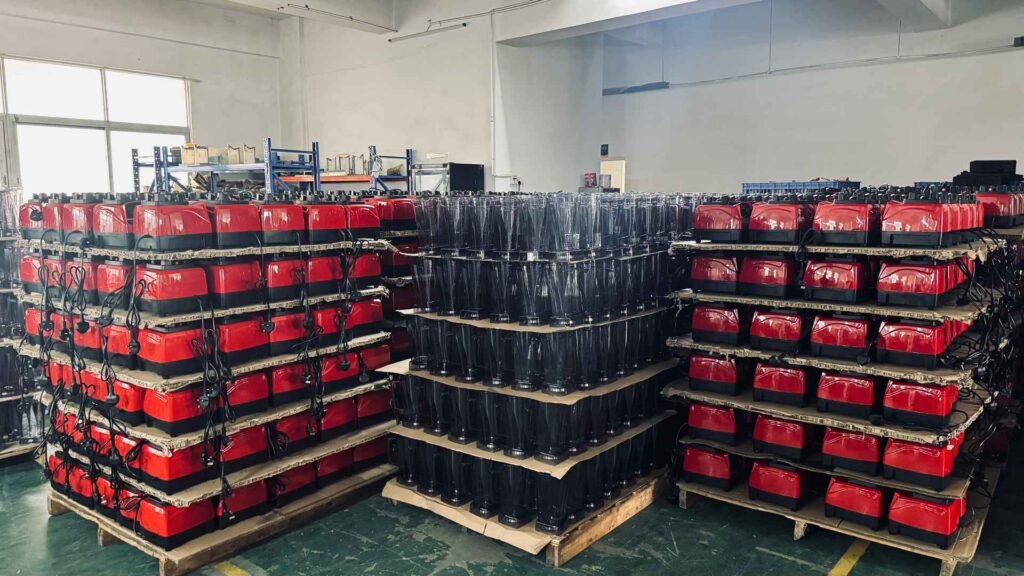
For distributors, importers, and multi-location chains, per-unit landed cost — not ex-factory price — drives profitability. Without question, container loading density is the single largest variable in that equation after the unit price itself. Consequently, a product that packs efficiently into a 40HQ saves hundreds or thousands of dollars in freight per shipment:
| Product | Units/40HQ | Approx. Freight/Unit | Best Wholesale Strategy |
|---|---|---|---|
| OTOJIA Blender | 1,380 | Low | Mix with food slicers for a hot + cold prep container |
| Food Slicer MS-1909 | 1,500 | Lowest | Add to blender container to fill dead space |
| Food Slicer MS-2201 | 1,428 | Very Low | Pair with OTJ-669 for value-focused mixed container |
| Induction OTJ-2801 | 1,254 | Moderate | Add 50-100 units for complete kitchen equipment container |
Mixed container tip: A 40HQ loaded with 700 blenders (OTJ-KC78D) + 700 slicers (MS-2202) gives a distributor both hot-prep and cold-prep categories in one shipment — serving different customer segments with complementary products. AIMA’s logistics team can provide a loading plan before purchase order confirmation; ask for it during the quotation phase.
7. OEM/ODM: How to Build Your Own Commercial Blender Brand
The commercial blender market is brand-driven — customers trust names they recognize. For Amazon FBA sellers, supermarket private-label programs, and regional distributors, the fastest path to market is therefore OEM-ing a proven blender platform with your own branding rather than engineering a machine from scratch.
AIMA’s blender OEM program supports container-level customization with factory-direct engineering communication — no trading company to misinterpret your requirements:
- Voltage & plug type — configured per market: NEMA 5-15 for North America, Type G for UK, Type F for EU
- Housing color & finish — custom color matching to your brand palette (Pantone or RAL reference)
- Branding placement — laser engraving on the motor base, silk-screen logo on the jar, embossed mark on the tamper
- Packaging design — full retail box with your brand, barcode, multi-language manual — shelf-ready for retail
- Accessory configuration — choose which jars (1.5L to 7.5L), tamper, and spare blade assemblies are included
- Control panel customization — pre-set programs labeled with your terminology: “Smoothie” “Soup” “Ice Crush” “Clean”
What makes AIMA’s OEM program different: You communicate directly with the production team who builds the blender — not a sales intermediary forwarding emails. As a result, specification changes, voltage requirements, and packaging artwork go to the engineer responsible for implementation. In turn, this reduces revision cycles from weeks to days.
8. Quality Control: Why Certifications Alone Are Not Enough
8.1 Three-Stage QC System
CE and CB marks on a product label are necessary for European market access — but they are minimum requirements, not quality guarantees. A factory can obtain a CE certificate for one sample unit while shipping containers of product that bear no resemblance to what was tested. For this reason, experienced procurement managers look beyond the certificate to the QC infrastructure behind it.
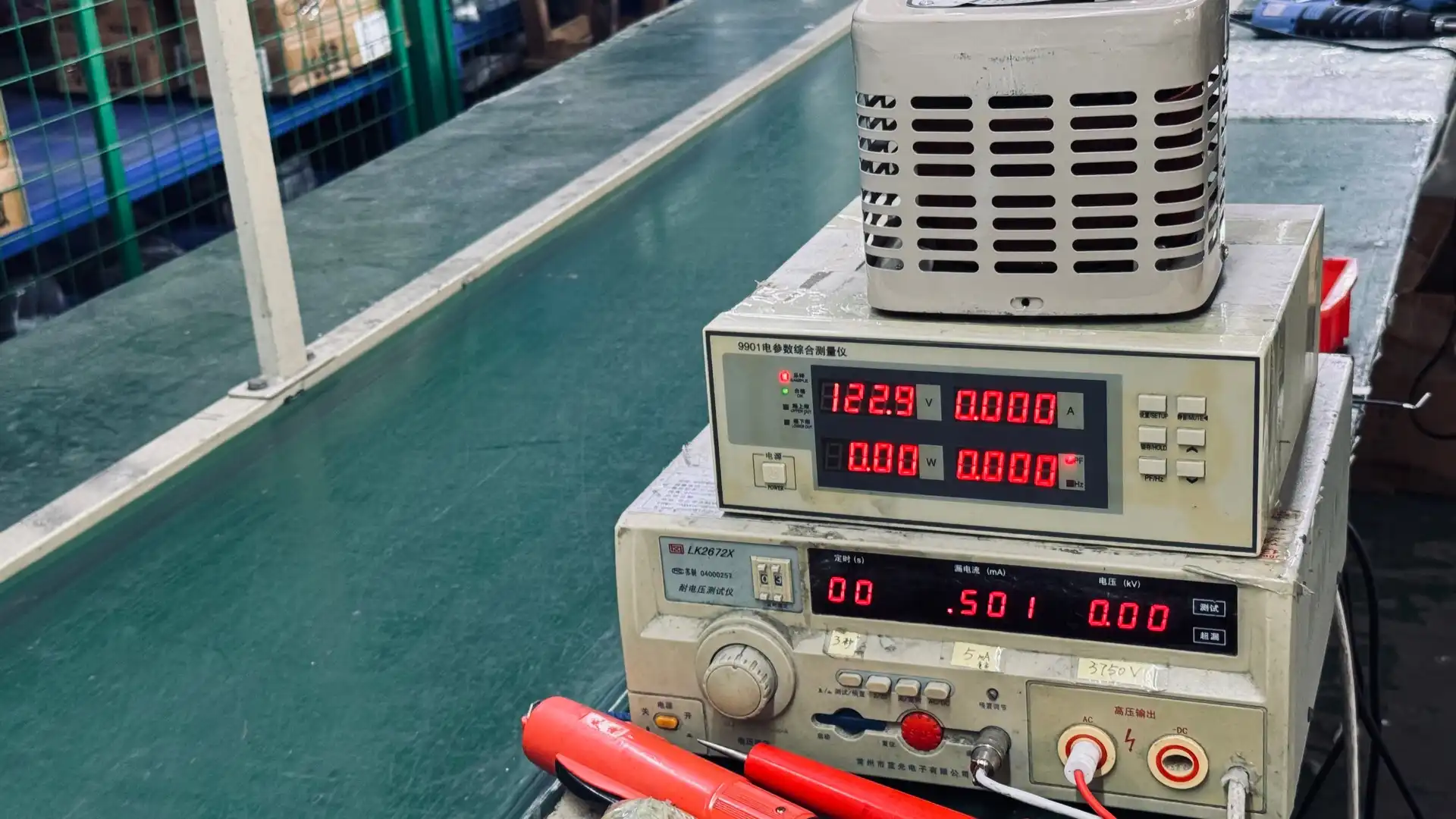
AIMA’s quality system operates at three stages, with the QC laboratory equipped for the full battery of tests required by IECEE and European notified bodies:
| QC Stage | What Happens | Equipment Used |
|---|---|---|
| IQC (Incoming) | 100% inspection of motors, blades, controls, and Tritan jars | Hipot tester (9901), digital micrometer, material cert verification |
| IPQC (In-Process) | Inline electrical safety and assembly quality at 5 production checkpoints | Leakage current tester, RPM tachometer, visual inspection station |
| FQC (Final) | Full functional test — motor run-up, blade balance, control panel, packaging | Automated run-in station, drop tester, vibration table, RoHS analyzer |
8.2 Certifications Held
- CE (LVD 2014/35/EU + EMC 2014/30/EU) — mandatory for EU/EEA distribution
- CB (IECEE CB Scheme, per IEC 60335-1 and IEC 60335-2-14) — international mutual recognition across 50+ member countries
- RoHS (2011/65/EU + amendment 2015/863) — verified by third-party laboratory, not factory self-declaration
- ISO 9001:2015 — quality management system, current and within surveillance audit cycle
- UL-ready — component selection and design pre-aligned with UL 982 for North American market entry
For European retail buyers, request the CE Declaration of Conformity with the notified body number and the CB Test Certificate from the issuing NCB before placing your order. Significantly, AIMA provides both — these are not documents a trading company can fabricate with a verifiable notified body number.
9. FAQ: Commercial Blender Sourcing Questions Answered
What is the minimum order quantity (MOQ)?
AIMA accepts orders starting at sample-level quantities for evaluation (1-5 units for in-house testing). For container-level OEM orders, typical MOQs range from 100-300 units depending on customization requirements. Mixed-model containers are supported — meaning you do not need to fill a 40HQ with a single model. Contact sales1@zs-aima.com to discuss your specific volume.
How long from order to shipment?
Standard production lead time is 25-35 days from proforma invoice confirmation for stock-configuration orders. Meanwhile, OEM orders with custom branding, color, or packaging typically require 35-50 days depending on artwork approval and color-matching complexity. Sea freight from Shenzhen/Yantian adds approximately 25-30 days to European ports and 18-22 days to US West Coast. Therefore, plan 60-90 days total from order to delivery for first-time OEM orders.
Can I get a sample before placing a container order?
Yes — AIMA provides sample units configured to your target market voltage and plug type. Sample orders ship via air freight (DHL/FedEx/UPS) with typical delivery of 5-7 business days. Specifically, we recommend ordering 2-3 samples: one for your quality team to run through internal QA, one for your marketing team for photography, and one as a reference unit to compare against container deliveries.
What warranty do OTOJIA blenders carry?
Standard warranty is 12 months from the date of shipment, covering manufacturing defects in materials and workmanship. Extended warranty terms are available for large-volume OEM contracts. Notably, warranty claims are handled directly with the factory — you submit documentation of the issue, and AIMA ships replacement parts or applies credit to your next order. This is a significant advantage over trading-company procurement, where warranty resolution often stalls between the trader and the factory.
How does AIMA ensure production matches the approved sample?
Three mechanisms ensure consistency. First, a pre-production sample (PPS) is sent for your sign-off before mass production begins — and this sample is built on the production line, not in the R&D lab. Second, in-process QC checkpoints at 5 production stages ensure every unit matches the approved PPS. Finally, you have the option to commission a third-party pre-shipment inspection (SGS, Bureau Veritas, TÜV, or your nominated inspector) before your container is sealed.
Do you offer spare parts for after-sales service?
Yes — AIMA maintains inventory of all major spare parts for current models: blade assemblies, jar assemblies, motor couplings, control boards, drive sockets, and tamper tools. Wholesale buyers can include a spare parts package with their initial container order, creating a parts revenue stream for their own business. Additionally, common wear items like blade assemblies and jar seals are stocked in quantity for immediate shipment.
10. Procurement Roadmap: From First Inquiry to First Container
Phase 1: Qualification (1-2 Weeks)
- Visit aimazs.com and review blender product pages: OTJ-KC78D, OTJ-669, OTJ-632
- Request certification documentation: CE DoC, CB Test Certificate, RoHS Report, ISO 9001 Certificate
- Verify AIMA’s trade show presence in the HOTELEX Shanghai exhibitor directory
- Review factory floor videos on YouTube and LinkedIn
Phase 2: Sample Evaluation (2-4 Weeks)
- Select 2 target models (recommend OTJ-KC78D for premium, OTJ-669 for value)
- Request samples with your target voltage and plug configuration
- Run continuous-duty cycle testing — blend ice, frozen fruit, and hot liquids back-to-back
- Evaluate noise level, jar seal integrity, control interface, and packaging quality
Phase 3: Commercial Negotiation (1 Week)
- Discuss OEM requirements: branding, color, jar capacity mix, packaging
- Confirm container loading plan — mixed container with food slicers if applicable
- Agree on payment terms (T/T 30% deposit, 70% before shipment)
- Review the proforma invoice with full specs, quantities, and FOB Shenzhen terms
Phase 4: Production & Shipment (5-8 Weeks)
- Optional: third-party pre-shipment inspection (SGS, Bureau Veritas, or your inspector)
- Confirm shipping documents: commercial invoice, packing list, bill of lading, certificate of origin
- Receive and inspect your first container — compare against the reference sample from Phase 2
Primary contact: Ricardo, Marketing & Supply Chain Manager — sales1@zs-aima.com. Factory direct line: +86 760-22558182.
11. Conclusion: The Blender Is Only as Good as the Factory Behind It
A commercial blender is a business-critical appliance, not a countertop accessory. When it fails during service, you lose revenue, frustrate customers, and damage your brand — whether that brand is a smoothie chain, a hotel group, or a private-label appliance line.
The difference between a blender that runs 5 years without incident and one that fails in 12 months is almost always traceable to a single variable: was the motor built with pure copper windings by the factory that designed it, or was it purchased from the lowest-bidding third-party supplier?
AIMA Electrical manufactures its own 2200W pure copper motors, operates an ISO9001-certified QC laboratory, holds CE/CB/RoHS certification with verifiable notified body documentation, and exports directly to over 30 countries under the OTOJIA international brand. In summary, whether you need soundproof blenders for hotel breakfast buffets, variable-speed blenders for smoothie chains, or a full OEM private-label blender program, you are talking directly to the people who build them.
Keywords: commercial blender buying guide, 2200W commercial blender, high speed blender supplier, soundproof commercial blender, commercial blender OEM, blender wholesale supplier, commercial kitchen blender, hotel blender supplier, pure copper motor blender, OTOJIA blender factory.