Table of Contents
- 1. Why Direct Factory Sourcing Outperforms Trading Intermediaries
- 2. Core Quality Control Systems & Testing Standards (ISO 9001)
- 3. Food-Grade Material Safety & Raw Component Inventory
- 4. Product Lineup & 40HQ Container Loading Capacity
- 5. Packaging Engineering & Export Damage Prevention
- 6. Container Stacking & Palletized Dock Logistics
- 7. Global Certification & Voltage Customization Matrix
- 8. Step-by-Step OEM/ODM Procurement Roadmap
- 9. About Zhongshan AIMA Electrical Appliance Co., Ltd.
- 10. Frequently Asked Questions (FAQ)
1. Why Direct Factory Sourcing Outperforms Trading Intermediaries
International buyers frequently face inflated unit prices and inconsistent product quality when purchasing through third-party sourcing agencies. Conversely, partnering directly with a genuine commercial kitchen appliance factory establishes transparent communication with factory engineers. Consequently, buyers can specify internal motor windings, custom housing colors, and private label packaging without middleman markups.
Furthermore, direct contracts eliminate communication delays during critical production phases. Because AIMA controls its entire manufacturing chain in Zhongshan, China, engineering adjustments can be implemented instantly on the assembly floor. Therefore, direct sourcing drastically reduces production lead times while securing maximum wholesale margins.
2. Core Quality Control Systems & Testing Standards (ISO 9001)
Evaluating an OEM supplier requires a thorough review of their internal quality assurance protocol. Operating under ISO 9001 and 5S management standards, AIMA enforces 100% IQC (Incoming Quality Control) on all critical components before assembly clearance. Additionally, every finished appliance undergoes rigorous electrical parameter tests prior to master carton packing.
2.1 Mandatory In-House QC Inspection Checklist
To guarantee long-term operational safety in demanding commercial environments, our internal QC laboratory subjects random batch samples to the following standardized stress tests:
- 9901 Hipot Insulation Test: Applies high-voltage stress to verify zero current leakage across internal circuit boards and copper motors.
- Glow-Wire & Ball Pressure Test: Verifies flame-retardant properties of plastic motor housings up to 850°C in compliance with IEC 60335-1.
- Continuous Load Endurance: Operates commercial blenders at 24,000 RPM under maximum continuous load to test thermal overload cutoffs.
- Drop & Vibration Stress Analysis: Simulates rough ocean transport conditions to guarantee outer carton structural integrity.
3. Food-Grade Material Safety & Raw Component Inventory
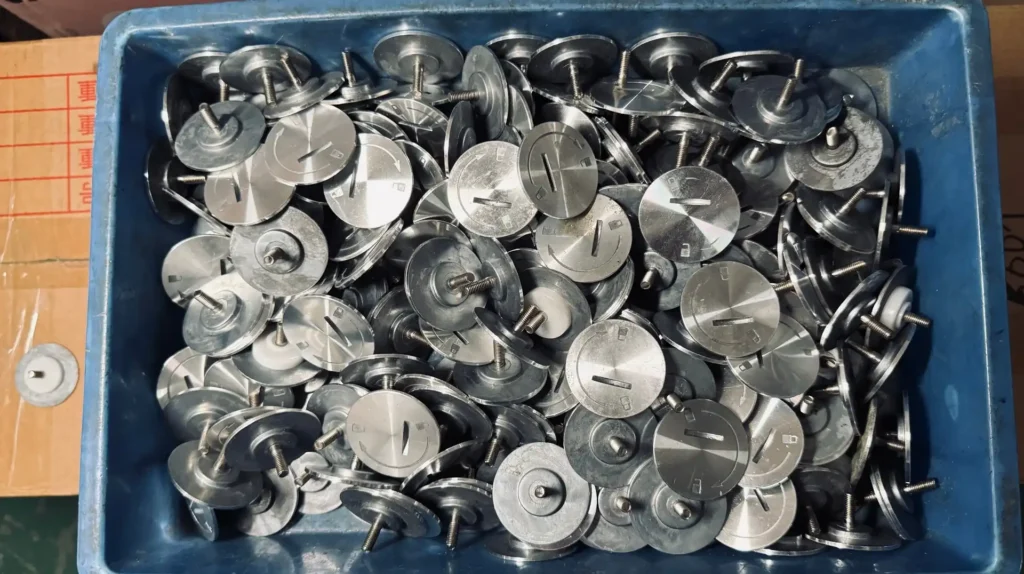
Commercial food processing equipment must strictly comply with food contact safety regulations across target markets. For instance, commercial high-speed blenders require durable, shatterproof pitchers that remain completely BPA-free under intense friction and thermal stress. Therefore, maintaining a well-organized inventory of certified raw materials is essential for maintaining prompt delivery schedules.
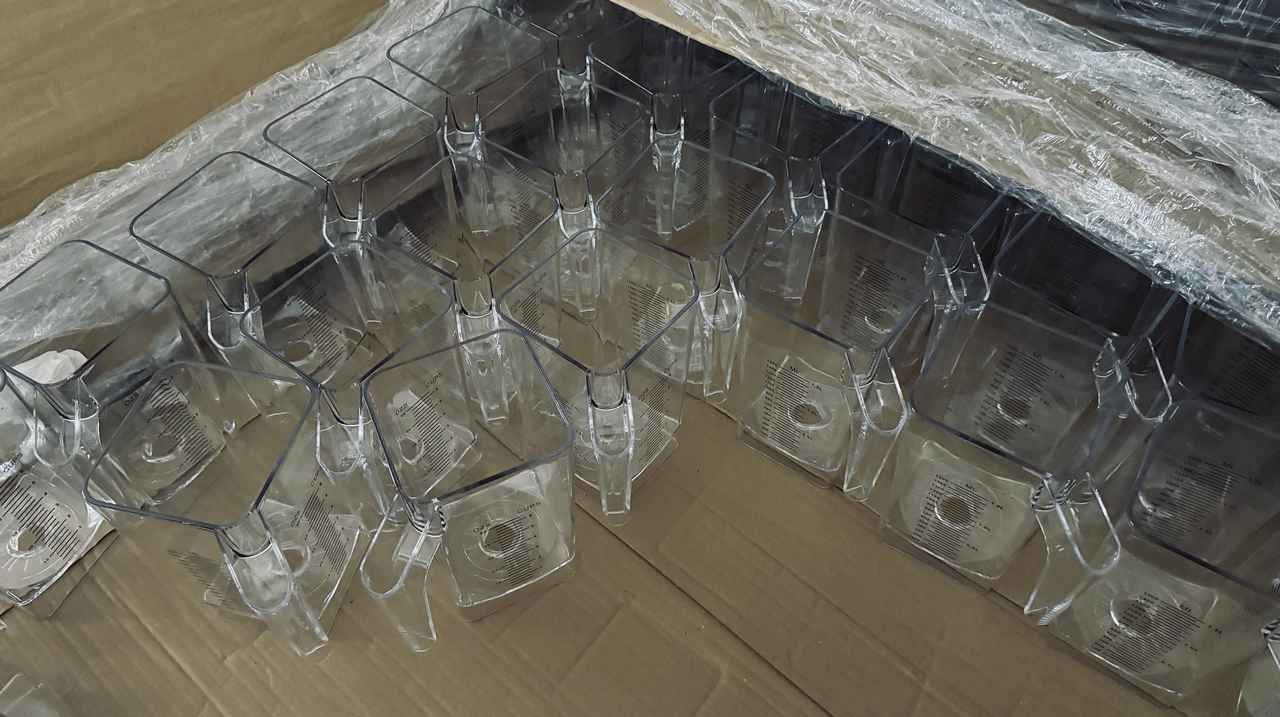
3.1 Precision Storage of Transparent PC Blender Pitchers
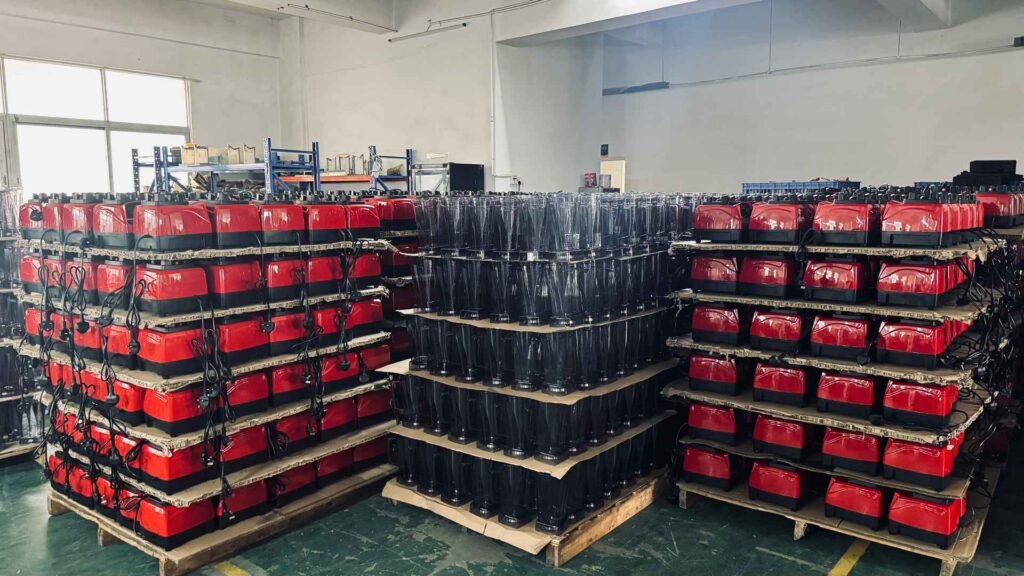
At our 3,000 m² Xiaolan manufacturing facility, food-grade transparent PC plastic jars and pitcher lids are stored in dust-free, organized warehouse racks prior to final assembly. As a result, our assembly lines maintain high output efficiency without risking material contamination.
4. Product Lineup & 40HQ Container Loading Capacity
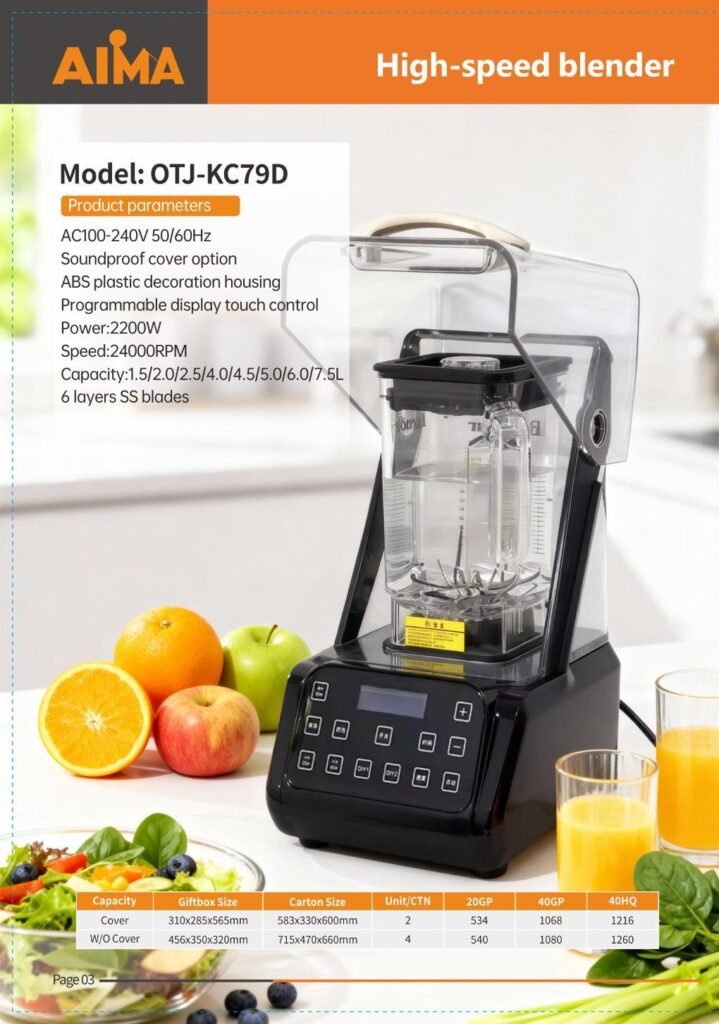
Calculating container load density is a vital step in reducing per-unit ocean freight costs. Because ocean shipping rates are billed per container volume, maximizing the quantity of finished appliances inside a 40HQ container directly improves profitability. Below is a detailed breakdown of core AIMA commercial models and their corresponding loading specifications.
| Model Number | Category & Core Features | Motor Specification | 20GP Load | 40HQ Loading Capacity |
|---|---|---|---|---|
| MS-2202 | 8.7″ Heavy-Duty Food Slicer | 220W / Gear Driven / Cast Iron | 580 pcs | 1,380 pcs |
| MS-2201 | 8.7″ Electric Food Slicer | 220W / Gear Driven / Cast Aluminum | 600 pcs | 1,428 pcs |
| MS-1909 | 7.5″ Iron Casting Slicer | 220W / Gear Driven / High Torque | 630 pcs | 1,500 pcs |
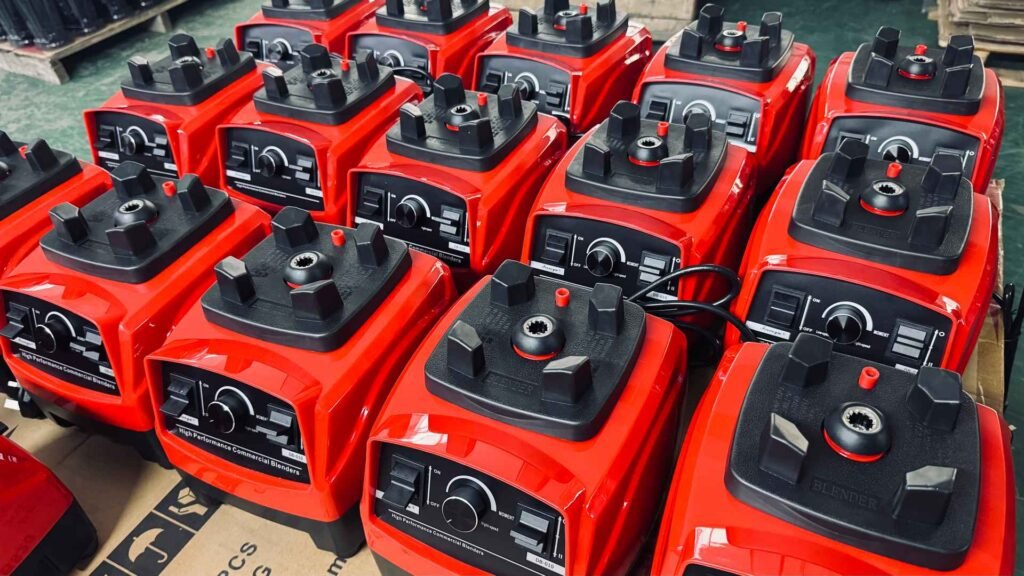
| OTJ-KC78D | Soundproof Commercial Blender | 2200W Copper / 24,000 RPM / Touch | 580 pcs | 1,380 pcs |
| OTJ-669 | Industrial High-Power Blender | 2200W Copper / Variable Knob Control | 580 pcs | 1,380 pcs |
5. Packaging Engineering & Export Damage Prevention
Heavy commercial appliances, such as cast iron food slicers, present unique transit challenges due to their weight. If outer cartons lack sufficient cushioning, severe shock during container transit can misalign precision blade assemblies or crack exterior housings. Consequently, professional manufacturers utilize engineered high-density EPS foam packaging inserts customized to the precise contours of the machine.
5.1 Bulk EPS Foam Insert Warehousing
To protect export orders against impact during sea shipment, AIMA warehouses bulk quantities of molded EPS foam protective inserts. In addition, our 5-ply corrugated outer master boxes undergo strict drop testing to ensure products arrive in pristine condition.
6. Container Stacking & Palletized Dock Logistics
Once products pass final QA testing and carton sealing, organized staging in the shipping warehouse ensures rapid container loading. Modern B2B appliance factories utilize heavy-duty palletizing and stretch-wrapping technology to streamline dock logistics. As a result, forklift operators can load full containers efficiently without risking box crushing or pallet collapse.
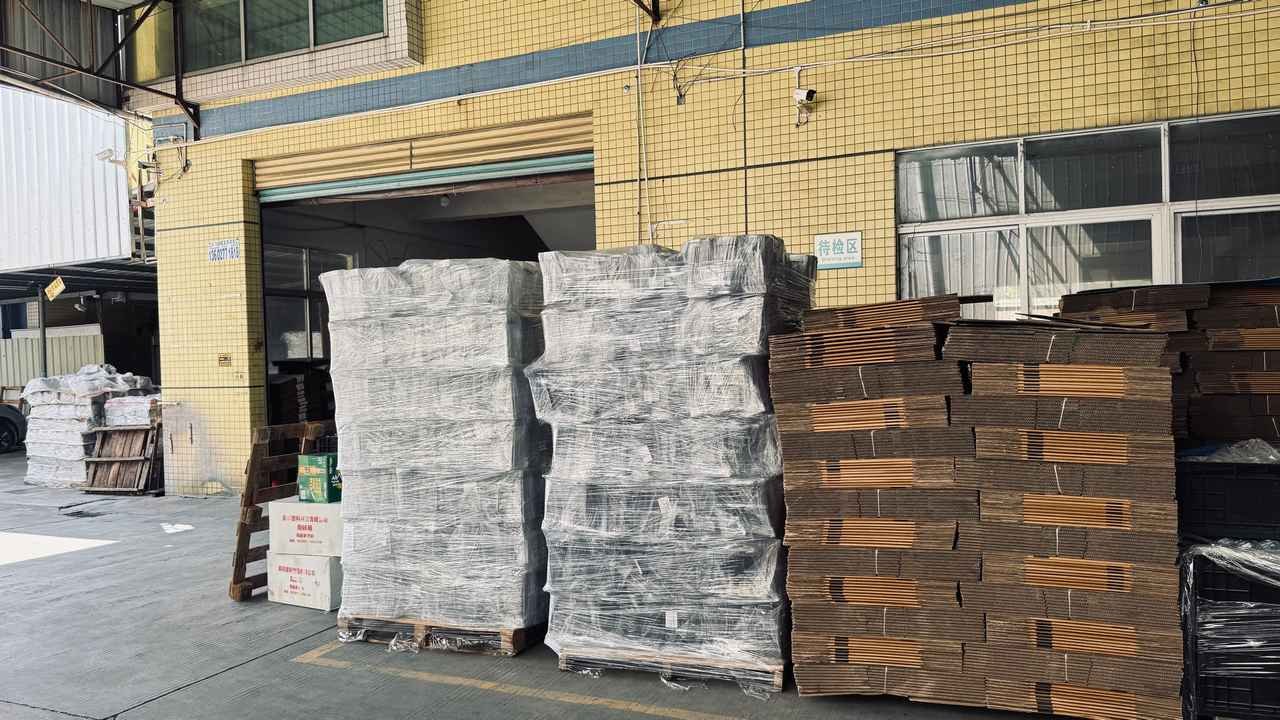
6.1 High-Density Warehouse Cardboard Storage
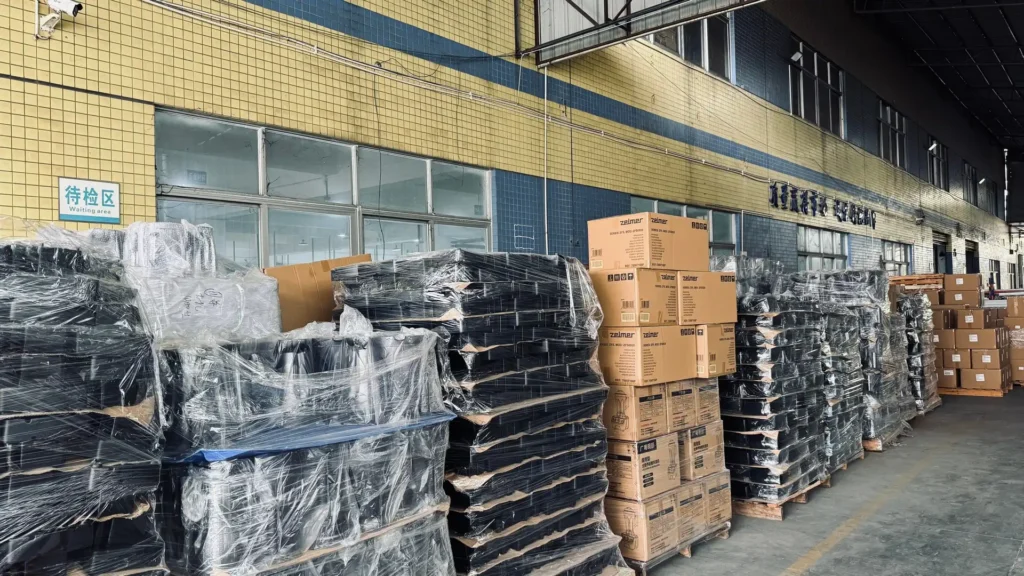
In our primary export warehouse, stacked master cartons are systematically organized by PO number and destination port. Additionally, clear barcode labeling allows instant inventory tracking for outgoing 40HQ container shipments.
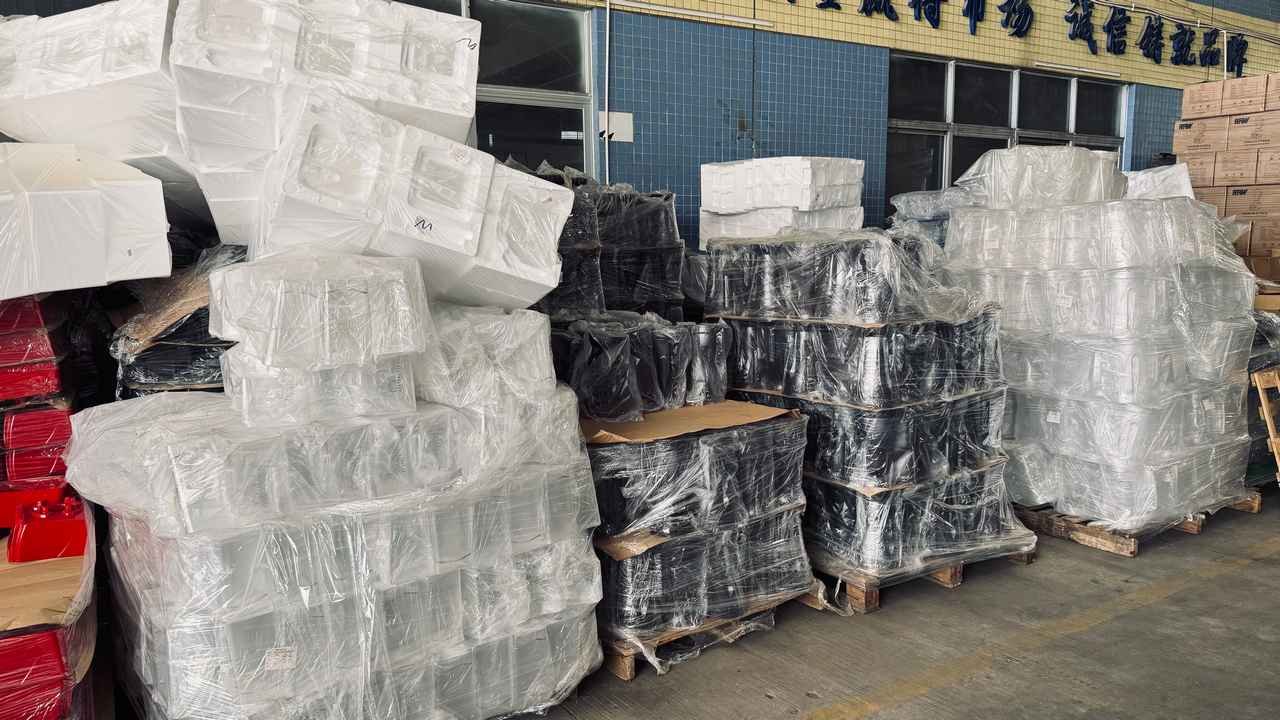
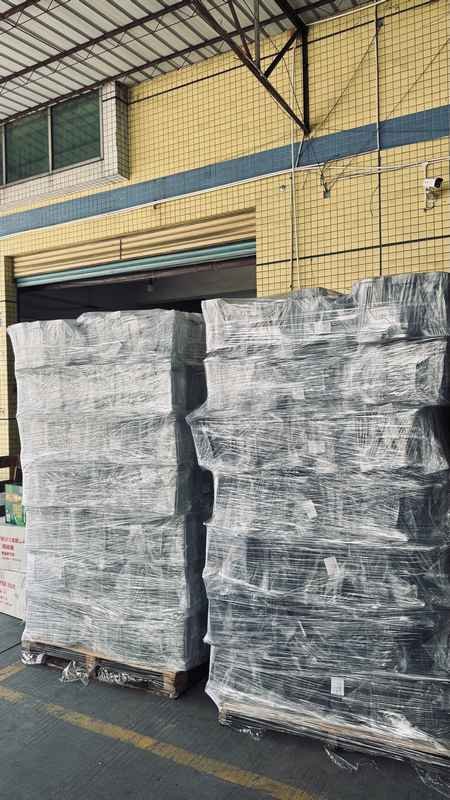
6.2 Palletized Stacking at the Factory Loading Dock
Furthermore, orders designated for LCL (Less than Container Load) transit or Amazon FBA intake are stretch-wrapped onto wooden pallets at our factory loading dock. This protective wrapping shields cardboard boxes against humidity and dust during maritime transportation.
7. Global Certification & Voltage Customization Matrix
Customs compliance is a non-negotiable prerequisite for importing electrical appliances into Europe, North America, and the Middle East. Failing to present valid test certificates issued by accredited laboratories can result in customs detention or re-export orders. Therefore, buyers must verify that their factory partner holds full certification coverage for target jurisdictions.
| Target Region | Standard Voltage / Frequency | Mandatory Safety Certifications | Plug & Cord Architecture |
|---|---|---|---|
| European Union (EU) | AC 220-240V / 50Hz | CE (LVD & EMC), CB, RoHS 2.0 | VDE Certified Schuko / Type F Plug |
| North America (USA/CA) | AC 120V / 60Hz | UL-Ready, ETL Equivalent, FDA PC | US Standard 3-Pin Grounded Plug |
| United Kingdom (UK) | AC 230V / 50Hz | CE, UKCA, CB Scheme | BS 1363 Fused 3-Pin UK Plug |
| Australia & NZ | AC 230-240V / 50Hz | SAA / RCM Compliance, CB | AS/NZS 3112 Standard Plug |
8. Step-by-Step OEM/ODM Procurement Roadmap
Executing a successful private label manufacturing project requires a structured workflow. By adhering to a standardized 4-phase procurement roadmap, importers prevent miscommunications and guarantee on-time container dispatch.
- Phase 1: Engineering Brief & Costing: Define core product parameters including motor wattage (e.g., 2200W), voltage (120V or 220V), plug standard, and target 40HQ container quantity.
- Phase 2: Golden Sample Approval: AIMA produces a fully operational pre-production prototype equipped with your private brand logo, customized rating label, and gift box artwork.
- Phase 3: Mass Assembly & In-Line QC: Following deposit confirmation, raw materials undergo IQC screening while finished motor bases pass 100% online Hipot insulation tests.
- Phase 4: Final QA & Container Loading: Completed master cartons pass drop tests before systematic container loading and customs declaration documentation dispatch.
9. About Zhongshan AIMA Electrical Appliance Co., Ltd.
Zhongshan AIMA Electrical Appliance Co., Ltd. is a premier B2B commercial kitchen appliance manufacturer located in Xiaolan Town, Zhongshan City, Guangdong Province, China. Spanning 3,000 square meters, our ISO9001-certified production facility operates strictly under 5S quality management protocols. Over the past 15+ years, we have specialized in high-power commercial blenders, cast iron food slicers, hand mixers, and induction cooktops for global distributors across Europe, North America, the Middle East, and Southeast Asia.
In addition, AIMA operates a strategic dual-brand export structure. While AIMA (艾玛) represents our industrial engineering headquarters and manufacturing base, OTOJIA (欧拓佳) serves as our premium international trademark for global distribution and retail channels. Sourcing directly from our factory guarantees uncompromised quality, direct-factory FOB pricing, and complete CE, CB, RoHS, and UL-ready certifications.
Core Factory Sourcing Advantages
- In-house manufacturing of 2200W pure copper wire motors and metal gear drives
- Direct factory wholesale contracts with zero trading company markups
- Complete QC testing lab: Hipot, Glow Wire, Ball Pressure, and Leakage testing
- Flexible OEM/ODM customization: Voltages (100V-240V), regional plugs, and branding
10. Frequently Asked Questions (FAQ)
Q1: Can I order mixed container loads of blenders and food slicers from AIMA?
A: Yes. We accommodate mixed 20GP and 40HQ container shipments, allowing wholesale buyers to combine commercial food slicers (MS Series) and 2200W blenders (OTJ Series) in a single order to optimize inventory diversity.
Q2: What is the lead time for custom OEM private label orders?
A: Standard OEM mass production lead times range from 25 to 35 days following golden sample approval and deposit confirmation. Pre-production samples with custom voltage and logos are typically dispatched within 7 to 10 business days.
Q3: Does AIMA manufacture 120V 60Hz appliances for the North American market?
A: Absolutely. We engineer specialized 120V / 60Hz pure copper motor stators equipped with US 3-pin grounded power cords and UL-ready thermal cutoffs specifically for US and Canadian importers.
Q4: How can global buyers verify AIMA factory credentials?
A: Importers can verify our legal registration under Zhongshan AIMA Electrical Appliance Co., Ltd., request official ISO9001, CE, and CB certificates, or inspect our verified booth records at major trade shows like HOTELEX Shanghai.
Request Direct Factory Wholesale Quotation
Contact our Supply Chain & Marketing Manager today to receive detailed CBM packing specifications, container loading diagrams, and official factory FOB pricing.
Get Wholesale Pricing NowDirect Contact: Ricardo — Marketing & Supply Chain Manager | Email: sales1@zs-aima.com