Table of Contents
- 1. Why Export Compliance Protects B2B Import Margins
- 2. Core International Safety Certification Standards
- 3. European Union Market Entry: CE (LVD & EMC) + RoHS 2.0
- 4. North American Readiness: UL Standards & 120V Engineering
- 5. The IECEE CB Scheme: Global Passport for Appliances
- 6. Inside AIMA’s In-House Quality & Safety Testing Lab
- 7. Supplier Audit Checklist for Regulatory Compliance
- 8. About Zhongshan AIMA Electrical Appliance Co., Ltd.
- 9. Frequently Asked Questions (FAQ)
1. Why Export Compliance Protects B2B Import Margins
Importing commercial electrical equipment involves severe liability if products fail local safety codes[cite: 1]. Customs authorities across Europe and North America routinely inspect incoming containers for proper testing documentation[cite: 1]. Consequently, uncertified appliances face immediate destruction or forced re-export at the importer’s expense[cite: 1].
Additionally, commercial kitchens demand higher electrical durability than household environments[cite: 1]. By sourcing appliances built to industrial standards like IEC 60335-1, distributors minimize warranty claims and brand damage[cite: 1]. Therefore, partnering with an ISO9001-certified factory ensures seamless clearance and long-term customer trust[cite: 1].
2. Core International Safety Certification Standards
Understanding regional certification acronyms helps procurement officers verify true factory capabilities[cite: 1]. Different target markets enforce specific directives covering electrical safety, electromagnetic compatibility, and chemical safety[cite: 1]. Furthermore, reputable manufacturers maintain complete test reports issued by accredited ISO 17025 laboratories[cite: 1].
2.1 Comparison of Major Global Appliance Certifications
When evaluating quotes, always request the full test report rather than a simple certificate summary[cite: 1]. Genuine test reports include specific model numbers, electrical schematics, and component lists[cite: 1].
| Certification | Governing Region | Core Directive / Standard | Primary Focus Area | AIMA Compliance Level |
|---|---|---|---|---|
| CE Marking | European Union (EU) | LVD 2014/35/EU & EMC 2014/30/EU | High Voltage & Electromagnetic Safety | Fully Certified[cite: 1] |
| CB Scheme | Global (50+ Countries) | IEC 60335-1 / IEC 60335-2-14 | Universal Electrical Safety Passport | Certified (IECEE)[cite: 1] |
| RoHS 2.0 | EU & Global Markets | Directive 2011/65/EU & 2015/863 | Hazardous Chemical Restrictions | 100% Compliant[cite: 1] |
| UL-Ready Architecture | North America (USA / CA) | UL 982 / CSA C22.2 No. 1335 | Motor Insulation & Overcurrent Safety | Ready for Deployment[cite: 1] |
3. European Union Market Entry: CE (LVD & EMC) + RoHS 2.0
Selling small kitchen appliances in the EU requires strict adherence to CE regulations[cite: 1]. The Low Voltage Directive (LVD) ensures electrical insulation prevents shock hazards, while the Electromagnetic Compatibility (EMC) Directive prevents radio frequency interference[cite: 1]. In addition, all plastic, metal, and electronic components must comply with RoHS 2.0 substance limits[cite: 1].
3.1 Food-Contact Hygienic Compliance
Beyond electrical safety, commercial blenders and food slicers require food-grade certification[cite: 1]. For instance, AIMA slicer blades utilize food-grade stainless steel, while blender jars feature BPA-free PC material[cite: 1]. As a result, commercial kitchens operate safely without risk of chemical migration into food[cite: 1].
4. North American Readiness: UL Standards & 120V Engineering
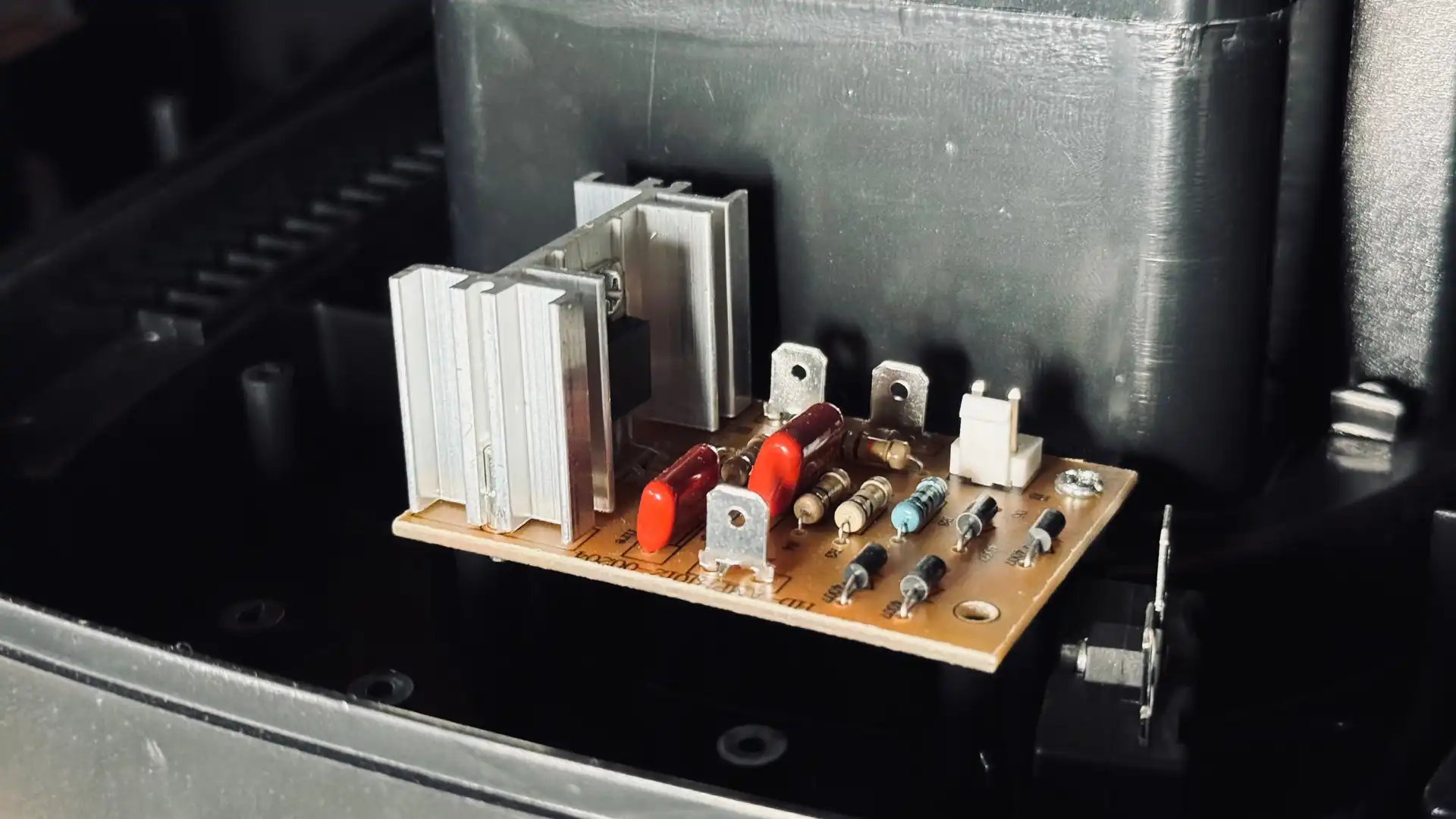
The North American market presents distinct electrical requirements compared to 220V regions[cite: 1]. High-power commercial blenders require dedicated 120V / 60Hz motor windings with heavy copper wire to handle higher currents[cite: 1]. Consequently, improper motor sizing leads to severe overheating and tripping under heavy load[cite: 1].
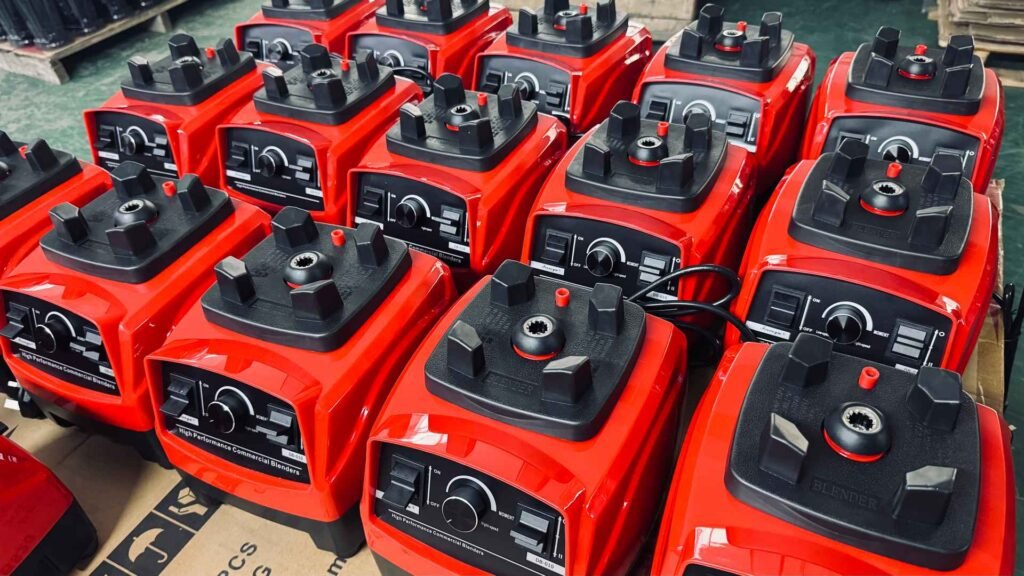
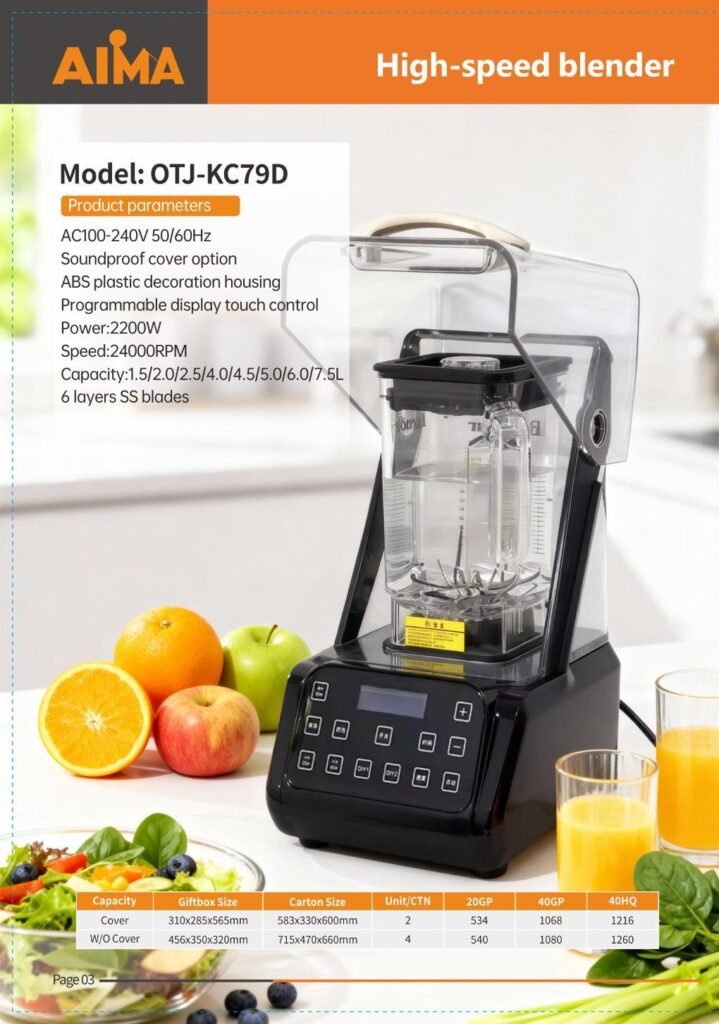
Specifically, AIMA designs OTJ Series blenders and MS Series slicers with UL-ready component architectures[cite: 1]. Featuring thermal overload cutoffs, flame-retardant ABS enclosures, and grounded power cords, our appliances easily pass North American field inspections[cite: 1].
5. The IECEE CB Scheme: Global Passport for Appliances
Importers operating in multiple international territories often face redundant certification costs[cite: 1]. The IECEE CB Scheme solves this problem by providing a recognized international test report[cite: 1]. Based on standard IEC 60335-1, a CB Test Certificate allows fast national conversion across more than 50 participating countries[cite: 1].
Therefore, purchasing CB-certified appliances from AIMA drastically reduces market entry timeline[cite: 1]. Importers can quickly obtain regional marks like Saudi SASO, Gulf GCC, or Singapore SAFETY Mark using our core CB documentation[cite: 1].
6. Inside AIMA’s In-House Quality & Safety Testing Lab
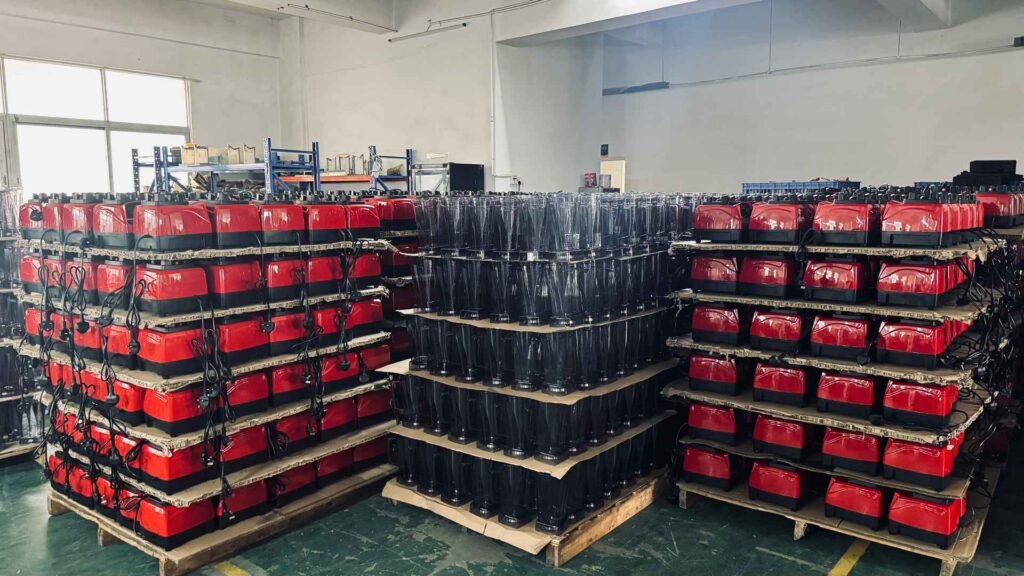
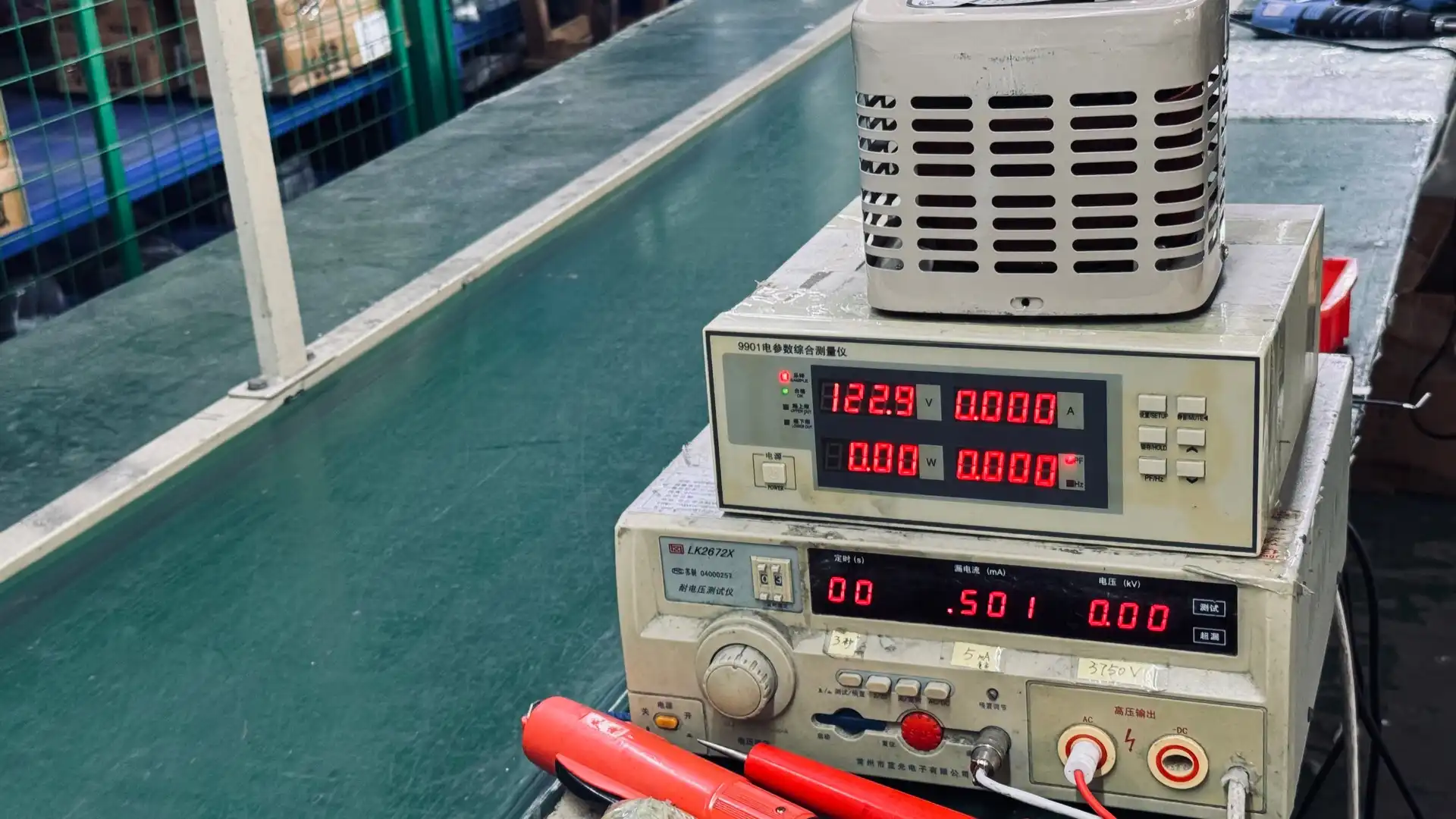
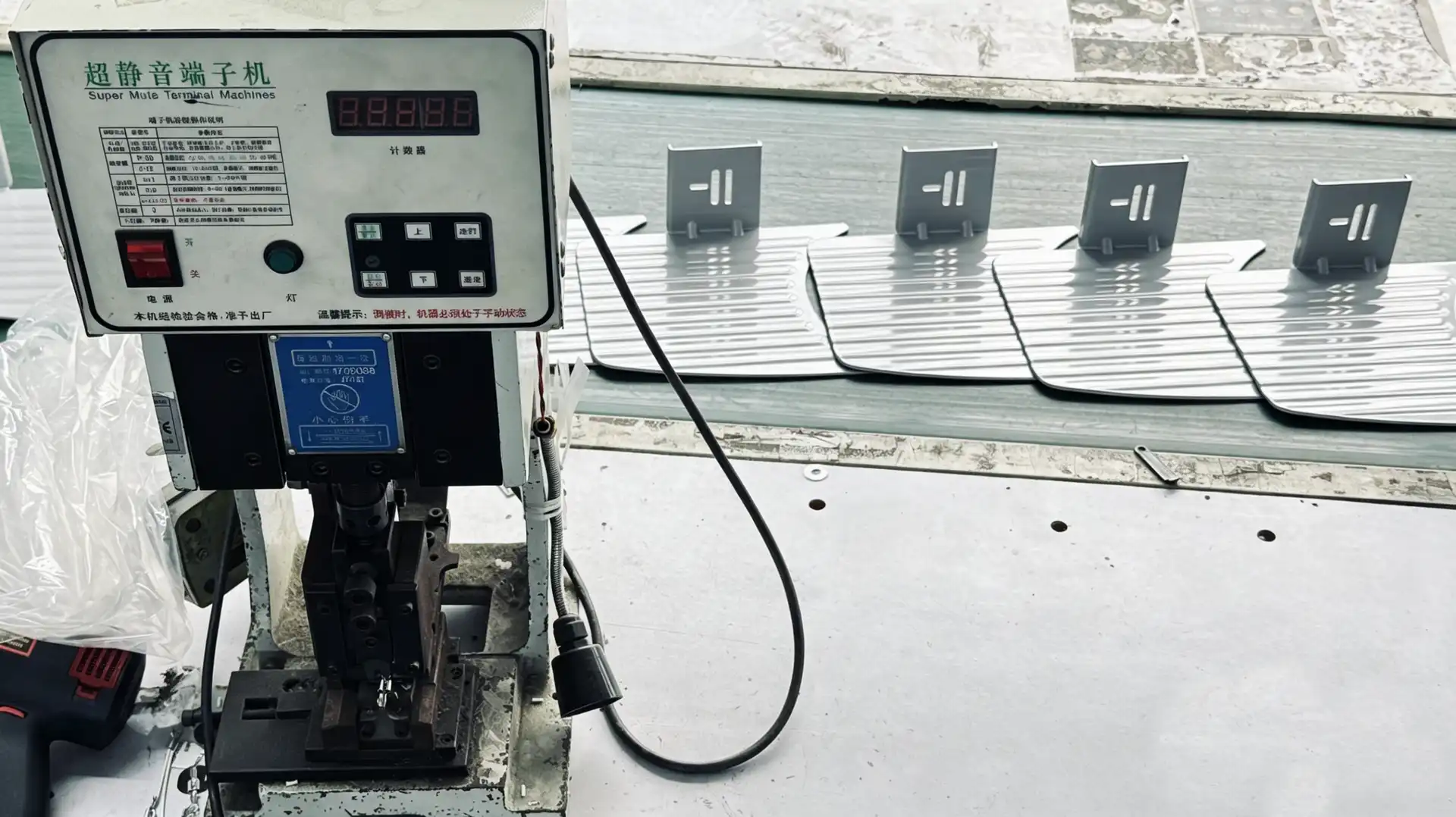
Relying solely on external annual audits is insufficient for maintaining mass production quality[cite: 1]. Therefore, AIMA operates a fully equipped internal QC testing laboratory at our Zhongshan facility[cite: 1]. Every production batch undergoes rigorous safety checks before outer carton sealing[cite: 1].
6.1 Mandatory Production Line Quality Checks
- 9901 Hipot & High Voltage Testing: Applies 100% high-voltage insulation tests to verify zero electrical leakage[cite: 1].
- Glow Wire & Ball Pressure Testing: Verifies flame resistance of plastic housings up to 850°C[cite: 1].
- RoHS Chemical Screening: Inspects incoming raw wires, circuit boards, and plastic resins[cite: 1].
- Drop & Vibration Stress Analysis: Simulates rough sea transit to guarantee packaging integrity[cite: 1].
7. Supplier Audit Checklist for Regulatory Compliance
Prior to finalizing contract terms with an OEM kitchen appliance factory, evaluate their compliance readiness[cite: 1]:
- Can the supplier provide valid CE, CB, and RoHS test reports naming the exact production factory?[cite: 1]
- Does the facility perform 100% online Hipot electrical insulation tests on every assembled unit?[cite: 1]
- Are internal motor wires and power cords fitted with certified flame-retardant terminals?[cite: 1]
- Does the factory offer customizable 120V / 220V voltage ratings and localized plug options (EU/UK/US/AU)?[cite: 1]
8. About Zhongshan AIMA Electrical Appliance Co., Ltd.
Zhongshan AIMA Electrical Appliance Co., Ltd. is a leading OEM/ODM manufacturer specializing in commercial high-speed blenders, cast iron food slicers, induction cooktops, and hand mixers[cite: 1]. Located in Xiaolan Town, Zhongshan City, Guangdong Province, China, our 3,000 square meter factory operates under ISO9001 quality management standards[cite: 1]. With over 15 years of manufacturing heritage, we deliver reliable, high-margin kitchen appliances to global distributors and supermarket buyers[cite: 1].
In addition, AIMA employs a dual-brand market structure[cite: 1]. While AIMA represents our industrial engineering manufacturing base, OTOJIA serves as our premium export brand for international distribution[cite: 1]. By sourcing directly from our factory, buyers connect directly with production lines, cutting out trading intermediaries and ensuring 100% regulatory compliance[cite: 1].
Why Global Buyers Trust AIMA Compliance
- Complete testing laboratory: Hipot, Glow Wire, Leakage, and RoHS[cite: 1]
- Direct factory sourcing with zero trading markups[cite: 1]
- In-house production of 2200W pure copper wire motors[cite: 1]
- Verified export compliance: CE, CB, RoHS 2.0, and UL-ready architectures[cite: 1]
9. Frequently Asked Questions (FAQ)
Q1: Are AIMA commercial food slicers CE and RoHS certified for European import?
A: Yes[cite: 1]. All AIMA and OTOJIA food slicers hold full CE (LVD & EMC) certificates and RoHS 2.0 compliance, ensuring frictionless customs clearance across all EU member states[cite: 1].
Q2: Can AIMA supply 120V 60Hz appliances for North American buyers?
A: Absolutely[cite: 1]. We manufacture specialized 120V / 60Hz motor configurations for blenders and slicers equipped with US standard plugs and UL-ready components[cite: 1].
Q3: What safety testing is conducted on commercial blenders before shipment?
A: Every unit undergoes 100% online electrical parameter inspection, Hipot high-voltage insulation testing, ground continuity checks, and operational load testing[cite: 1].
Q4: Can importers request custom private label branding on certified models?
A: Yes[cite: 1]. We offer complete OEM/ODM customization including laser-etched brand logos, custom-printed box packaging, localized user manuals, and regional plug selection[cite: 1].
Ensure 100% Compliance for Your Next Appliance Order
Contact our Supply Chain & Compliance team to request official CE, CB, and RoHS test reports, product specifications, and direct wholesale pricing[cite: 1].
Request Certificate DocumentationDirect Contact: Ricardo — Marketing & Supply Chain Manager | Email: sales1@zs-aima.com[cite: 1]