Table of Contents
- 1. Why Retail Chains Standardise Slicer Fleets
- 2. MS-1909 Parameters and Positioning
- 3. MS-2203 Parameters and Positioning
- 4. Head-to-Head Comparison Matrix
- 5. Throughput and Store Format Matching
- 6. Fleet Maintenance and Spare Parts
- 7. Factory QC and Workshop Evidence
- 8. Procurement Advice for Chain Projects
- 9. Frequently Asked Questions (FAQ)
1. Why Retail Chains Standardise Slicer Fleets
Large retail groups operate hundreds of delicatessen and meat counters under one procurement contract. Consequently, every additional model number increases training time, spare-part stock, and audit complexity.
Standardisation therefore reduces total cost of ownership. Specifically, one blade size means one sharpening process, one guard design, and one maintenance manual.
Nevertheless, a single model rarely suits every store format. Small convenience outlets, standard supermarkets, and hypermarkets differ in volume per hour. As a result, chains usually approve two blade diameters from the same platform family.
1.1 Cost Drivers Beyond Unit Price
Blade replacement, carriage wear, motor service, and staff training dominate lifecycle cost. Additionally, downtime at a busy counter has a measurable revenue impact.
1.2 Specification Discipline
A written specification prevents suppliers from quoting lighter machines at attractive prices. Moreover, it gives engineers a baseline for approving substitutes.
2. MS-1909 Parameters and Positioning
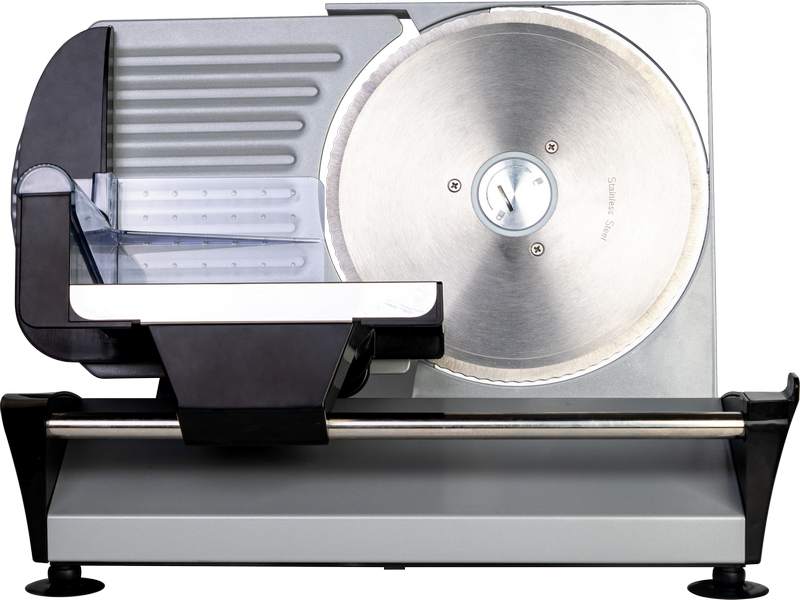
The MS-1909 is a 190mm iron casting slicer designed for compact stores and medium volume counters. Furthermore, its smaller footprint suits counters where space between the sink and the display case is limited.
| Parameter | MS-1909 |
|---|---|
| Blade Diameter | 190mm (7.5 inch) stainless steel |
| Motor | 220W pure copper stator |
| Transmission | Gear-driven, high torque |
| Housing | Iron casting body |
| Thickness Control | 0-15mm precision knob |
| Best Fit | Convenience stores, satellite deli counters |
| Container Loading | 1,500 pcs per 40HQ (high density packing) |
2.1 Advantages in Small Formats
A smaller blade reaches service speed faster, which suits short bursts of slicing. Additionally, the lighter carriage is easier to remove during cleaning.
2.2 Limitations to Consider
Large diameter products are harder to position on a 190mm blade. Therefore, stores slicing whole hams frequently usually prefer the 220mm platform.
3. MS-2203 Parameters and Positioning
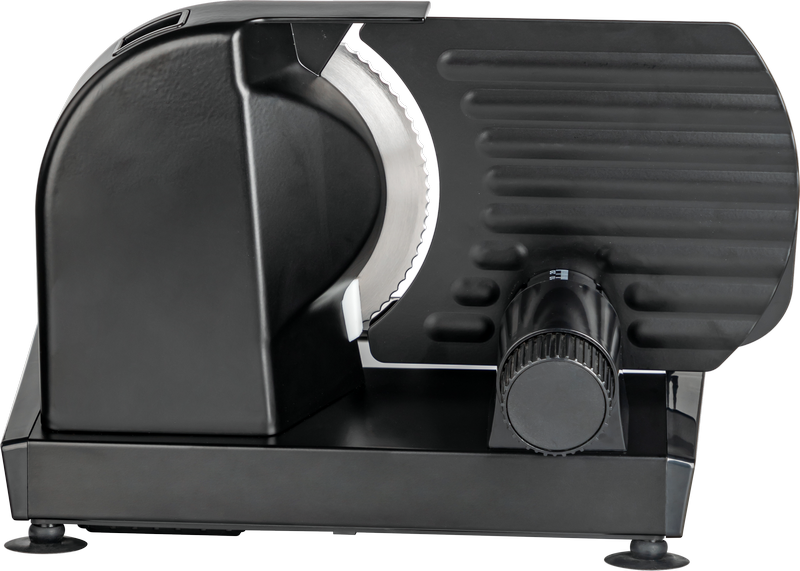
The MS-2203 is a 220mm iron casting slicer built for high volume deli and meat counters. Moreover, the extra blade diameter improves product support for large pieces.
| Parameter | MS-2203 |
|---|---|
| Blade Diameter | 220mm (8.7 inch) stainless steel |
| Motor | 220W pure copper stator |
| Transmission | Gear-driven, anti-stall torque |
| Housing | Iron casting body, anodised finish |
| Thickness Control | 0-20mm precision knob |
| Best Fit | Supermarkets, hypermarkets, central meat preparation |
| Container Loading | 1,380 pcs per 40HQ |
3.1 Higher Volume Capability
The longer cutting edge reduces the number of strokes per portion. Consequently, staff finish peak-hour queues faster.
3.2 Structural Mass and Vibration
Iron casting absorbs vibration, which keeps slice thickness stable. Additionally, the mass prevents the machine from creeping across the counter.
4. Head-to-Head Comparison Matrix
The table below summarises the differences that matter during a chain tender review.
| Criteria | MS-1909 (190mm) | MS-2203 (220mm) |
|---|---|---|
| Daily portions (typical) | 300 – 700 | 700 – 1,500 |
| Counter footprint | Compact | Standard |
| Thickness range | 0-15mm | 0-20mm |
| Whole ham support | Moderate | Strong |
| Cleaning time | Fast, lighter parts | Fast, heavier parts |
| Fleet role | Satellite and convenience | Main deli and meat counters |
| 40HQ loading | 1,500 pcs | 1,380 pcs |
5. Throughput and Store Format Matching
Matching blade diameter to store format prevents both over-spending and bottlenecks. Therefore, segment your estate before finalising quantities.
5.1 Store Segmentation Model
| Store Type | Recommended Model | Reason |
|---|---|---|
| Convenience (under 800 m²) | MS-1909 | Space saving, adequate volume |
| Standard supermarket | MS-2203 | Higher throughput at peak |
| Hypermarket or central kitchen | MS-2203 plus spare carriage | Continuous operation |
5.2 Peak Hour Simulation
Estimate the worst thirty minutes rather than the daily average. Consequently, the specification covers Christmas and weekend peaks without stalling.
6. Fleet Maintenance and Spare Parts
Fleet reliability depends on parts availability, not on marketing claims. Therefore, define spare levels in the supply contract.
- Two blades and one carriage per twenty slicers.
- One thickness knob assembly per fifty slicers.
- Annual blade sharpening schedule for high volume stores.
- Written spare-part list with each container shipment.
6.1 Service Documentation
Technicians need exploded diagrams and torque values. We therefore supply service documents to distributors and chain engineering teams on request.
7. Factory QC and Workshop Evidence
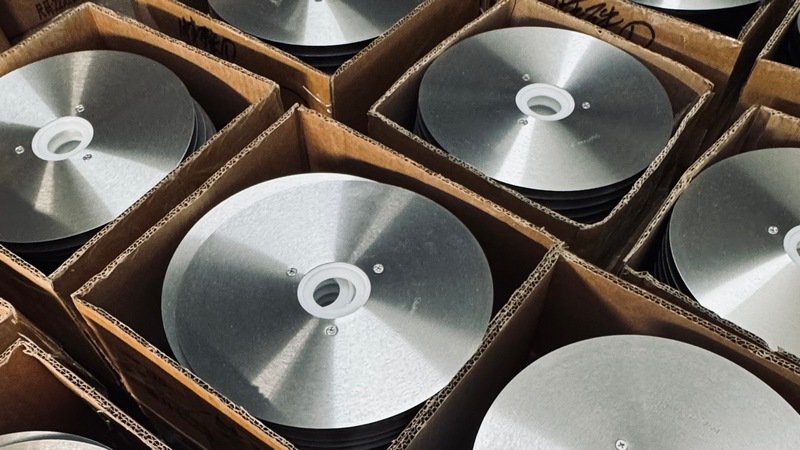
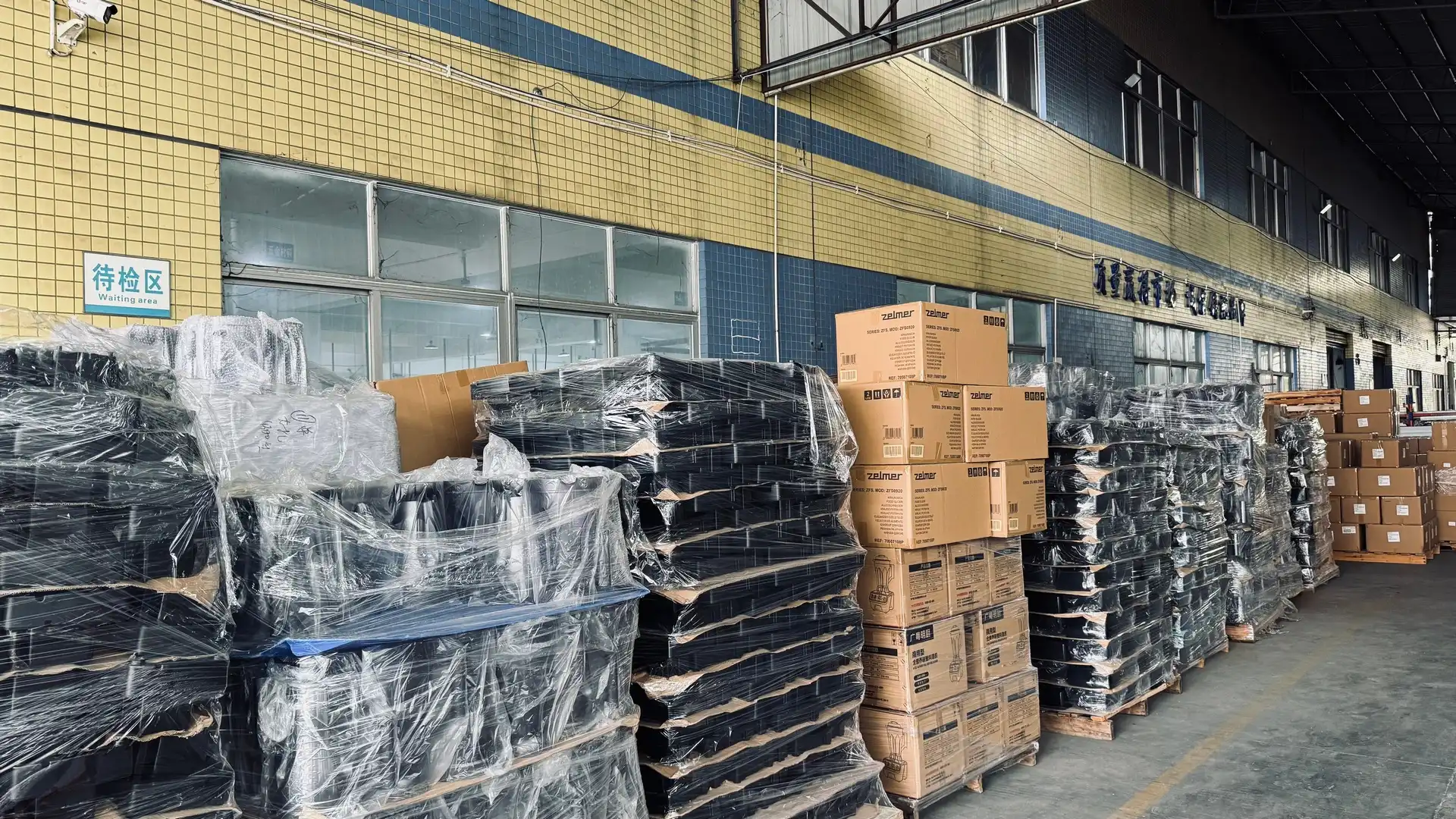
Retail engineering teams increasingly audit the production site remotely. Therefore, the images below show the slicing machine workshop.
7.1 Documentation Available on Request
Buyers can request inspection reports, hipot test records, and packing checklists. Additionally, we support third-party inspection appointments.
8. Procurement Advice for Chain Projects
Chain projects succeed when specification, pilot, and rollout follow a defined sequence. Therefore, use this checklist.
- Segment stores by volume before deciding blade sizes.
- Pilot one region with twenty to fifty units and record failure data.
- Lock the specification including thickness range, blade diameter, and plug type.
- Combine containers with other appliances to optimise freight.
- Schedule training before the first delivery week to reduce damage.
Furthermore, agree a review meeting after six months of operation. That meeting converts field feedback into the next specification revision.
9. Frequently Asked Questions (FAQ)
Q1: Which blade size is better for a commercial food slicer for retail chains?
A: Use 190mm models for convenience stores and satellite counters, and 220mm models for standard supermarkets where deli volume exceeds 700 portions per day.
Q2: Do both models share the same motor specification?
A: Yes. Both platforms use a 220W pure copper stator with gear-driven transmission, which simplifies fleet maintenance.
Q3: How many slicers fit in a 40HQ container?
A: Approximately 1,500 units of the MS-1909 and 1,380 units of the MS-2203, depending on carton design and packing density.
Q4: Can chains order blades and carriages separately?
A: Yes. We recommend adding two blades and one carriage per twenty slicers to the first container.
Q5: Does AIMA provide service diagrams?
A: Yes. Exploded diagrams and torque references are released to distributors and chain engineering departments on request.
Request Chain Supply Quotation
Contact our export team for MS-1909 and MS-2203 pricing, fleet spare-part lists, and mixed container loading plans for retail rollouts.
Email Our Export TeamDirect Contact: sales2@zs-aima.com