Commercial Blender Troubleshooting
Key Takeaways
- A drawing review before quotation prevents most custom-blender surprises.
- The DFM report is the factory's first deliverable, not a price.
- A functional sample must prove the customer's recipe, not only the appearance.
- Freeze the approved drawing, BOM and packaging before the pilot run.
Table of Contents
- The drawing review is the first gate in custom juice blender projects
- A DFM review turns the drawing into a buildable blender
- The motor and jar specification decide whether the sample will match
- A sample should prove function, not just looks
- The housing, panel and branding are controlled by one artwork master
- Voltage, plug and certification must be fixed before the pilot run
- The pilot run and approval package protect the repeat order
- Change control keeps a custom juice blender stable
- Frequently Asked Questions (FAQ)
1. The drawing review is the first gate in custom juice blender projects
The solution is a structured drawing review before any quotation. The review checks the overall dimensions, motor and duty cycle, jar and blade, housing and panel, voltage and plug, certification market, and packaging. It returns a written question list and a redlined drawing, not a verbal opinion. The commercial blender range shows the platforms the factory already builds, which helps separate a new design from a variant.
Start with the product duty cycle, not the exterior. A juice bar may run frozen fruit, ice and dense smoothies for hours, while a hotel buffet may run short batches. Ask for the recipe, batch size, run/rest pattern and expected daily volume; those inputs decide the motor and thermal protection before the housing is discussed.
Treat the drawing as a proposal until every interface is confirmed. The jar seat, blade coupling, motor mount, panel opening, screw bosses and cord exit must agree across the drawing and the sample. A dimension that is not called out is not approved.
Use a drawing review table to force the same questions on every project.
| Drawing area | What to confirm | Output |
|---|---|---|
| Overall dimensions | Height, width, depth, jar clearance and counter space | Redlined drawing |
| Motor and duty cycle | Voltage, wattage class, speed, thermal protection and run/rest cycle | Motor specification |
| Jar and blade | Capacity, material, wall thickness, blade geometry, coupling and bearing | Jar and blade specification |
| Housing and panel | Wall thickness, draft, ribs, screw bosses, panel layout and service access | DFM notes |
| Voltage and plug | 110V/60Hz or 220–240V/50–60Hz, plug type and cord length | Market version |
| Certification | Destination, required file, model scope and label language | Document list |
| Packaging | Retail box, master carton, foam, pallet and barcode | Packaging specification |
A written review protects both sides. Record the drawing revision, date, assumptions and open questions, and send the same document to the customer before quoting. Verbal approvals are easy to misremember and hard to audit.
2. A DFM review turns the drawing into a buildable blender
The solution is a DFM review that returns a redlined drawing, a question list and a build note. The factory checks mold draft, wall thickness, ribs, screw bosses, parting lines, motor mounting, airflow and service access. The output is a design the factory can build, not a polite confirmation that the drawing was received.
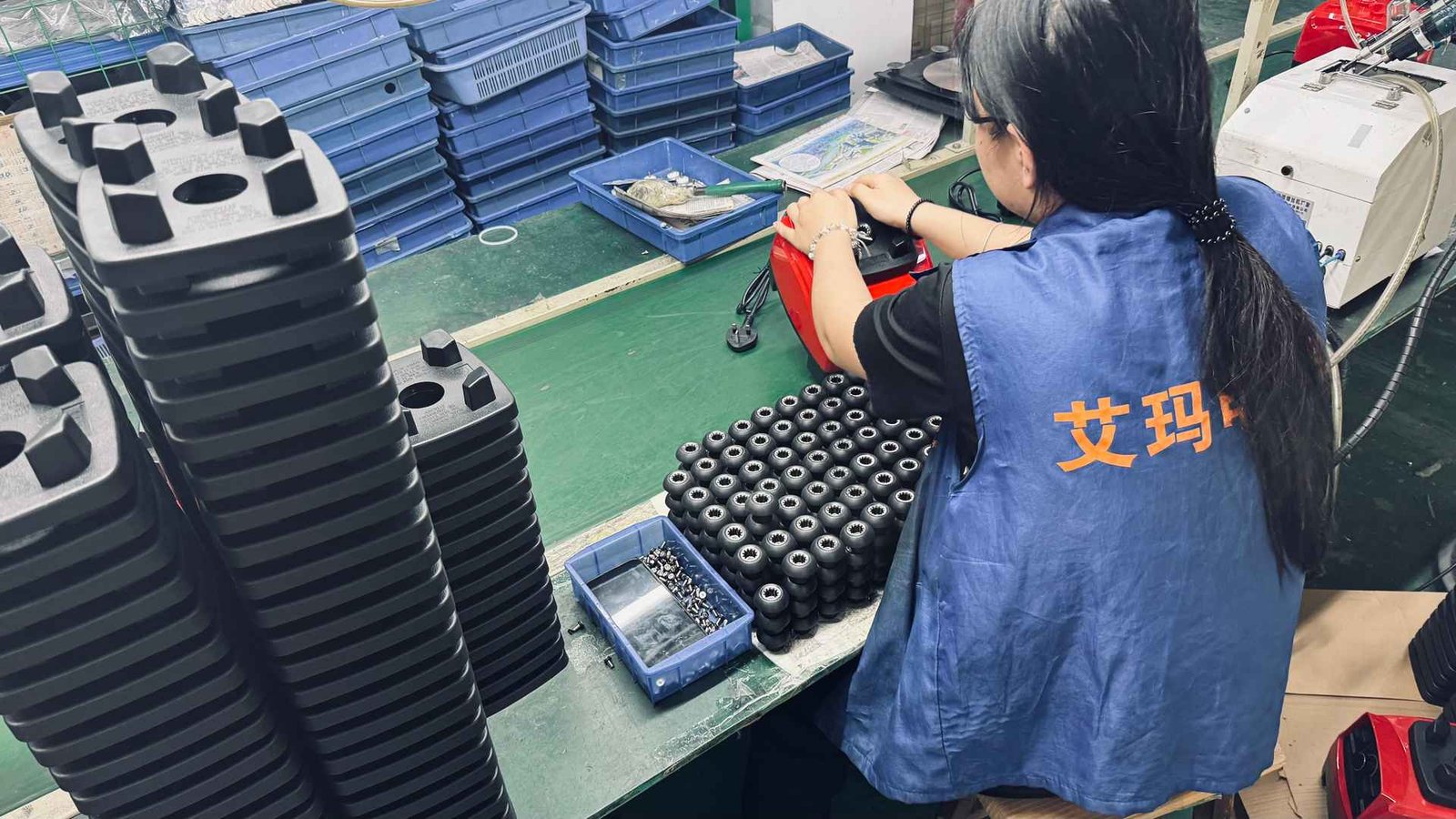
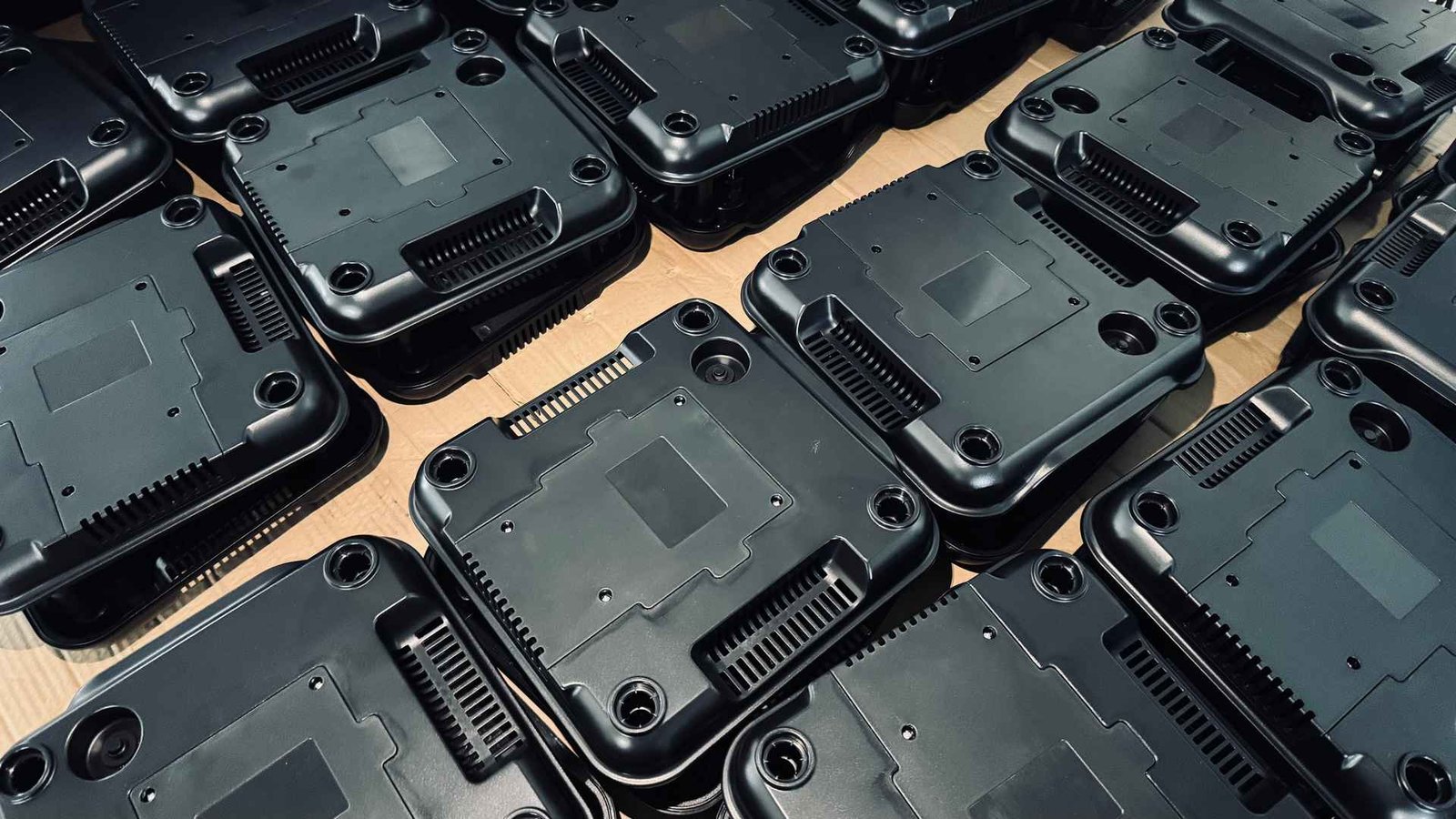
Review the housing for molding and assembly, not only appearance. ABS injection molding needs draft, uniform wall sections and adequate ribs; a thin cosmetic shell can warp, rattle or fail at the screw bosses. AIMA’s in-house ABS injection molding and assembly make those points part of the same review, not a separate supplier conversation.
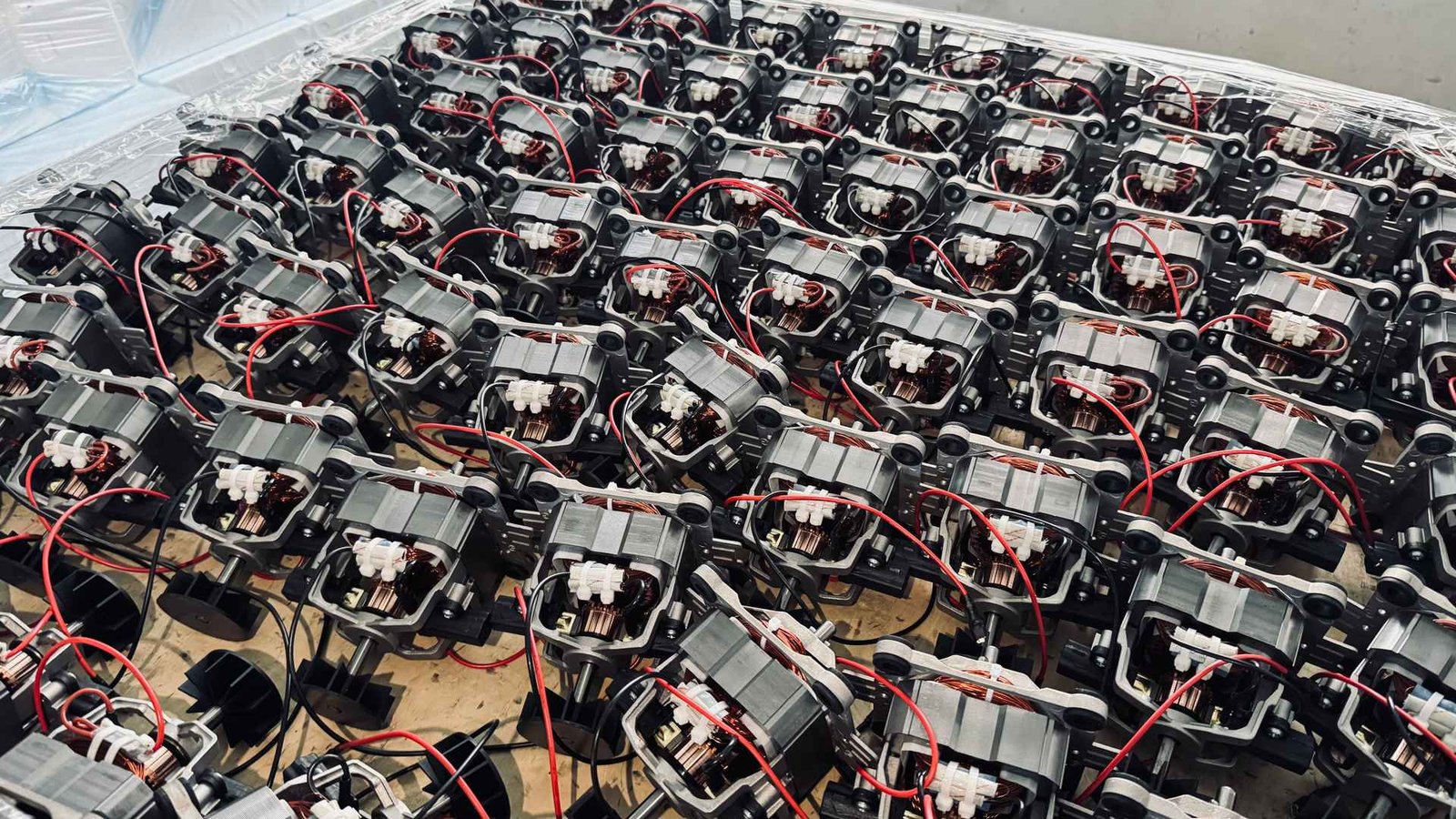
Review the motor mount and airflow before the first sample. A 2200W-class motor needs a stable mount, a matched cooling path and enough clearance for the enclosure; a misaligned mount shows up as vibration, noise or a hot base.
Review serviceability while the design is still open. The jar, blade, coupling, fuse and control board should be reachable without destroying the housing; a design that cannot be serviced becomes a return, not a custom product.
3. The motor and jar specification decide whether the sample will match
The solution is to lock the motor version, jar geometry and blade coupling as one performance system. A 2200W label does not define copper volume, duty cycle, thermal protection or torque. The OTJ-329 heavy-duty commercial blender is one platform to compare, but the final motor must be confirmed against the customer’s recipe.
Match the motor to the customer’s juice recipe and duty cycle. Frozen fruit and ice need torque and a thermal path; continuous juice-bar cycles need a duty cycle the protector can tolerate. A motor that is right for one shop can be wrong for another.
Treat the jar and blade as performance parts, not containers. Jar material, wall thickness, blade count, blade geometry, bearing quality and the coupling change yield, texture, noise and service life. Ask for a juice test, not only a capacity number.
Confirm the voltage version before the motor is ordered. The 110V/60Hz and 220–240V/50–60Hz versions are separate motor versions, not a universal 100–240V design; the plug, label and manual follow the same decision.
4. A sample should prove function, not just looks
The solution is a functional sample built to the agreed motor, jar, blade and control specification. A shell with the right color proves the look, not the machine. The OTJ-KC78D soundproof commercial blender shows how the enclosure and jar are specified together; the sample should carry the same configuration.
Test the sample with the customer’s product, not with water. Record juice yield, texture, temperature rise, cycle time, noise and vibration under the same load the customer will use; water hides torque and heat problems.
Approve the sample against a written checklist, not a photo. Check dimensions, jar fit, blade movement, control response, leakage, safety, noise and packaging; each item needs a pass/fail result and a signature.
Keep the golden sample and its test record. The approved sample becomes the physical reference for the pilot run and the repeat order; without it, every later discussion restarts.
5. The housing, panel and branding are controlled by one artwork master
The solution is one approved master for color, logo, panel layout and packaging artwork. A custom blender can fail at the surface even when the motor is right: a color mismatch, a translated warning with the wrong wording, or a carton logo that does not match the approved file.
Approve color under production light, not on a screen. Use a physical color chip or Pantone reference, agree gloss and texture, and accept that ABS batches can vary slightly; the approved chip is the reference, not a phone photo.
Freeze the panel layout with the market language and safety text. Buttons, icons, voltage, warnings and the model number must be reviewed together; a last-minute translation change can break the overlay and the manual.
Control the packaging artwork with the same revision as the product. The retail box, master carton, label and barcode should carry the same revision number as the drawing; mixed revisions create mixed shipments.
6. Voltage, plug and certification must be fixed before the pilot run
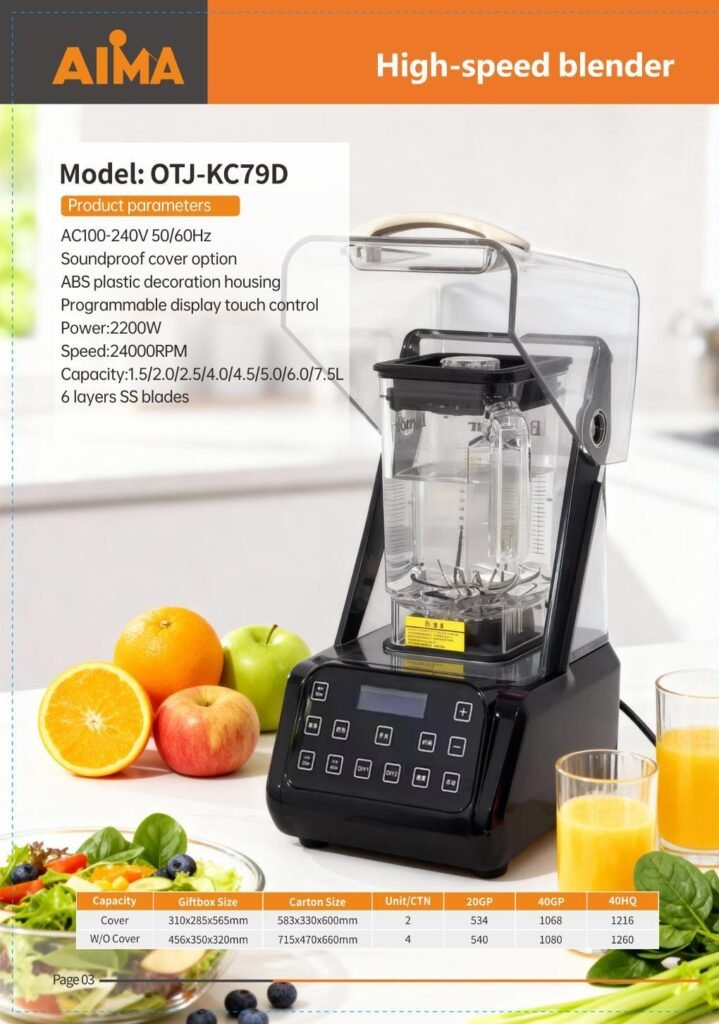
The solution is to freeze the market version, plug, language and certification scope before the pilot run. The OTJ-KC79D soundproof commercial blender is one example where the panel and voltage version should be confirmed together. The 110V/60Hz and 220–240V/50–60Hz versions are separate configurations; the plug, cord, label and manual must match the destination.
Do not treat certification as a blanket promise. Certification is model- and market-specific; ask for the certificate scope and report number that matches the exact SKU, voltage, plug and enclosure. “CE available” without a model and report is not a reviewable answer.
Match the plug and cord to the destination. Plug type, cord length, strain relief and markings are part of the safety review; an adapter is not a market version.
Put the voltage and certification on the drawing and the carton. A mixed 110V/220V line is a recall risk; the label, carton and invoice should all show the same version.
7. The pilot run and approval package protect the repeat order
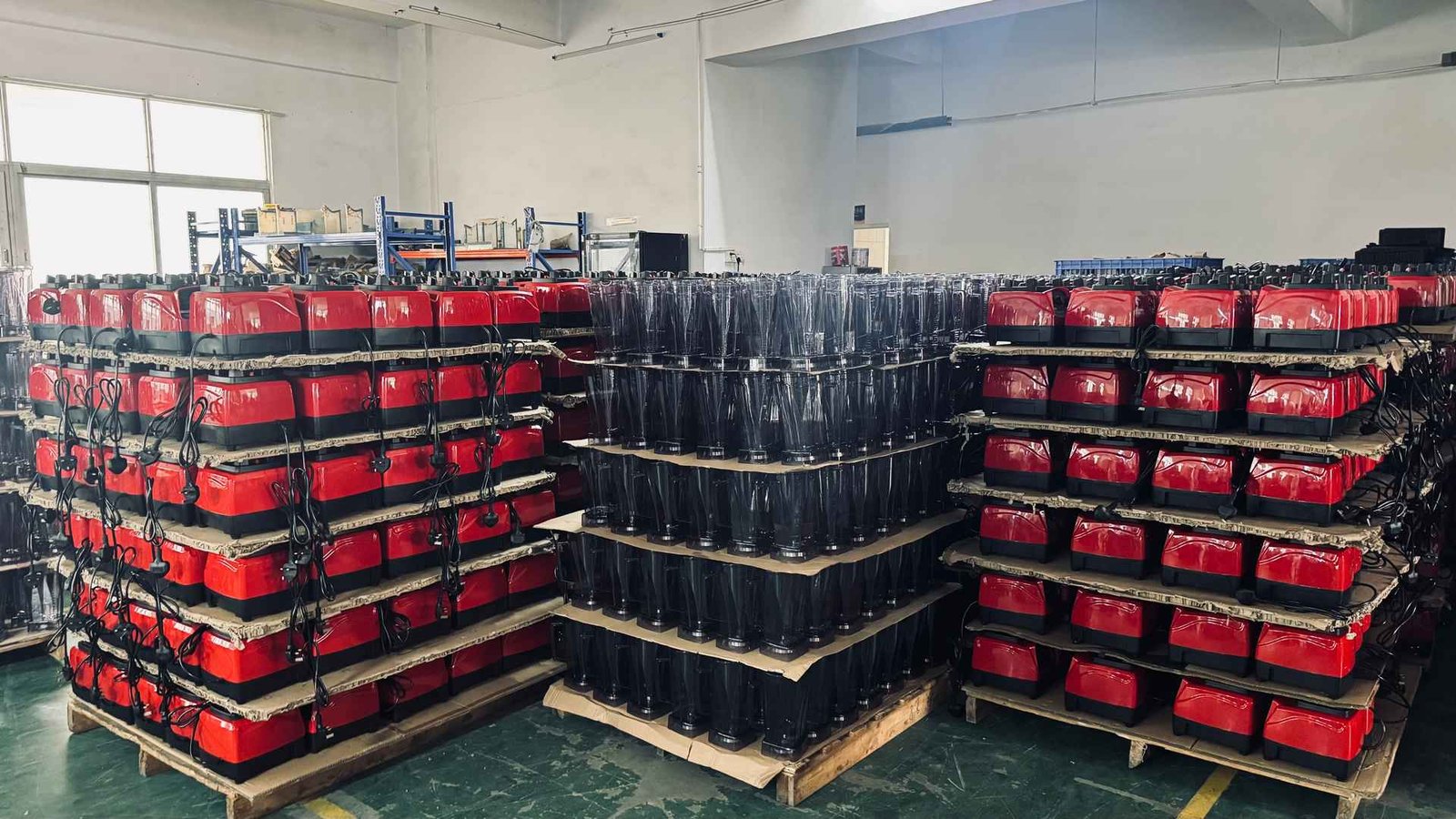
The solution is a pilot run with a signed approval package before mass production. The pilot proves the tooling, assembly sequence, test gates and packaging, not just the design. It is the last cheap place to find a problem.
Build the pilot with production tooling and production operators. A hand-built sample can hide a fixture problem, a tolerance stack or a cycle time that only appears on the line.
Measure the pilot against the golden sample and the drawing. Record dimensions, performance, safety tests, noise and packaging results; any deviation needs a decision, not a note.
Approve the package, not just the units. The signed package should include the approved drawing, BOM, motor test record, jar and blade specification, panel artwork, packaging specification and inspection checklist.
Use an approval package table to make the sign-off auditable.
| Approval item | Evidence | Why it matters |
|---|---|---|
| Golden sample | Signed sample with serial number and date | Physical reference for the pilot and repeat order |
| Approved drawing | Revision number and customer sign-off | Design baseline |
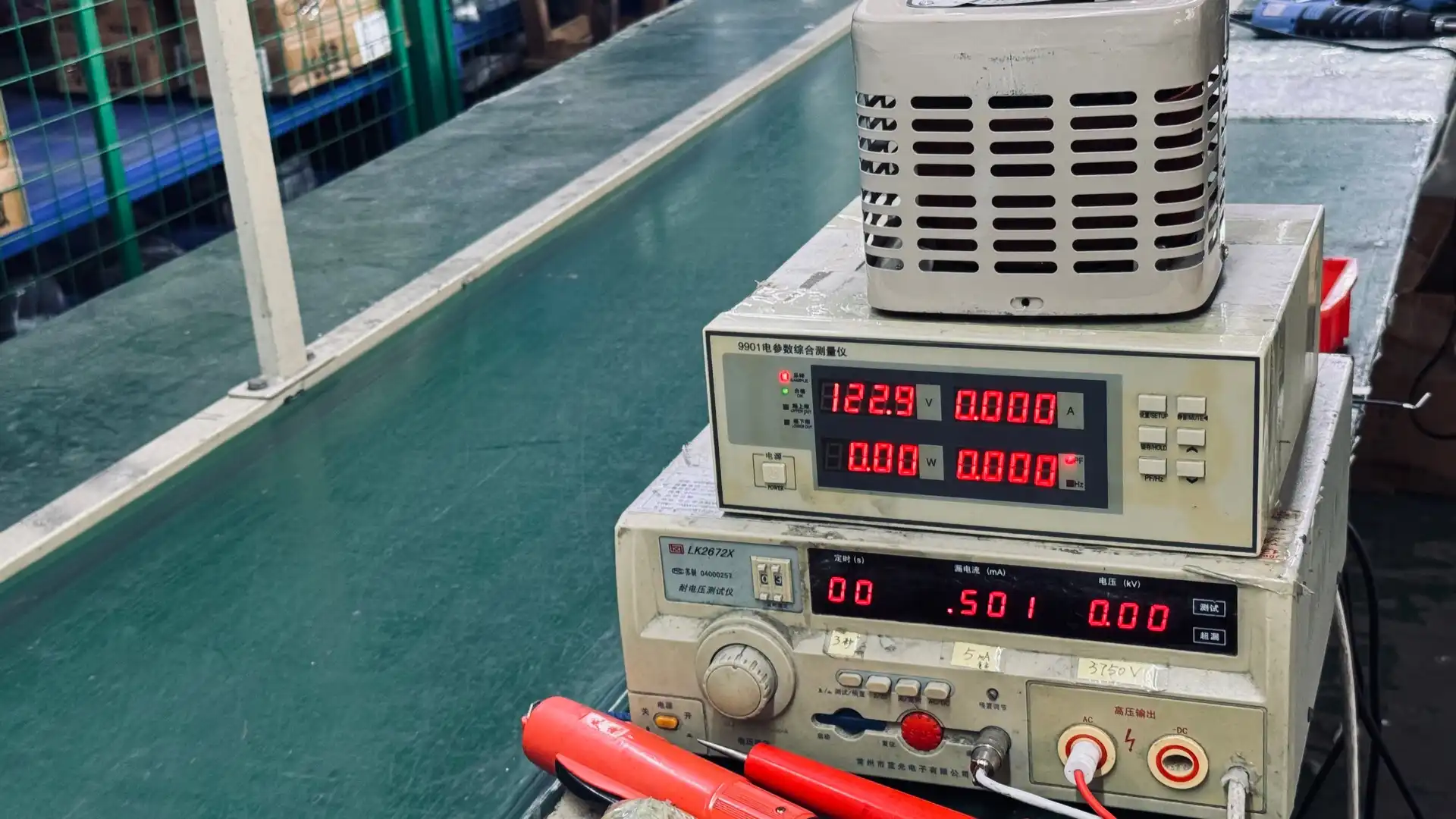
| Motor test record | Winding, speed, thermal and hipot results | Performance and safety evidence |
| Jar and blade specification | Material, dimensions and coupling | Juice yield and service life |
| Panel and artwork | Color chip, logo file and language proof | Brand consistency |
| Packaging specification | Box, carton, label and barcode | Repeat order accuracy |
| Inspection checklist | Dimensions, function, safety and packaging | Pilot approval |
8. Change control keeps a custom juice blender stable
The solution is a frozen specification plus a written change-control process. After approval, no motor, jar, blade, capacitor, panel or carton should change without a revision and a re-validation decision.
Control alternate parts before they reach the line. A second-source motor or jar can look identical and still change torque, fit or service life; the customer should approve the alternate against the same test record.
Re-test any change that affects performance, safety or packaging. A cosmetic change may need a visual approval; a motor, blade, voltage or enclosure change needs a functional and safety review.
Keep the revision history with the order. The drawing revision, BOM revision, packaging revision and sample serial number should travel with the purchase order so the next repeat is traceable.
9. Frequently Asked Questions (FAQ)
The solution is to resolve these five questions before the drawing review starts.
Can AIMA build a custom juice blender from my drawing?
Yes, AIMA can review a commercial blender drawing for an OEM/ODM project, but the drawing is a starting point, not a production-ready specification. AIMA does not manufacture dedicated juicers; the review is for a commercial blender used in juice, smoothie or cold-dessert production.
What should I send with the drawing?
Send the drawing, target market, voltage and plug, jar size, recipe, duty cycle, packaging and certification requirements. Add the expected daily volume and the cleaning routine, because both affect the motor, jar and service access.
Can you match a specific motor or jar?
Only after the factory confirms the motor version, jar geometry and coupling as one system; a wattage number alone is not a specification. Ask for the thermal protection, duty cycle, blade geometry and test record that match the drawing.
How do you protect my drawing?
Use an NDA and a documented drawing-control process before sharing the file; confirm the factory’s confidentiality and IP terms in writing. Keep a revision log and limit access to the people who need the drawing for the review.
What is the difference between a sample and a production order?
A sample proves the design; a production order proves the process. Approve the golden sample and the pilot-run package before repeating the order, because tooling, fixtures and operators can change the result.
A drawing review starts with the drawing and the target market. Send both, plus the voltage version, jar size and recipe, to sales2@zs-aima.com for a DFM review.
Email RicardoContact: Ricardo | sales2@zs-aima.com