Commercial Blender Sourcing
Table of Contents
- The motor sets the floor of the quote
- Jar, blade and coupling: the parts that fail first
- Housing, soundproof enclosure and control panel
- Certification and market version
- Order volume, packaging and Incoterm
- How to compare two quotes line by line
- What to send for a written quotation
- What a factory quote should disclose
- Frequently Asked Questions (FAQ)
1. The motor sets the floor of the quote
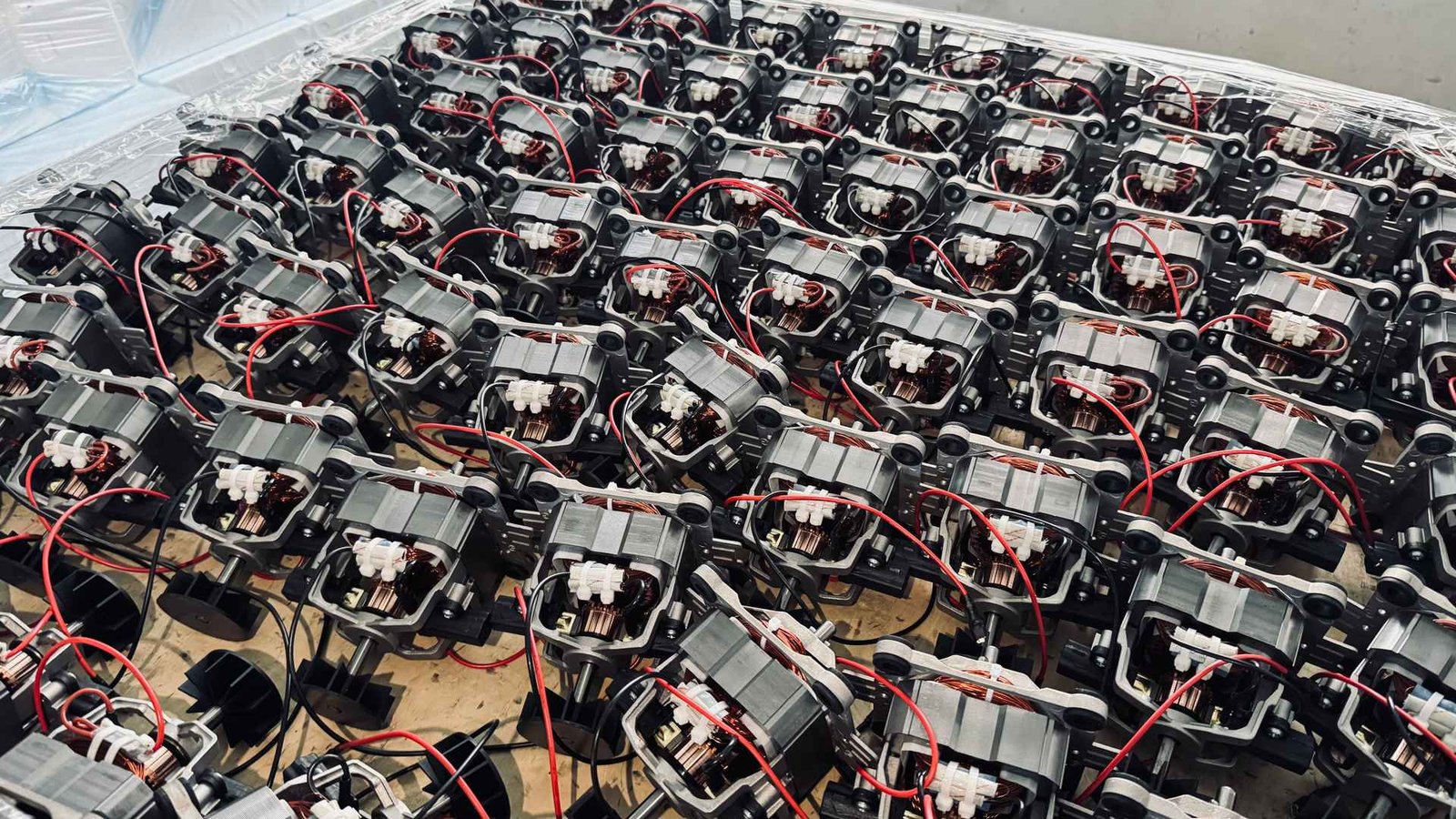
2200W describes a power class, not a complete motor specification. Two motors can both draw 2200W while using different copper volumes, stator stacks, bearings, thermal protection and duty-cycle ratings. That is why the motor is the first place to look when one quote is materially lower than another.
A commercial kitchen motor is expected to survive repeated blending cycles, frozen fruit, ice and dense nut pastes. A motor built for short household bursts can reach the same peak wattage but may run hotter, lose torque sooner and shorten the machine’s service life. Ask for the winding material, the thermal cutoff setting and the duty cycle stated in the test record, not only the wattage on the label.
The motor also drives the cost of the electronics around it. A stronger motor needs a matched control board, a suitable capacitor, a thermal path and a base that can absorb vibration. When a quote excludes those parts, the difference is not a discount; it is a different machine.
2. Jar, blade and coupling: the parts that fail first
The jar and blade assembly are the most visible cost drivers after the motor, and the most common source of after-sales complaints. Jar material, wall thickness, lid seal, blade count, blade geometry, bearing quality and the coupling between the blade and the motor all change the quote.
A thicker jar and a mechanically secured blade assembly cost more than a thin jar with a press-fit coupling. They also change the machine’s vibration, noise and service life. For a smoothie bar or hotel breakfast buffet, the difference is measured in downtime, not in the purchase order.
Ask whether the blade assembly is serviceable, whether the jar is available as a spare part, and whether the coupling is designed for the motor’s torque. If the answer is vague, the lower quote may be using a consumable design. The OTJ-KC78D soundproof commercial blender is one example of how the jar, blade and enclosure are specified together rather than priced as separate commodities.
3. Housing, soundproof enclosure and control panel
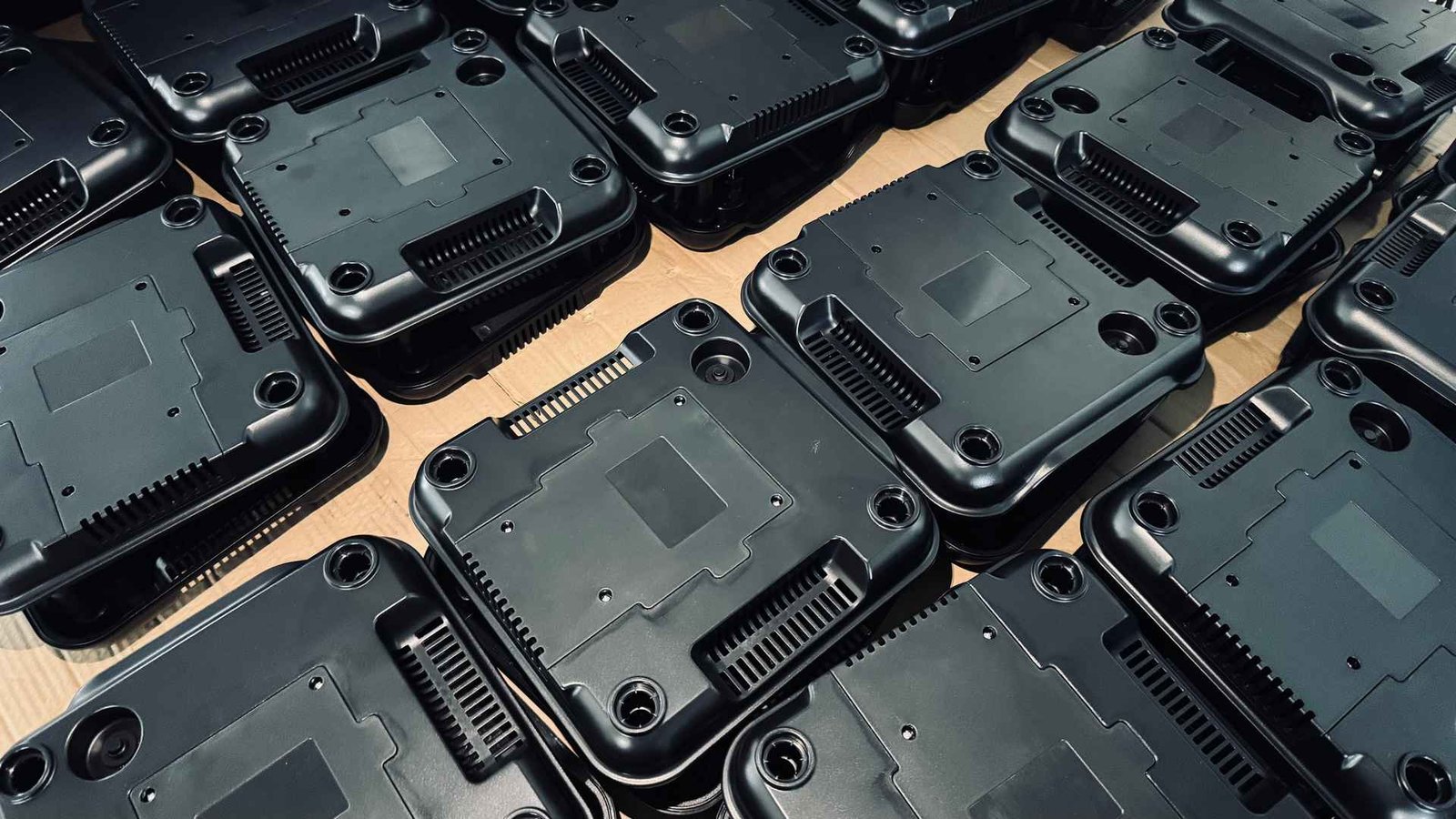
The housing is not a cosmetic shell. It carries the motor, aligns the jar, isolates vibration and, on soundproof models, controls the noise path. A soundproof enclosure adds an outer shell, acoustic lining, airflow design and a different lid or door mechanism. Those parts add material, tooling and assembly time, so a soundproof blender should not be expected to quote at the same level as an open-frame model.
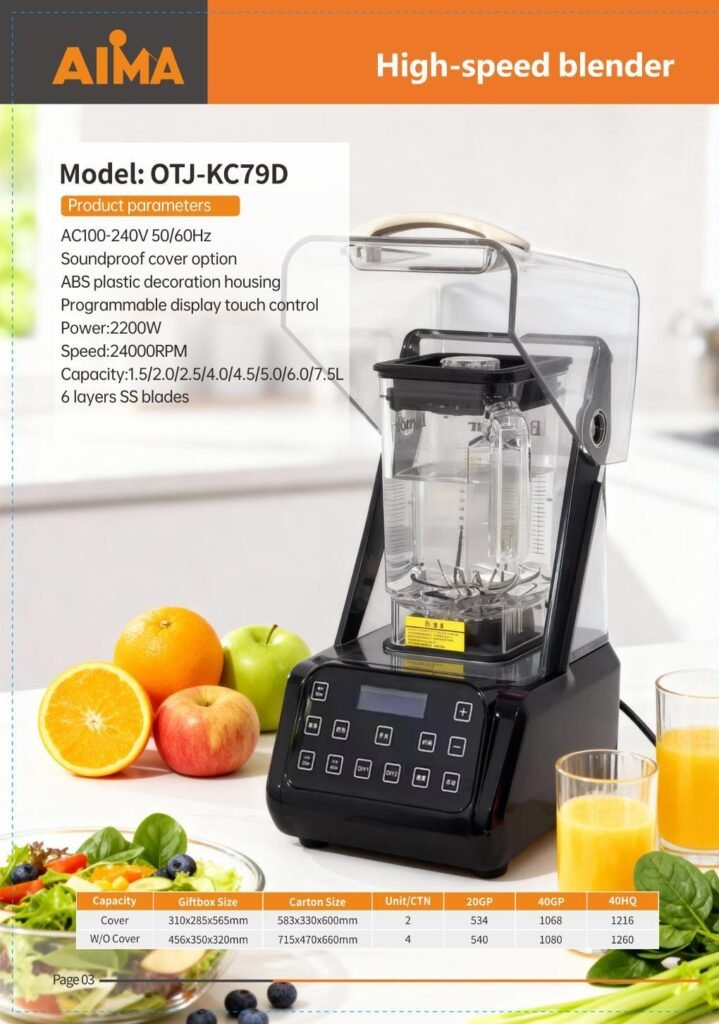
Ask how noise is measured, not only what decibel number appears in a brochure. The test method, distance, load and room conditions matter. A number without a method is not a comparable specification. The OTJ-KC79D soundproof commercial blender shows the enclosure, control panel and jar as one system.
Control panels also move the quote. A mechanical knob with a timer is easier to service; a touch panel with presets adds electronics, tooling and a different warranty profile. For a hotel or chain account, the control interface may matter more than the motor on paper because it determines how staff use the machine every day.
4. Certification and market version
A quote for the European market is not the same as a quote for North America or the Middle East. Voltage, frequency, plug type, language of the manual, label content and the certification file all change with the destination. The 110V/60Hz version and the 220–240V/50–60Hz version use different motor versions; they should be quoted as separate configurations, not as one universal model.
Certification is model-specific. A CE or CB file for one configuration does not automatically cover a different voltage, plug, motor or enclosure. Ask for the certificate scope and the report number that matches the exact SKU you are buying. If a supplier says “CE available” without naming the model and report, the quote is not comparable.
For a heavy-duty blender used in a commercial kitchen, the OTJ-329 heavy-duty commercial blender is an example of a model where the motor, jar and market version should be confirmed together. Certification documents are supplied for the ordered configuration, not as a blanket promise for every accessory.
5. Order volume, packaging and Incoterm
Order volume changes the quote because it changes material purchasing, production setup, packaging runs and inspection sampling. A small trial order and a repeat container order should not be compared as if they were the same purchase. MOQ is project-specific; confirm it with AIMA at the quotation stage rather than assuming a number from another supplier.
Packaging is another line that is easy to hide. A mail-order box, a master carton, foam protection, a pallet plan and a drop-test requirement all add cost. If one quote uses a thin carton and the other uses a reinforced export carton, the FOB numbers are not measuring the same product. Ask for the master carton dimensions, gross weight and the 40HQ reference load for the exact configuration.
Incoterm changes the quote as well. EXW, FOB, CIF and DDP allocate freight, insurance, duty and destination charges differently. A lower FOB quote can still be the more expensive landed option if it excludes packaging, loading or the documents your market requires.
6. How to compare two quotes line by line
Do not compare the bottom line first. Put the two quotes side by side and check the same seven lines. If one supplier cannot answer a line, mark it as unconfirmed rather than assuming it is included.
| Cost driver | What changes | What to ask |
|---|---|---|
| Motor | Copper volume, stator, bearings, thermal cutoff, duty cycle | Winding material, thermal setting, test record |
| Jar and blade | Material, wall thickness, blade layers, bearing, coupling | Spare-part availability, serviceable coupling |
| Housing and enclosure | ABS grade, mold quality, acoustic lining, airflow | Noise test method, enclosure construction |
| Controls | Mechanical vs touch, timer, presets, board protection | Board supplier, replacement parts, warranty terms |
| Certification | Voltage, plug, report scope, label and manual | Certificate number and exact model coverage |
| Packaging | Mail box, master carton, foam, pallet, drop test | Carton dimensions, gross weight, test standard |
| Volume and Incoterm | Setup, purchasing, inspection, freight allocation | MOQ, 40HQ reference load, EXW/FOB/CIF/DDP |
7. What to send for a written quotation
A useful quote starts with a complete brief. The more precisely you describe the model, market and packaging, the fewer revisions you need later. Use the checklist below as the first email, even if some lines are still open.
| Item | What to specify |
|---|---|
| Model or target spec | Existing AIMA model, or the performance you need |
| Quantity | Trial order, repeat order or annual volume |
| Voltage and plug | 110V/60Hz or 220–240V/50–60Hz; destination plug |
| Jar and blade | Capacity, material preference, wet or dry use |
| Enclosure | Open frame or soundproof; noise target if any |
| Certification market | EU, North America, Middle East or other; required files |
| Packaging | Retail box, private label, master carton, pallet |
| Incoterm and destination | EXW, FOB, CIF or DDP; port or final address |
If the project includes a custom housing colour, control panel or private-label packaging, describe it in the same email. The commercial blender OEM customization guide explains which changes affect tooling, minimum order and approval time. Pricing is quoted per project — email sales2@zs-aima.com with the checklist above for a written quotation.
8. What a factory quote should disclose
A written quote should identify the model, the exact configuration, the motor and jar specification, the packaging, the certification scope, the Incoterm, the validity date, the lead time, the payment terms and the MOQ. If any of those lines is missing, the quote is incomplete, not necessarily cheaper.
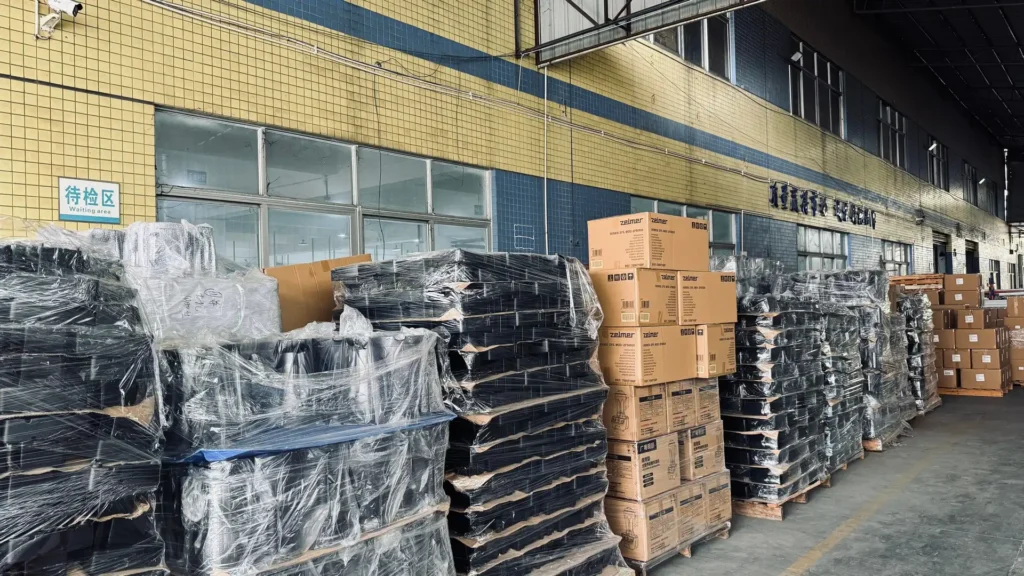
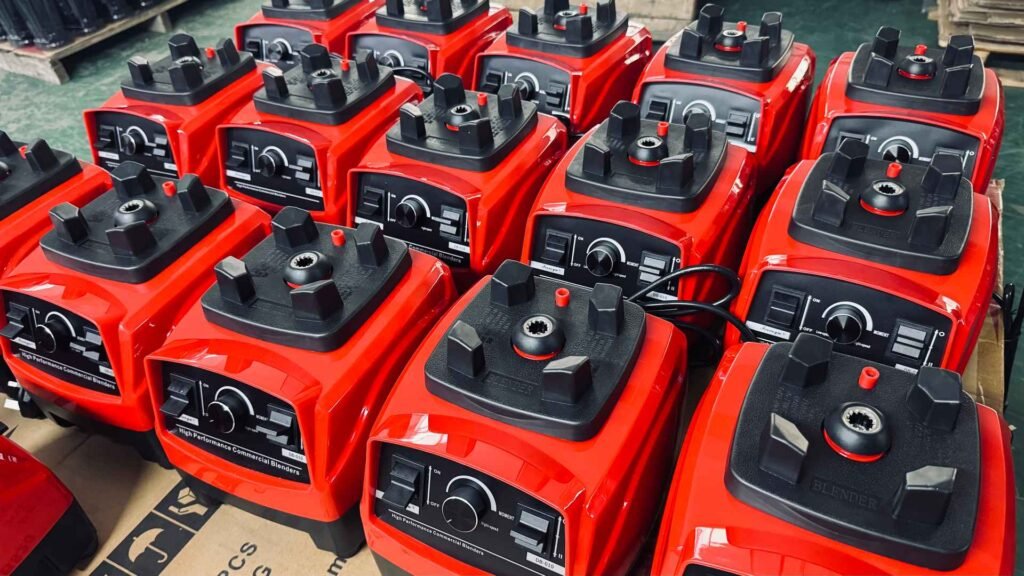
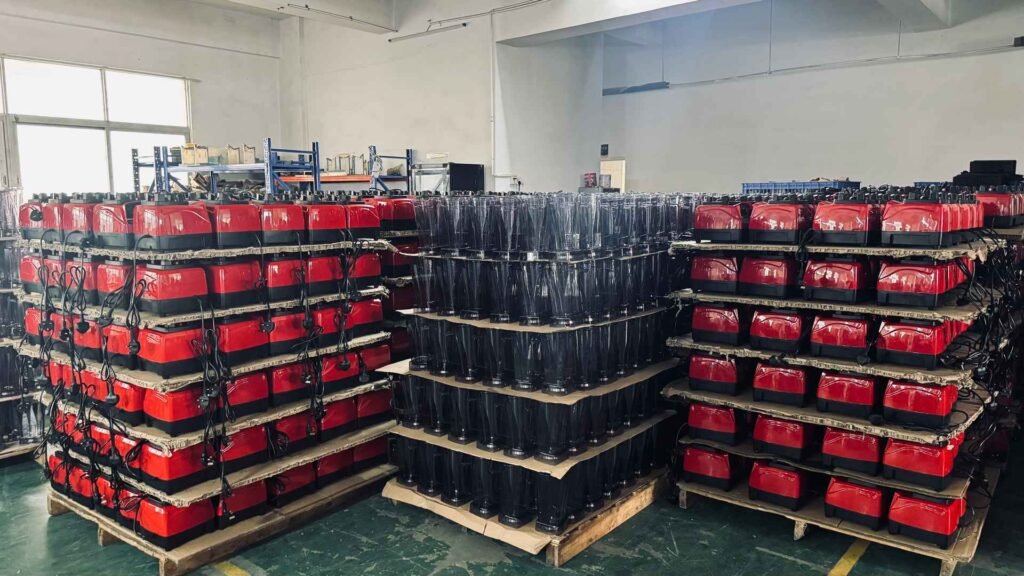
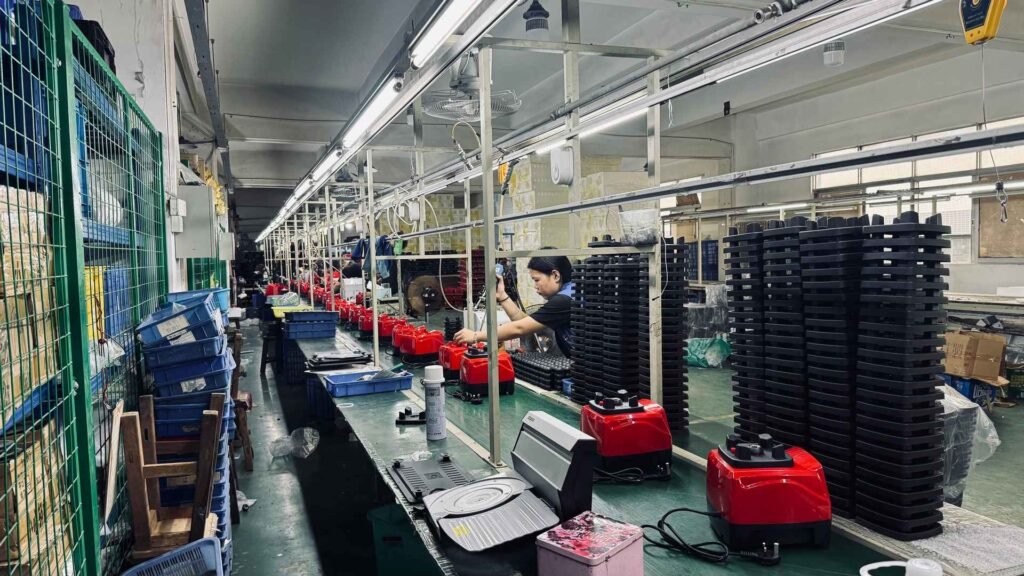
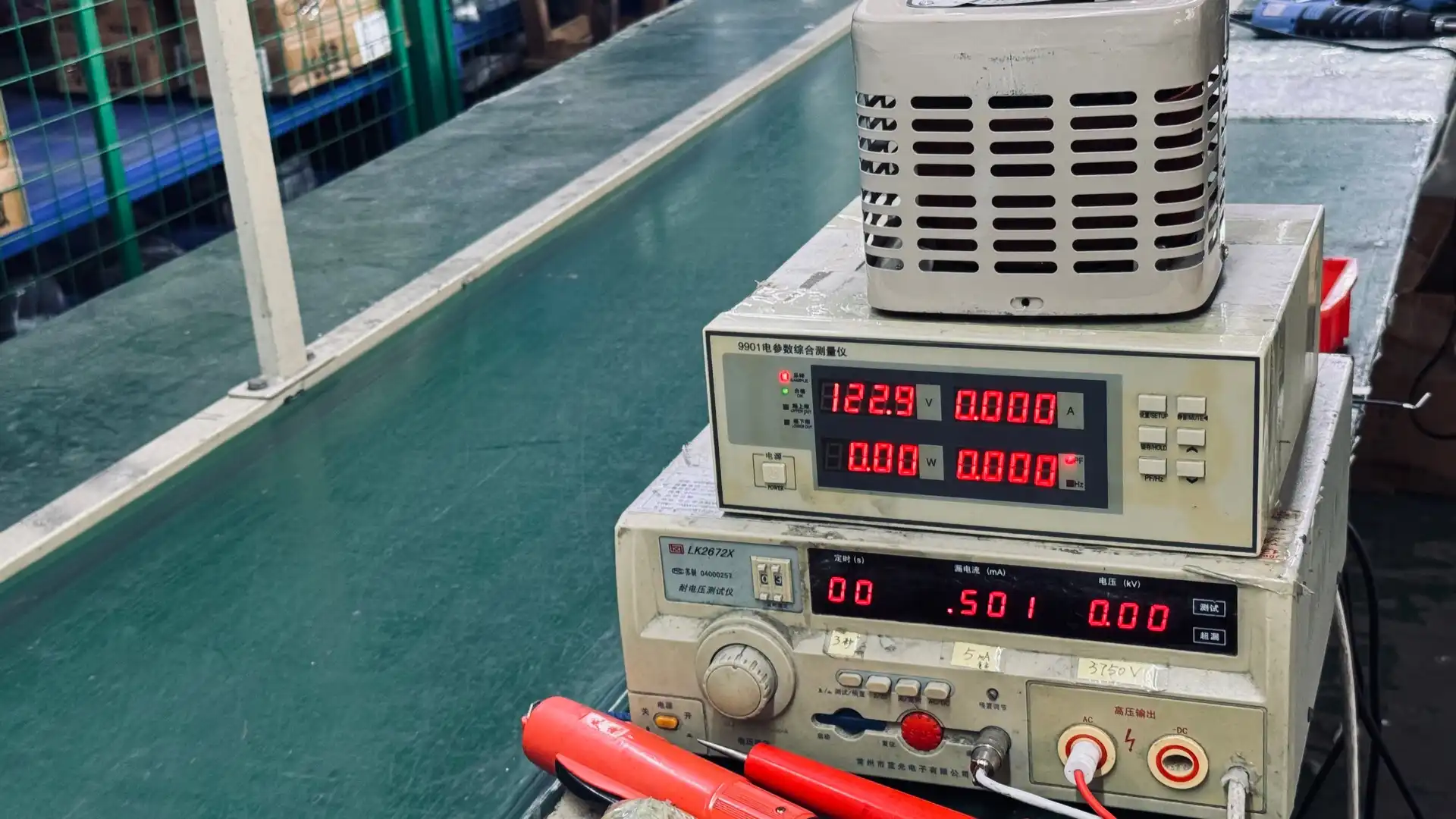
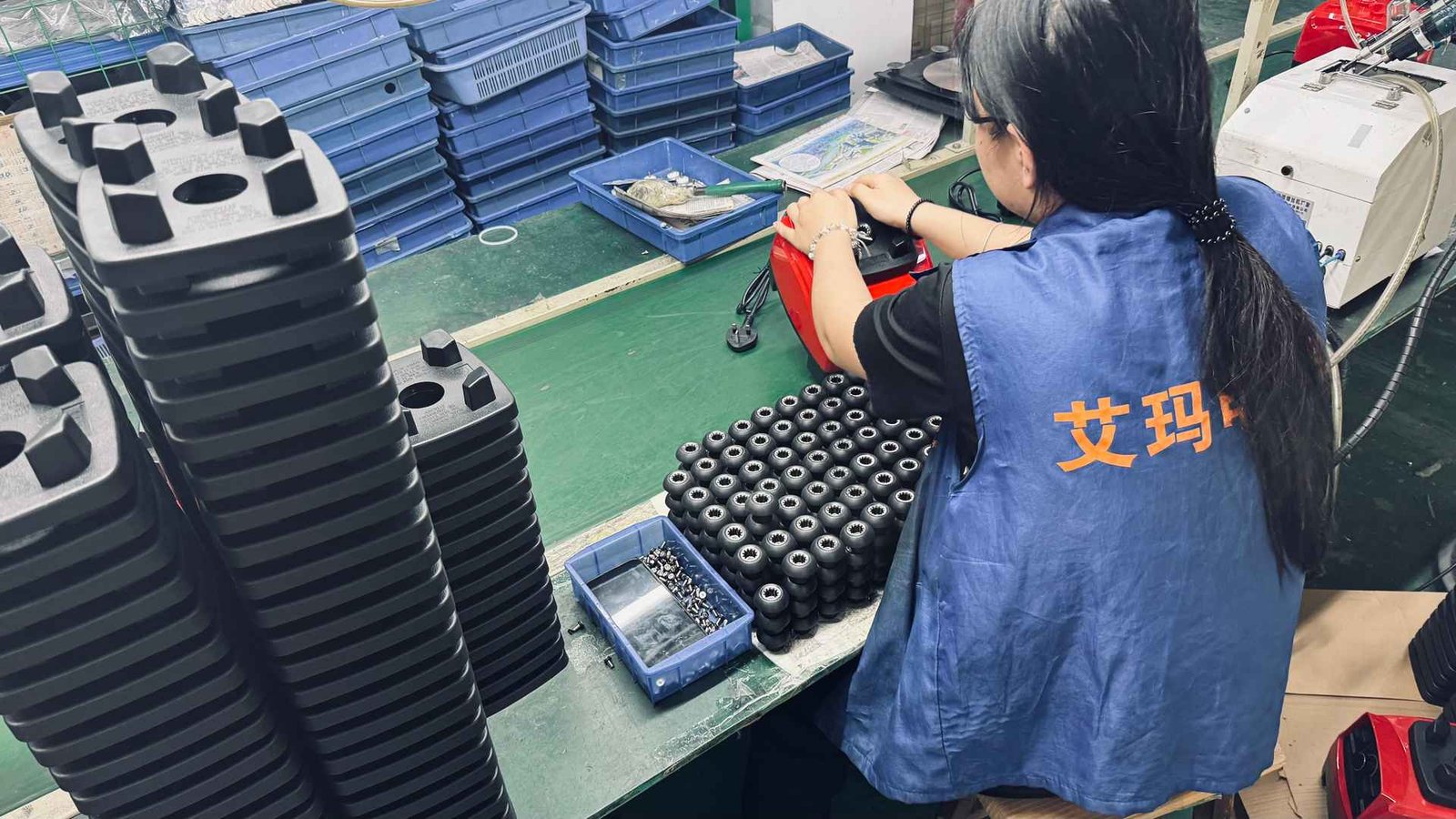
AIMA manufactures commercial blenders and electric food slicers in Zhongshan, with in-house copper motor winding, ABS injection molding, assembly and hipot testing under one roof. That vertical control is useful at quotation stage because the motor, housing and test record can be confirmed against the same production batch. It also means a custom configuration should be quoted from the factory floor, not from a catalogue price.
Ask for the reference loading data and the current packaging drawing before you compare freight. A 40HQ load is a planning number, not a promise; it changes with the jar size, enclosure, carton and pallet plan. Confirm it for the exact SKU and packaging you are buying.
9. Frequently Asked Questions (FAQ)
Does AIMA publish a commercial blender price list?
No. Pricing is quoted per project because the motor version, jar, enclosure, certification scope, packaging and order volume change the cost. Email sales2@zs-aima.com with your specification for a written quotation.
Why do two 2200W commercial blenders have different quotes?
The wattage can be the same while the motor duty cycle, copper volume, jar, blade coupling, housing, controls, certification and packaging differ. Compare those lines before comparing the total.
Is a soundproof commercial blender more expensive to buy?
A soundproof model adds an enclosure, acoustic lining, airflow design and additional assembly and testing. Ask for the noise test method and the enclosure construction so the quote is compared like for like.
Can AIMA quote a 110V or 220–240V version?
Yes. The 110V/60Hz and 220–240V/50–60Hz versions use different motor versions and should be quoted as separate configurations. Specify the destination, plug type and required certification files.
What information speeds up a commercial blender quotation?
Send the model or target performance, quantity, voltage and plug, jar size, open or soundproof design, certification market, packaging requirement, Incoterm and destination. A complete brief reduces back-and-forth and makes the quote comparable.
Pricing is quoted per project. Send your model, quantity, voltage, certification market and packaging requirements to sales2@zs-aima.com for a written quotation.
Email RicardoContact: Ricardo | sales2@zs-aima.com