1. Why Slicer Downtime Is a Counter-Level Cost
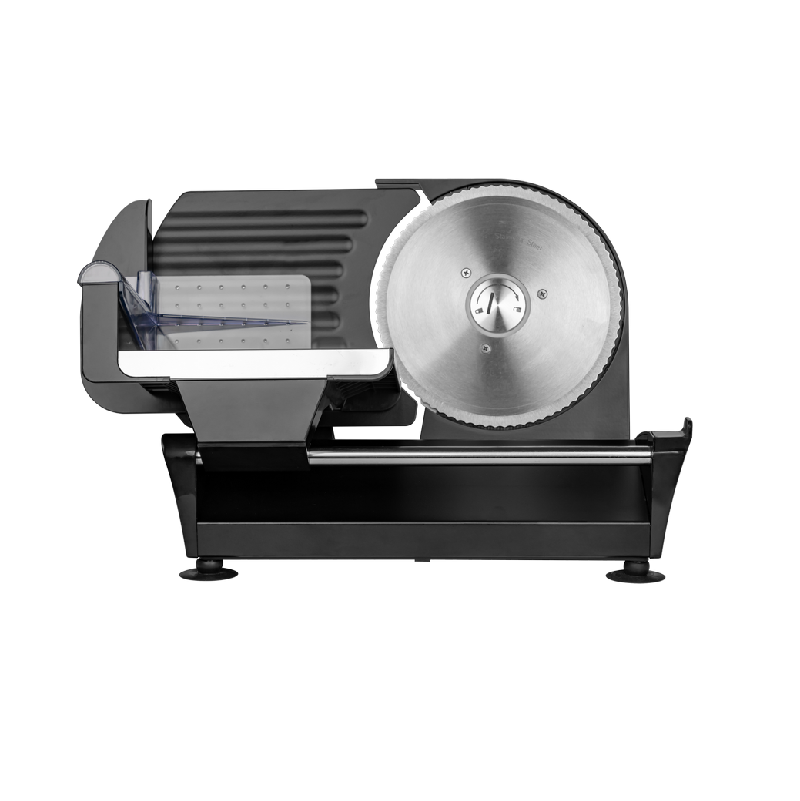
An electric food slicer is a low-cost machine with a high-cost failure mode. The unit itself is a few hundred dollars wholesale, but a deli counter that cannot slice during the lunch peak loses the sale of every cold-cut sandwich on the menu, and the staff time spent swapping in a backup is rarely accounted for.
In our commercial food slicer range, the two failure paths that dominate field reports are blade dullness (a gradual decline that operators compensate for by pushing harder, which loads the motor) and gear-drive lubrication neglect (a sudden failure that stops service outright). Both are preventable with a schedule that takes about ten minutes a week.
2. Blade Care: Sharpening vs Replacement Intervals
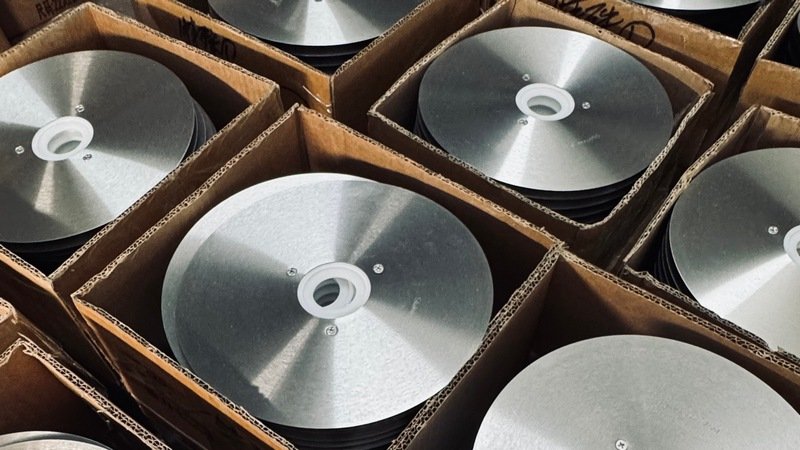
A 220mm circular blade does not fail suddenly; it degrades until the cut surface turns ragged. The sign to watch is the slice face: a clean blade leaves a smooth, glossy cut, while a dull blade tears the muscle fibres and leaves a matte, slightly fuzzy surface. Once the face looks matte, sharpening is due.
| Item | Light Use (cafe, 1-2 hrs/day) | Medium (deli, 4-6 hrs/day) | Heavy (supermarket, 8+ hrs/day) |
|---|---|---|---|
| Blade sharpening | Every 6-9 months | Every 3-4 months | Every 6-8 weeks |
| Blade replacement | 2-3 years | 12-18 months | 6-9 months |
| Slice-face check | Monthly | Weekly | Weekly |
Field sharpening is acceptable for light use but drifts the bevel angle over time, which changes slice thickness consistency. For a supermarket running pre-pack programs where weight accuracy matters, replacement blades are cheaper than the yield loss from an inconsistent cut.
3. Gear-Drive Wear: Lubrication, Backlash and Replacement Signs
Gear-driven slicers outsell belt-driven units in commercial kitchens for one reason: the drive does not slip under load. The trade-off is that a dry gear train announces itself late. By the time the operator hears a whine, the teeth are already wearing.
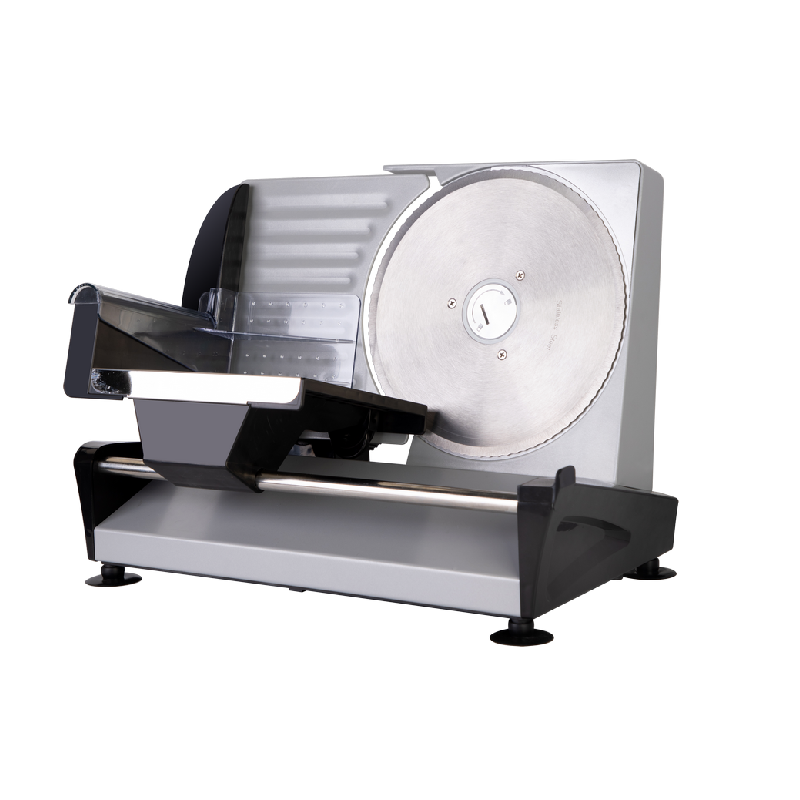
- Lubrication interval: food-grade grease every 500 operating hours, or quarterly in a deli
- Backlash test: with power off, rock the blade hub by hand; more than about 2 mm of free rotation means adjustment is due
- Audible warning: a rising pitch under load that was not there a month earlier
- Replacement threshold: visible tooth flank wear, or grease that comes out grey and metallic on inspection
The full comparison of drive types, including torque transfer and five-year total cost of ownership, is set out in our gear-driven vs belt-driven slicer guide.
4. Motor, Switch and Overload Inspection
Commercial slicers run a 220W-class copper-wound motor with a thermal cutout. The cutout exists to save the motor, not to be a normal operating mode. A machine that trips its overload weekly is telling you the blade is dull, the product is too cold, or the operator is over-feeding the carriage.
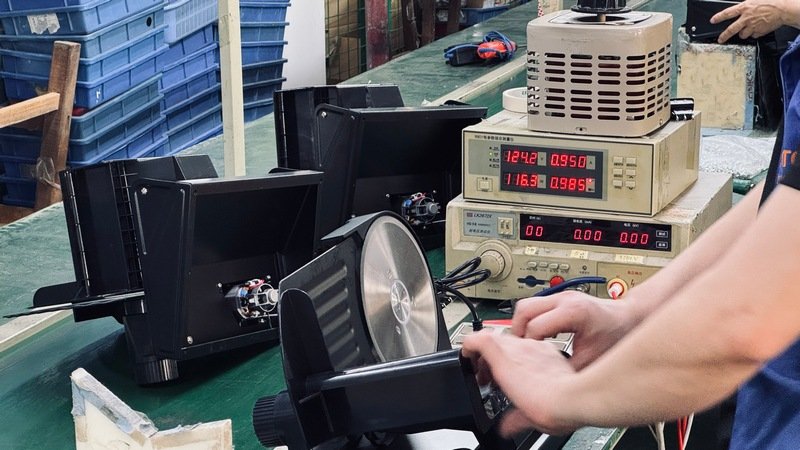
Record three numbers at commissioning: no-load running current, blade RPM at the lowest thickness setting, and the temperature rise after ten minutes of continuous running. When a fault is reported, those three numbers turn a guessing game into a five-minute diagnosis.
5. Carriage, Slide Rod and Thickness Plate Adjustment
Carriage alignment is the quiet cause of uneven slices. When the slide rods dry out or pick up product residue, the carriage tilts slightly under load, so the top of the cut is thicker than the bottom. Operators rarely report this as a fault – they simply cut a thicker setting and accept the waste.
- Wipe the slide rods daily and apply a light food-grade lubricant weekly
- Check the carriage for lateral play at full extension; any visible rock needs the rod tension adjusted
- Verify the thickness plate returns to zero without the blade touching – a plate that drags dulls the blade edge silently
- Inspect the product clamp grip; a slipping clamp lets the product rotate during the stroke
6. The Spare-Parts Kit Worth Holding
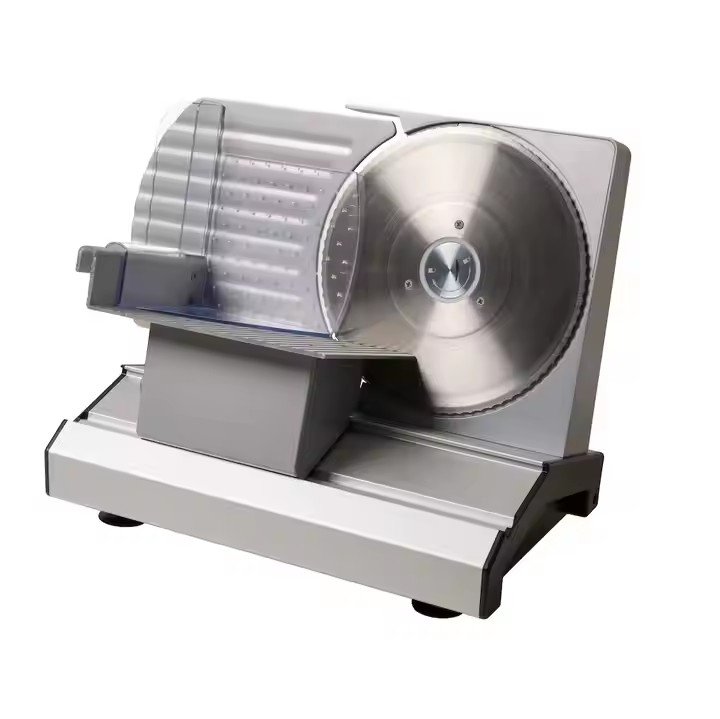
Holding spares is a working-capital decision, but the kit below covers roughly nine out of ten field failures we see, and it fits in a shoebox. For a distributor servicing a fleet, the kit is what turns a two-week parts shipment into a same-day repair.
| Part | Quantity for 10 Machines | Fails Because |
|---|---|---|
| 220mm replacement blade | 2 | Dull edge, or chipped from frozen product |
| Drive gear set | 1 | Dry running, missing lubrication |
| Thermal cutout / overload switch | 2 | Repeated trips wear the bimetal contact |
| On/off and safety interlock switch | 2 | Moisture ingress during wash-down |
| Blade guard screws and hardware kit | 1 set | Lost or stripped during cleaning |
| Food-grade grease cartridge | 1 | Consumable |
7. Cleaning and Storage: What Ruins a Slicer Fastest
Water is the enemy, not grease. A slicer washed down with a hose forces moisture past the switch seals and into the gear housing, where it emulsifies the grease. The machine then runs dry without any visible sign until the gear teeth fail.
- Wipe down with a damp cloth; never hose the base
- Remove and clean the blade with the guard in place, or with a cut-resistant glove
- Leave the thickness dial at zero and the carriage retracted overnight
- If the machine is stored for more than a month, run it for two minutes monthly to redistribute grease
8. Maintenance Schedule by Slicing Volume
| Frequency | Light Use | Medium Use | Heavy Use |
|---|---|---|---|
| Daily | Wipe down, blade guard check | Wipe down, blade guard, carriage wipe | Full wipe down, blade wash, rod wipe |
| Weekly | Slice-face check | Slice-face, rod lubrication | Slice-face, rods, clamp grip, switch test |
| Monthly | Overload reset test | Backlash check, overload test | Backlash, current draw record, guard hardware |
| Quarterly | Grease check | Grease top-up, alignment check | Grease service, full alignment, blade assessment |
9. Slicer Maintenance FAQ
Every 6-9 months in light cafe use, every 3-4 months in a deli, and every 6-8 weeks in a supermarket running eight-hour shifts. The practical trigger is the slice face: once it looks matte rather than glossy, the edge is gone.
Yes, on models where the blade is retained by a removable hub, and it takes about ten minutes with the guard in place. Wear a cut-resistant glove, and re-check that the thickness plate clears the new blade at the zero setting.
In order of likelihood: a dull blade, product that is too cold or too dense, over-feeding the carriage, or a failing thermal cutout. A machine that trips more than once a month needs the first three checked before the part is replaced.
Gear-driven needs scheduled greasing but no belt replacement; belt-driven machines are cheaper to buy but need belt tension checks and periodic replacement. Over five years the gear-driven unit typically costs 50-60 percent less in maintenance.
Yes. Blades, gear sets, switches, thermal cutouts and hardware kits are available for the models we manufacture, and small quantities can be consolidated into the same carton as a machine order. State the model and serial when requesting parts.
Request Spare Parts or a Fleet Service Plan
Tell us the model, the serial range and the failure you are seeing. We can quote parts only, a recommended spares kit sized to your fleet, or a replacement machine if the repair no longer makes sense.